
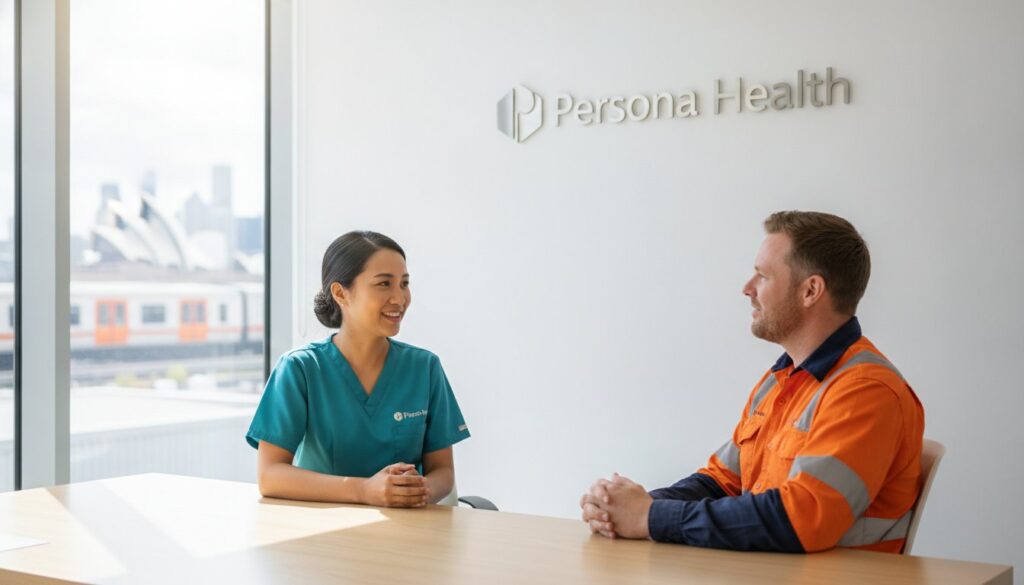
Could a simple misunderstanding of the 2024 National Standard be the only thing standing between you and your next shift on the Sydney rail network? For many workers, the pressure of a looming health assessment is compounded by the confusion of Category 1, 2, or 3 requirements and the search for a qualified rail medical provider sydney who understands the urgency of their situation. It is a stressful position to be in, especially when the fear of an unexpected result or a delay in RIW data uploads feels like a genuine threat to your career.
Key Takeaways
- Understand the critical updates in the November 2024 National Standard to ensure your certification remains compliant with current Australian rail safety requirements.
- Identify whether you require a Category 1, 2, or 3 assessment based on your specific role and the level of risk associated with your work in the rail corridor.
- Learn how to select an authorised rail medical provider sydney with the expertise to conduct in-person assessments and manage fast RIW data uploads.
- Discover practical steps to prepare for your appointment, from gathering essential documentation to managing lifestyle factors that can impact your clinical results.
- Gain confidence in navigating the clinical examination process with a clear walkthrough of what to expect during your physical and medical history review.
Choosing a Rail Medical Provider in Sydney: The 2024 National Standard
A rail medical assessment is a specialised health review designed to ensure that anyone working on or near the tracks is physically and mentally fit to perform their duties safely. In the busy Sydney basin, where Transport for NSW manages a complex web of passenger and freight services, these assessments are the foundation of operational safety. Finding a qualified rail medical provider sydney is not just about checking a box; it’s about adhering to the strict National Standard for Health Assessment of Rail Safety Workers. This standard protects the individual, their colleagues, and the millions of commuters who rely on Australia’s rail network every day.
The legal framework governing these medicals is rigorous. Every assessment must be conducted by an Authorised Health Professional (AHP). These are medical practitioners who have undergone specific training to understand the unique risks of the rail environment. In Sydney, local regulators and major operators require strict evidence that your AHP is currently registered and following the most recent clinical guidelines to maintain site safety.
To better understand the clinical nature of these assessments, watch this helpful video:
What Changed in the 2024 National Standard Update?
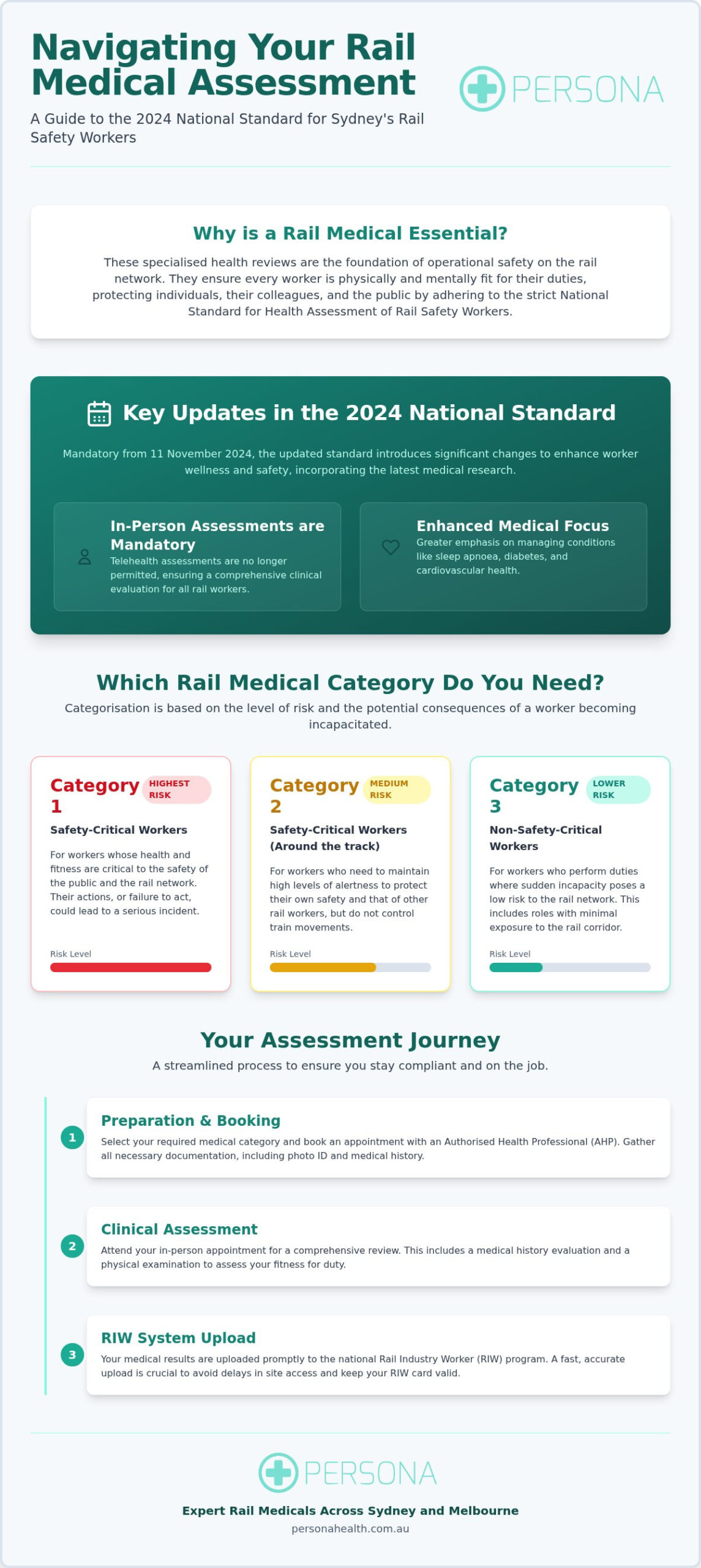
The National Transport Commission (NTC) released the latest edition of the National Standard, which became mandatory on 11 November 2024. This update represents a significant shift in how we approach worker wellness and safety. It incorporates the latest medical research to better manage conditions like sleep apnoea, diabetes, and cardiovascular health. One of the most critical changes is the move away from telehealth; the 2024 standard mandates that assessments must be performed in person to ensure a comprehensive clinical evaluation. If your current certification was issued under an older framework, it might no longer meet the requirements for certain safety-critical roles, making it vital to consult with an expert rail medical provider sydney to stay compliant.
The Role of the Rail Industry Worker (RIW) Program
Compliance is managed through the Rail Industry Worker (RIW) program, a national system that tracks the competencies and medical fitness of every person on site. For contractors and employees alike, your RIW card is your digital passport to work. The National Competency Management Framework requires that medical results are uploaded accurately and promptly to avoid site access delays. Choosing a provider like Persona Health, which specialises in Cat 3 rail medicals and higher categories, ensures that your results are handled by a team with streamlined systems for RIW data management. This reduces the administrative burden on your employer and ensures you don’t lose valuable hours waiting for a system update.
The Three Categories of Rail Medicals: Which Do You Need?
Risk categorisation in New South Wales isn’t just about your job title; it’s about the safety of everyone on the network. The new edition of the National Standard clarifies how roles are split between safety-critical and non-safety-critical work. When you book with a rail medical provider sydney, the first question they’ll ask is which category you require, as this dictates the depth of the clinical examination. This system ensures that medical resources are focused where they are most needed to prevent accidents.
The distinction between these categories is based on the potential consequences of a worker becoming suddenly incapacitated. Safety-critical workers are those whose actions directly impact the safety of the public or the rail network. Non-safety-critical workers are those whose health only affects their own safety or the safety of their immediate colleagues. Understanding which group you fall into is the first step toward a successful assessment.
Category 1: Safety Critical Workers (High Risk)
This is the most stringent level of assessment. It’s reserved for workers like train drivers and signallers, whose sudden incapacity could lead to a serious incident involving the public or the environment. Because the stakes are so high, the medical focuses heavily on cardiovascular health and the risk of sudden events like heart attacks or strokes. You’ll need an ECG and specific blood tests, including HbA1c for long-term blood sugar levels and a lipid profile for cholesterol. For workers under 50, these are required every five years; however, the frequency increases to every two years from age 50 and annually from age 60 to ensure your health remains a reliable asset to the network.
Category 2: Safety Critical Workers (Lower Risk)
Category 2 roles are also safety-critical, but they differ because the worker’s sudden incapacity is unlikely to cause a major public incident. This often includes track maintenance crews or technicians who work in teams. If a worker in this category collapses, their colleagues are usually there to intervene or stop work immediately. While the physical requirements are still high, the testing is less intensive than Category 1. For instance, an ECG is generally not a standard requirement for Category 2 unless a specific clinical need is identified by your medical professional. The frequency of these assessments follows the same age-based schedule as Category 1.
Category 3: Non-Safety Critical Workers
If you work in or near the rail corridor but don’t perform safety-critical tasks, you likely need a Category 3 assessment. The primary goal here is to ensure you’re safe in the rail environment. This means having the hearing to detect an approaching train and the musculoskeletal health to move out of the way of danger quickly. These assessments are required at pre-employment, again at age 40, and then every five years thereafter. If you’re unsure which level applies to your role, booking a Cat 3 rail medical in Sydney with our specialised team can help clarify your requirements and get you ready for site access.
Ensuring you have the correct documentation from your employer before your appointment will make the process much smoother. If you’re transitioning between roles, our team at Persona Health can guide you on whether your previous assessment still meets the requirements of your new position.
What to Expect During Your Rail Medical Assessment
Walking into a clinic for a formal health review can feel daunting, especially when your livelihood depends on the outcome. At Persona Health, we believe the process should be transparent and supportive. When you visit a rail medical provider sydney, the experience is designed to be a collaborative check on your well-being rather than a high-pressure hurdle. The assessment typically takes between 45 and 90 minutes, depending on your category, and focuses on identifying any health risks that could impact your safety or the safety of others on the network.
You’ll start by completing a comprehensive medical history questionnaire. Under the 2024 National Standard, honest disclosure is more than just a formality; it’s a legal and safety requirement. This document covers your past injuries, current medications, and any chronic conditions like sleep apnoea or diabetes. Our medical team uses this information to build a complete picture of your health, ensuring that any necessary management plans are in place to keep you working safely. If you’re joining the industry for the first time, this review often forms a vital part of your pre-employment medicals.
Clinical Testing Components and Standards
The physical examination includes several specialised tests tailored to the rail environment. Audiometry is a key component, where we test your ability to hear specific frequencies essential for track-side safety. You need to be able to hear warning sirens and communicate clearly over radio systems, even in noisy environments. Vision testing is equally critical, particularly for Category 1 and 2 workers. This includes the Ishihara test for colour blindness to ensure you can accurately distinguish between signal lights, alongside standard visual acuity and peripheral vision checks.
The musculoskeletal screen is another vital step. Rail work often involves walking on uneven ballast, climbing into locomotive cabs, or handling heavy equipment. We assess your joint range of motion, grip strength, and overall balance. This isn’t about being an athlete; it’s about confirming your body can handle the physical demands of your specific role without increasing the risk of injury to yourself or your team.
Drug and Alcohol Testing in the Rail Industry
Safety on the tracks is non-negotiable, and drug and alcohol testing is a mandatory requirement for all rail safety workers. This testing is conducted in accordance with strict Australian Standards and the specific rules of your rail transport operator. It usually involves a breathalyser for alcohol and a urine sample for drug screening. These tests look for substances that could impair your judgement, reaction times, or physical coordination.
If a result is non-negative, the sample is sent to an accredited laboratory for further confirmatory testing. We understand the sensitivity of these results, which is why we handle the entire process with the utmost privacy and professionalism. Once the assessment is complete, the findings are reported through the RIW system, ensuring your employer has the necessary clearance to allow you on site. If you’re preparing for a new role, you can find more details by booking a Cat 3 rail medical in Sydney through our streamlined digital system.
Preparation Checklist: Ensuring a Successful Appointment
A successful health assessment begins long before you arrive at the clinic. Arriving unprepared is one of the most common reasons for delays in certification, often leading to avoidable stress and lost shifts. When you choose a rail medical provider sydney, you are partnering with a clinical team that wants to see you succeed. By taking a few simple steps to manage your health and documentation beforehand, you can ensure the process is as smooth and efficient as possible.
One critical factor often overlooked is the impact of lifestyle choices on your clinical results. On the morning of your assessment, try to avoid heavy meals, excessive caffeine, or nicotine. These substances can temporarily elevate your blood pressure and heart rate, potentially leading to a “deferred” result that requires further monitoring or a follow-up appointment. If you have a pre-existing medical condition, such as diabetes or a heart condition, having your specialist’s latest report ready will save significant time. This proactive approach allows the Authorised Health Professional (AHP) to make an informed decision without waiting weeks for external correspondence.
The Rail Medical Preparation Checklist
- Mandatory Identification: You must present current photo identification, such as a valid Australian driver’s licence or passport, to verify your identity.
- Aids and Equipment: Bring any prescription glasses, contact lenses, or hearing aids you use for work. We need to test your capacity while you are using these aids.
- Medication Records: Provide a clear list of all current medications, including dosages and the reasons they were prescribed.
- Specialist Documentation: If you are managing a chronic condition, a recent letter from your treating specialist outlining your stability and treatment plan is essential.
Post-Assessment: RIW Uploads and Certificates
Once your clinical examination is complete, the AHP will issue a “Fitness for Duty” certificate. This document confirms whether you are fit for your specific role, fit with restrictions, or temporarily unfit. This status is then uploaded directly to the Rail Industry Worker (RIW) system. It is vital to ensure your employer has granted the necessary permissions within the RIW portal for your chosen provider to access your profile. Without this link, the data cannot be synchronised, which can prevent you from swiping onto a site even after you have passed the medical.
For those moving between different types of high-risk work, you might find our guide to fitness for work assessments helpful for understanding how various medical standards overlap. Most results are processed and visible in the RIW system within 24 to 48 hours, allowing you to return to work with confidence. To ensure your next certification is handled with clinical precision and speed, book your assessment with Persona Health today and experience a streamlined approach to rail compliance.
Persona Health: Expert Rail Medicals Across Sydney and Melbourne
Choosing the right rail medical provider sydney is a decision that impacts your operational continuity and the long-term health of your workforce. Persona Health has established itself as a leading partner in the Sydney infrastructure sector by combining clinical excellence with a deep understanding of the rail industry’s unique demands. Our team of experienced Authorised Health Professionals (AHPs) ensures that every assessment is conducted with precision, adhering strictly to the latest National Standard to keep your projects moving safely.
We recognise that accessibility is vital for a mobile workforce. Our network of modern clinics is strategically located across the Sydney basin, with dedicated facilities in Parramatta, Rosebery, Gregory Hills, and Dee Why. For projects spanning the east coast, we also operate clinics in Cairnlea and Craigieburn in Melbourne, supported by a vast affiliate network of over 100 clinics and Australia-wide mobile services. This footprint ensures that whether you are a sole contractor or a large-scale operator, high-quality medical support is always within reach.
Integrated Injury Management for Rail Operators
Our commitment to worker health extends far beyond the initial medical assessment. We provide comprehensive support for rail businesses through best practice injury management, focusing on early intervention and sustainable return-to-work outcomes. In the complex rail environment, the role of an Injury Management Consultant is essential. These specialists bridge the gap between clinical care and the workplace, ensuring that recovery plans are tailored to the specific physical requirements of rail safety roles.
By implementing proactive health surveillance and structured recovery programmes, often enhanced by the integrated health solutions provided by One Health Connect, we help businesses significantly reduce Lost Time Injuries (LTIs). This employer-focused approach ensures that your team remains healthy, productive, and compliant with SafeWork NSW and relevant WHS legislation.
InjuryQR: Modern Triage for the Rail Industry
To further enhance site safety, we have introduced InjuryQR, a free AI-powered triage service designed for immediate on-site reporting. In the event of an incident, workers simply scan a QR code using their smartphone; no app download is required. They can describe the injury using their voice, and the AI provides instant, guided next steps such as self-care advice, a telehealth referral, or direction to emergency services.
For Sydney rail projects, this technology is a game-changer. It ensures immediate incident reporting and can facilitate the issuance of Certificates of Capacity where appropriate, further reducing LTIs and administrative delays. Businesses can even order free physical InjuryQR assets, such as posters and magnets, to ensure this tool is visible across their worksites.
At Persona Health, we combine this modern digital reporting with a supportive, human-centred approach to care. If you are looking for a reliable rail medical provider sydney that prioritises both compliance and worker well-being, our team is ready to assist. Contact Persona Health today to request a quote or discuss how we can support your occupational health requirements.
Stay Compliant and Keep Sydney Moving
Adhering to the 2024 National Standard is a vital part of your professional commitment to safety on the tracks. By understanding whether you require a Category 1, 2, or 3 medical and preparing your documentation in advance, you can approach your appointment with total confidence. The right preparation ensures that your health remains a stable foundation for your career in the rail sector. Choosing a dedicated rail medical provider sydney like Persona Health means you’re supported by Authorised Health Professionals who prioritise clinical accuracy and your individual needs.
With modern clinics in Parramatta, Rosebery, and Melbourne, we provide the convenient access and fast RIW data uploads you need to stay operational. Our team is committed to delivering professional reporting and empathetic care, ensuring you aren’t left waiting for the permissions you need to swipe onto a site. We’re here to act as your expert partner in health, helping you navigate the complexities of compliance with ease and reliability.
Book Your Rail Medical Assessment with Persona Health Today and ensure your certification is in expert hands. We look forward to supporting your continued success on the network.
Frequently Asked Questions
What is the difference between a Category 1 and Category 3 rail medical?
Category 1 assessments are the most intensive, designed for safety-critical workers like train drivers where sudden incapacity could impact the public. These include pathology and ECGs. Category 3 medicals are for non-safety-critical workers who work in the rail corridor, focusing primarily on hearing and musculoskeletal health to ensure they can detect and move away from hazards. Choosing a qualified rail medical provider sydney ensures your assessment is matched correctly to your specific risk category and job requirements.
How long does a rail medical assessment take at a Sydney clinic?
Most rail medical appointments at our Sydney clinics take between 45 and 90 minutes. A Category 3 assessment is usually at the shorter end of that scale, while Category 1 or 2 medicals take longer due to the additional clinical tests like ECGs or blood collection. We recommend arriving 15 minutes early to complete your medical history paperwork, which helps our clinical team maintain a prompt schedule and gets you back to work sooner.
How often do I need to renew my rail medical certificate?
Renewal periods are determined by your age and category under the National Standard. Category 1 and 2 workers generally require a new medical every five years until age 50, every two years until age 60, and then annually. Category 3 workers must have an assessment at pre-employment, then at age 40, and every five years thereafter. It is essential to monitor these dates in your RIW profile to ensure your site access remains active and compliant with Transport for NSW requirements.
Can any GP perform a rail medical assessment in Australia?
No, only a medical practitioner registered as an Authorised Health Professional (AHP) can conduct these assessments. The National Standard requires specific training to ensure the doctor understands the unique safety risks associated with the rail environment. Persona Health utilises highly experienced AHPs at all our locations, ensuring your results are legally valid and meet the strict criteria used by major rail operators and contractors across the country.
What happens if I fail my rail medical assessment?
If you don’t meet the initial criteria, you will often receive a “fit with restrictions” or “deferred” status rather than a permanent fail. This usually means the AHP needs more information, such as a report from your treating specialist or a follow-up test after managing a condition like high blood pressure. Our team takes an empathetic approach, working with you and your employer to find a safe path back to full duties whenever possible.
Do I need to fast before my Category 1 rail medical blood test?
Yes, fasting is required for the blood tests associated with Category 1 assessments to ensure accurate readings of your blood sugar and cholesterol levels. You should not eat or drink anything except water for 8 to 12 hours before your appointment. If you have a medical condition that makes fasting difficult, such as diabetes, please inform our staff when booking so we can schedule your appointment for an appropriate time and provide further clinical guidance.
How quickly will my results be uploaded to the RIW system?
We prioritise fast turnaround times, with most results uploaded to the RIW system within 24 to 48 hours of your assessment. As a specialised rail medical provider sydney, Persona Health uses modern digital reporting systems to ensure your employer receives the necessary fitness for duty certificates promptly. This efficiency reduces administrative delays and ensures you can swipe onto your worksite as soon as your clinical clearance is finalised.
What should I bring to my rail medical appointment in Parramatta?
You must bring current photo identification, such as an Australian driver’s licence or passport, to our Parramatta clinic. Additionally, bring any prescription glasses or hearing aids you use for work, a list of current medications, and any recent specialist reports for chronic conditions. Having these items ready allows our AHPs to complete your clinical review without delay, ensuring a smooth and professional experience from the moment you walk through our doors.

Article by
Ian Nicholson
Ian is the Business Support Manager at Persona Health, where he plays a key role across IT, sales, marketing and business operations. With a broad skill set and a practical, solutions-focused approach, Ian helps drive the systems, communication and commercial strategy that support Persona Health’s continued growth across Australia.