
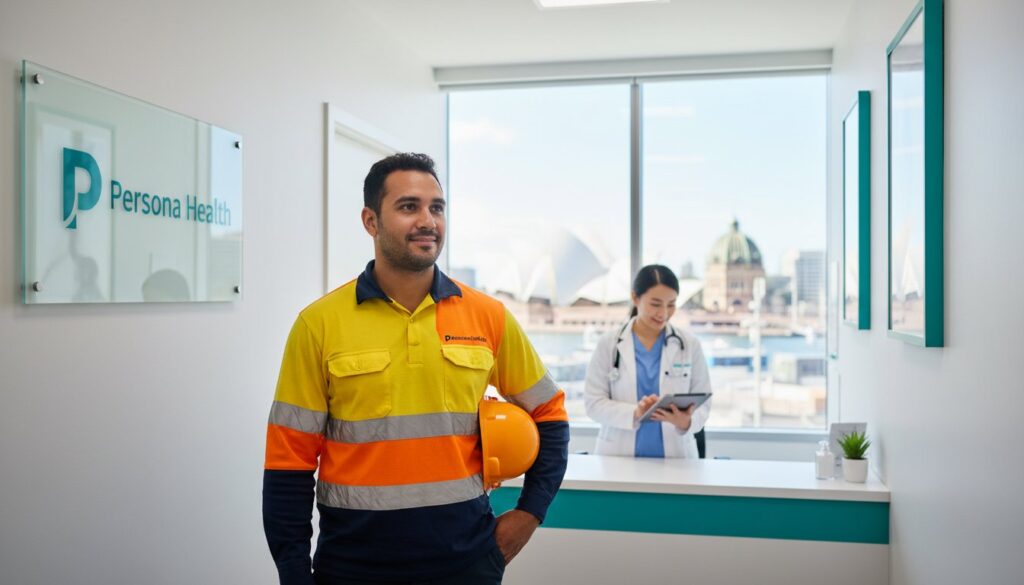
Last Tuesday, a rail recruit in Melbourne spent hours searching for a clinic near Cairnlea, worried that a simple misunderstanding of the drug and alcohol screen might derail their career before it even started. You aren’t alone in this feeling; the path to obtaining your RIW card often feels like moving through a maze of technical jargon and strict regulations. It’s natural to feel a sense of unease when your livelihood depends on a single cat 3 medical appointment.
At Persona Health, we believe that your health assessment should be a supportive step forward rather than a source of stress. We understand that you want to walk into your appointment with total confidence, knowing exactly what to expect from the physical and clinical tests. This guide provides everything you need to know for 2026, from understanding the specific health standards to ensuring you pass your assessment on the first try.
We’ve designed this resource to help you manage the process with ease, whether you’re visiting our new facilities in Cairnlea or Craigieburn. We will break down the essential steps of the assessment, clarify the difference between medical categories, and provide a clear checklist to help you prepare. You’re just a few steps away from starting your journey on the Australian rail network with the expert guidance you deserve.
Key Takeaways
- Understand why the Category 3 assessment is the mandatory entry requirement for obtaining your Rail Industry Worker (RIW) card and safely accessing the Australian rail corridor.
- Discover what to expect during your 30 minute consultation with an Authorised Health Professional, focusing on the vital hearing, vision, and mobility checks.
- Stay compliant with the latest 2026 standards by learning how your age affects the validity of your assessment and when you will need to book a renewal.
- Streamline your appointment process with our preparation checklist, specifically designed for those visiting Persona Health clinics in Sydney or our new Melbourne sites in Cairnlea and Craigieburn.
- Identify the essential identification and medical documents you must bring to your cat 3 medical to ensure your results are processed efficiently and professionally.
Understanding the Category 3 Rail Medical in Australia
A cat 3 medical represents the fundamental health requirement for any professional seeking access to the Australian rail corridor. It’s the baseline assessment designed to ensure that workers possess the physical and psychological capacity to stay safe in a high-risk environment. Without completing this assessment, you can’t activate a Rail Industry Worker (RIW) card, which serves as your mandatory digital permit to enter active sites. This process isn’t just a box-ticking exercise; it’s a vital safety layer that protects you and the wider network.
To better understand the process of a pre-employment health check, watch this helpful video:
In the hierarchy of rail safety, roles are divided into safety-critical and non-safety critical categories. Category 1 and 2 assessments are reserved for workers whose sudden ill health could cause a major incident, such as train drivers or signallers. In contrast, a cat 3 medical is for those in non-safety critical roles. While your actions might not directly cause a collision, your own safety depends on being fit enough to navigate the tracks and respond to warnings instantly.
Who requires a Cat 3 medical assessment?
This assessment is primarily for “Around the Track” personnel. This includes rail labourers, cleaners, landscapers, and various tradespeople who perform essential maintenance. Even if you aren’t operating heavy machinery, you must maintain a high level of situational awareness to detect approaching trains or moving plant equipment. We’ve seen a surge in demand for these assessments as contractors ramp up work on major infrastructure projects like the Metro Tunnel in Melbourne and the Southwest Link in Sydney. To support this growth, Persona Health now offers dedicated booking slots at our new clinics in Cairnlea and Craigieburn, ensuring local workers can get site-ready quickly.
The regulatory framework: SafeWork Australia and RISSB
Health standards in the Australian transport sector are governed by strict industrial laws and overseen by bodies like SafeWork Australia and the Rail Industry Safety and Standards Board (RISSB). These regulations ensure that every worker on the track meets a uniform level of fitness. The National Standard for Health Assessment of Rail Safety Workers provides a consistent framework for these exams, and by 2026, updated protocols will further refine how we manage worker well-being across the network. For a deeper look at these upcoming changes, you can read our Fitness for Work Assessments in Sydney and Melbourne: The 2026 Guide. At Persona Health, we align every cat 3 rail medical with these national standards to guarantee your compliance and peace of mind.
What to expect during your Cat 3 medical assessment
Your cat 3 medical is a streamlined, 30 minute consultation designed to ensure you can work safely around the rail corridor. At Persona Health, we understand that medical exams can feel daunting; our Authorised Health Professionals (AHPs) focus on creating a supportive environment where your health is the priority. If you manage chronic conditions like diabetes or heart disease, please bring a summary from your GP. This documentation helps our team confirm your fitness for duty without unnecessary delays, ensuring we treat you as an individual rather than just another appointment on the list.
Vision and hearing standards for rail workers
Rail safety relies on sharp situational awareness. You’ll undergo tests for distance vision; if you wear glasses or contacts, bring them along so we can record your corrected sight. Hearing is equally vital. The standards require you to hear warnings at frequencies up to 2000 Hz. These benchmarks are essential for the Rail Industry Worker (RIW) program, ensuring every person on site can detect approaching hazards. If you use a hearing aid, our clinicians will guide you through the specific requirements for site use to keep you safe and compliant.
Mobility and physical awareness checks
Working in a rail environment requires more than just being fit. You need the agility to move to a place of safety immediately when a train approaches. Our assessment includes functional movements like bending, squatting, and kneeling. We evaluate your balance and coordination to ensure you aren’t at risk of falls or injury in the corridor. For those based in Victoria, our new clinics in Cairnlea and Craigieburn offer these specialised checks in a modern, professional setting. You can also find more details on our page for Cat 3 Rail Medicals Sydney to see how we standardise our care across all locations.
Drug and alcohol screening protocols
Standard Australian rail safety protocols require a urine-based drug and alcohol screen. To prepare, stay hydrated and be ready to disclose any prescription medications you’re currently taking. If a sample returns a “non-negative” result, the sample is sent to a secondary laboratory for confirmatory testing to identify specific substances and their levels. This process protects both the worker and the network. Whether you’re visiting us in Melbourne or Sydney, our goal is to get you through your cat 3 medical with confidence. If you’re ready to book, view our fitness for duty options to find a time that works for you.
Validity periods and compliance for the RIW card
Your Rail Industry Worker (RIW) card is a digital passport to the Australian rail network; however, it’s only active if your medical data is current. For anyone working on track in 2026, the lifespan of a cat 3 medical isn’t permanent. It functions as a clinical snapshot of your health at a specific point in time, requiring regular updates to ensure you remain fit for duty. This system protects you, your colleagues, and the integrity of the rail infrastructure across the country.
Age-based renewal schedules
The frequency of your health assessments depends heavily on your age, as the physical risks associated with rail work change over time. According to the standards maintained by the Office of the National Rail Safety Regulator (ONRSR), workers under the age of 40 generally find their medical remains valid until their 40th birthday. This allows younger workers a long period of compliance after their initial pre-employment check, provided no significant health changes occur or they don’t change roles.
Once you reach 40, the requirements shift significantly. You’ll enter a mandatory five-year renewal cycle. This means you must undergo a new assessment every five years until you retire. If you’re approaching a milestone birthday during a major project, it’s wise to plan ahead. Turning 40 mid-contract will trigger a requirement for a new medical to keep your RIW card active. Our teams at the new Persona Health clinics in Cairnlea and Craigieburn specialise in these milestone transitions, ensuring your paperwork is processed before your current validity expires.
Maintaining compliance on the rail network
Staying compliant involves more than just passing the initial exam. The RIW online portal is the source of truth for your medical status. Employers and site supervisors use this portal to verify your fitness before you step onto a site. If your medical expires, the portal automatically flags your profile, which can result in an immediate loss of site access. This isn’t just a bureaucratic hurdle; it’s a legal necessity. An expired cat 3 medical can void insurance coverage and put your employer at risk of breaching SafeWork Australia regulations.
Persona Health takes the stress out of this process by helping employers manage complex periodic schedules. We don’t just perform the tests; we act as a modern health partner to ensure no one in your team misses a renewal date. Whether you’re visiting our Sydney locations or our expanding Melbourne branches in Craigieburn and Cairnlea, we focus on a supportive, clinical experience. For more detailed guidance on staying ahead of these dates, you can review our Rail Medicals in Melbourne and Sydney: The 2026 Preparation Checklist to ensure your team is ready for the year ahead.
Preparing for your assessment in Sydney or Melbourne
Arriving for your cat 3 medical assessment doesn’t need to be a source of anxiety. At Persona Health, we focus on your unique health profile to ensure you’re fit for the rail corridor while making the process as smooth as possible. Whether you’re visiting our established Sydney clinics or our brand-new Melbourne locations in Cairnlea and Craigieburn, arriving prepared ensures your RIW card application moves swiftly through the system.
In the 24 hours before your appointment, prioritize hydration and rest. Avoid excessive caffeine or energy drinks; these can temporarily spike your blood pressure and lead to unnecessary retesting. High-vis workwear can be restrictive, so we recommend wearing comfortable activewear instead. You’ll be asked to demonstrate mobility through squats, reaching, and balance exercises. These movements are much easier to perform in flexible clothing than in stiff work trousers. If you have a pre-existing condition, bring any relevant specialist letters or recent test results. This proactive approach mirrors SafeWork Australia’s emphasis on proactive risk management; it shows you’re managing your health responsibly and prevents administrative delays.
The ultimate Cat 3 preparation checklist
A smooth assessment depends on a few vital steps that you can control before you walk through our doors. We’ve seen that 15% of delays are caused by simple things like forgotten eyewear or missing documentation. Use this checklist to stay on track:
- Photo Identification: You must bring a valid Australian Driver’s Licence or Passport to verify your identity.
- Hydration: Drink plenty of water. This ensures you can provide an adequate sample for the drug and alcohol screen without waiting around the clinic for hours.
- Vision Support: If you use glasses or contact lenses for driving or reading, bring them. We test your vision against specific rail standards, and forgetting them can halt the process immediately.
- Full Disclosure: Be prepared to discuss your health history openly. Disclosing managed conditions like asthma or past injuries prevents the National Rail Safety Regulator from flagging your file for missing data later.
Managing “Non-Negative” drug test results
It’s vital to understand that a “non-negative” result isn’t the same as a positive result. A non-negative simply means the initial point-of-care test requires further scrutiny. This often happens due to legitimate prescription medications or certain over-the-counter supplements. In these cases, we send the sample to a NATA-accredited laboratory for confirmation. A qualified Medical Review Officer then examines the findings to determine if the substance is part of a declared treatment plan. For a deeper look at these protocols, read our Pre-Employment Medical Assessments in Sydney and Melbourne: The 2026 Guide.
Ready to secure your spot at one of our specialized clinics? Book your cat 3 medical at our Sydney or Melbourne clinics today.

Book your Cat 3 medical at Persona Health clinics
Your health assessment shouldn’t be a source of anxiety or a hurdle in your career. At Persona Health, we’ve built our reputation as a premier Australian occupational health provider by treating every individual with the respect and care they deserve. We support the local rail infrastructure workforce by providing thorough, professional evaluations that keep projects moving and workers safe. Our clinics are equipped to handle high volumes without sacrificing the clinical quality or the personal touch that defines our brand.
We understand the importance of compliance with the National Standard for Health Assessment of Rail Transport Workers. Our team prioritises a friendly, efficient environment designed to put candidates at ease during their cat 3 medical. We ensure fast turnaround times for results, including direct uploads to the Rail Industry Worker (RIW) system. This streamlined approach means you can get back to work without unnecessary delays, knowing your documentation is handled by experts who understand the industry’s urgency.
New Melbourne locations: Cairnlea and Craigieburn
We’ve recently expanded our footprint to better serve Victoria’s rail contractors with two strategically placed locations. Our specialised facility in Cairnlea offers a convenient hub for Western Melbourne workers, featuring modern clinical rooms designed for efficient throughput. This site is specifically tailored to meet the needs of those working on major transport infrastructure projects in the western suburbs.
Similarly, our Craigieburn clinic provides accessible support for Northern Melbourne contractors, significantly reducing travel time for those based in the northern growth corridors. These sites are fully equipped to perform all components of a rail assessment, including audiometry and vision screening. You can find more details regarding our regional capabilities in our Occupational Health Services in Melbourne guide.
Why choose Persona Health for your rail medical?
Choosing the right provider for your cat 3 medical makes a tangible difference in your overall experience. We focus on reducing candidate stress through clear communication and a supportive clinical atmosphere. Our practitioners possess deep expertise in Fitness for Duty (FFD) Medicals, ensuring that all regulatory requirements are met with clinical precision while maintaining a holistic view of worker health.
We offer a simplified booking process that caters to both individual contractors and large corporate rail teams. Our services are designed to be flexible and responsive:
- Personalised Care: We treat every worker as an individual, not just a number in a system.
- Expert Oversight: Our clinicians stay updated on the latest SafeWork Australia guidelines and rail industry standards.
- Efficient Systems: Rapid results and direct RIW uploads to keep your site access current.
- Scalable Solutions: Easy coordination for large teams requiring bulk assessments.
By partnering with us, you’re choosing a modern health partner that values stability, reliability, and the unique needs of the Australian rail sector.
Secure Your Rail Career for 2026 and Beyond
Staying compliant with the National Standard for Health Assessment of Rail Safety Workers ensures you’re ready for the track without unnecessary delays. Your cat 3 medical isn’t just a regulatory box to tick; it’s a vital step in maintaining the high safety standards overseen by bodies like SafeWork Australia. At Persona Health, our Authorised Health Professionals understand that every worker’s journey is unique. We’ve expanded our reach to support the growing Melbourne rail network with two new clinics in Cairnlea and Craigieburn, alongside our established Sydney locations. We value your time and prioritise fast RIW card data uploads so you can get back to work sooner. Our team provides a supportive, clinical environment where your individual health is the focus, not just a number in a system. Whether you’re just starting out or renewing your credentials for the 2026 season, we’re here to guide you through every requirement with professional clarity and genuine care. You’re in expert hands with a partner that values your long term wellbeing and professional success.
Book your Cat 3 Rail Medical at our Sydney or Melbourne clinics today
Frequently Asked Questions
What is the difference between a Cat 1, Cat 2, and Cat 3 rail medical?
The primary difference lies in how your specific role impacts the safety of the rail network. Category 1 is for safety-critical workers who control train movements, such as drivers. Category 2 applies to safety-critical staff who don’t control trains but work on tracks, like signallers. A cat 3 medical is designed for non-safety critical workers, including cleaners or maintenance staff, who must safely navigate the rail corridor without endangering themselves or others.
How much does a Category 3 rail medical cost in Sydney or Melbourne?
While prices vary across providers, a standard assessment in major hubs like Sydney or Melbourne typically ranges between A$150 and A$300. This cost can fluctuate based on whether your employer requires additional laboratory screenings. At Persona Health, we provide transparent pricing at our new Melbourne clinics in Cairnlea and Craigieburn. We focus on delivering a personalized experience that ensures you’re fully prepared for your site requirements without hidden fees.
Can I fail a Cat 3 medical if I have a pre-existing health condition?
Having a pre-existing condition doesn’t automatically mean you’ll fail your assessment. Our clinicians follow the National Standard for Health Assessment of Rail Transport Workers to determine if your condition is well-managed. In many cases, you might receive a “Fit with Restrictions” status rather than a fail. We take a holistic view of your health at our Cairnlea facility, working to understand your unique situation while ensuring you meet SafeWork Australia safety benchmarks.
How long does it take to get the results of my Cat 3 medical?
You can typically expect to receive your cat 3 medical results within 24 to 48 hours of your appointment. We understand that your livelihood depends on these certifications, so we prioritize efficient processing. Once the assessment is complete, our team manages the data entry and can assist with the upload to the RIW system. Our Craigieburn clinic staff are dedicated to ensuring your paperwork is handled swiftly so you can start work on schedule.
Do I need to fast before my Category 3 rail medical appointment?
You don’t need to fast for a standard Category 3 appointment because it doesn’t usually include blood glucose or cholesterol testing. It’s a good idea to stay hydrated and take your regular medications as usual. If your employer has requested specific extra tests that require fasting, we’ll notify you well in advance of your visit. We want your experience at our Melbourne locations to be as stress-free and comfortable as possible.
What happens if my RIW card medical has expired?
If your medical expires, your RIW card will become inactive, and you won’t be allowed to enter any rail sites until a new certificate is issued. According to the National Standard, workers under the age of 40 must renew their assessment every 5 years. We recommend booking your renewal at our Craigieburn or Cairnlea clinics at least 30 days before the expiry date. This proactive approach prevents any loss of income or disruption to your project timelines.
Is a drug and alcohol test always included in a Cat 3 medical?
Drug and alcohol testing isn’t a mandatory requirement under the National Standard for Category 3, but most Australian rail operators require it as part of their own safety policy. We usually perform an instant urine dipstick test and a breathalyser during your visit. It’s important to check your specific contract or job offer before your appointment. Our team at Persona Health ensures these tests are conducted with the utmost professional care and privacy.
Can I use a standard GP for my Category 3 rail medical assessment?
You can’t use a standard GP because the assessment must be conducted by an Authorised Health Professional (AHP). These are doctors who have undergone specialized training and are registered on the National RIW system. Our practitioners at Persona Health are fully accredited AHPs who understand the complexities of rail industry regulations. Choosing an accredited provider at our Melbourne sites ensures your medical is legally valid and meets the rigorous standards required for site access.

Article by
Ian Nicholson
Ian is the Business Support Manager at Persona Health, where he plays a key role across IT, sales, marketing and business operations. With a broad skill set and a practical, solutions-focused approach, Ian helps drive the systems, communication and commercial strategy that support Persona Health’s continued growth across Australia.
Pingback: Rail Medicals in Melbourne and Sydney: The 2026 Preparation Checklist - Occupational Health Blog