
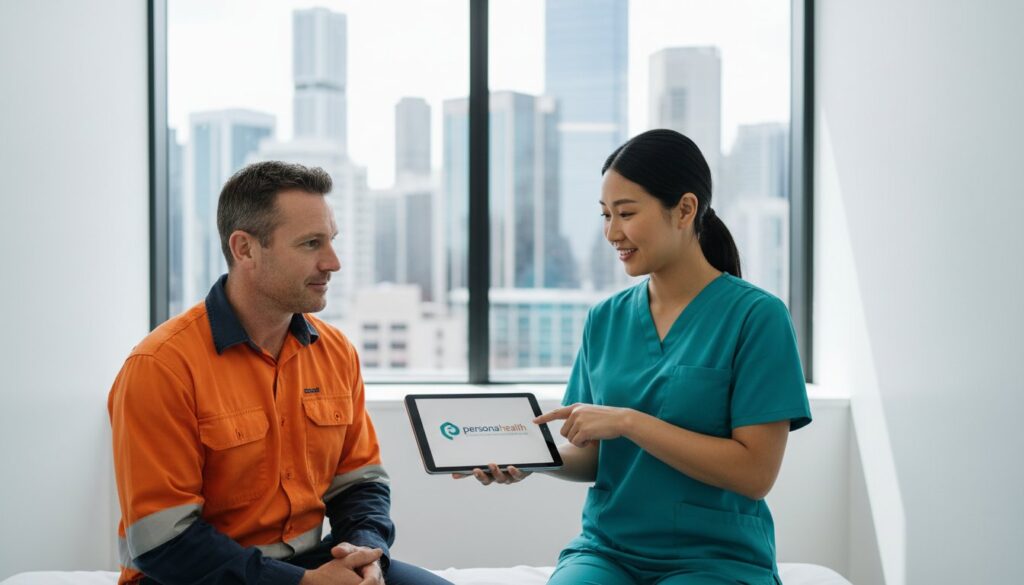
What if the most critical tool for your career isn’t in your toolbox, but is instead a clean bill of health from a specialist physician? For thousands of tradespeople across Australia, staying ahead of occupational risks means more than just wearing a mask; it requires regular, high-quality asbestos medicals to monitor long-term respiratory wellness.
You likely understand that the legacy of past exposure can create a quiet background noise of anxiety, especially when regulatory standards between SafeWork NSW and WorkSafe Victoria seem to evolve. We believe that your health shouldn’t be a source of stress or a simple box-ticking exercise for compliance. This 2026 guide promises to clarify exactly what you need for legal certification, how the latest lung function tests work, and why proactive monitoring is your strongest asset for a long, healthy career.
We will explore the specific health benefits of early detection and how our modern facilities, including our newly opened clinics in Cairnlea and Craigieburn, offer a supportive environment for your assessment. Whether you’re an employer seeking group compliance or an individual worker looking for a personalised health plan, you’ll find the expert guidance needed to navigate these requirements with confidence and peace of mind.
Key Takeaways
- Understand how professional asbestos medicals facilitate the early detection of respiratory conditions, ensuring your long-term health and safety on the job.
- Discover what to expect during your appointment at our modern clinics, where we prioritise your comfort through a supportive and stress-free health monitoring process.
- Navigate the complex legal requirements of SafeWork NSW and WorkSafe Victoria with ease to ensure you remain fully compliant as an interstate contractor.
- Learn how to prepare for your assessment at our newly opened Melbourne locations in Cairnlea and Craigieburn for a seamless and accurate clinical experience.
What are Asbestos Medicals and Why are They Vital in 2026?
Asbestos medicals are specialized health surveillance assessments designed to monitor the respiratory wellbeing of workers who may have encountered airborne fibres. Unlike a standard physical, these checks focus on the health risks of asbestos exposure, specifically looking for early indicators of asbestosis or pleural thickening. Detecting these changes early is vital for long-term health management and ensures you receive the support you need at the right time. We believe that every worker deserves a clear understanding of their health status, delivered with clinical precision and genuine care.
Why is 2026 such a pivotal year for these assessments? Asbestos related diseases often have latency periods spanning 20 to 50 years. This means workers exposed during the height of industrial use in the late 20th century are now entering a critical window for monitoring. SafeWork Australia provides the national framework for these assessments, ensuring every worker receives a consistent standard of care. This regulatory body sets the benchmark for hazardous substance monitoring; they make sure that your health remains the top priority in any high-risk environment.
To better understand how these health checks work, watch this helpful video:
The Difference Between Testing and Surveillance
It’s common to confuse the two, but they serve very different purposes. Asbestos testing refers to the analysis of physical materials or air quality in a building. Conversely, medical surveillance focuses on the person. We track your respiratory health over your entire career. Periodic monitoring is far more effective than a one-off check, as it allows clinicians to notice subtle changes in lung function over time. This longitudinal approach gives you a clearer picture of your health journey and empowers you to make informed decisions about your future.
Who is Legally Required to Undergo Monitoring?
Under Australian law, employers must provide and fund asbestos medicals if there is a “reasonable expectation” that a worker will be exposed to fibres. This includes demolition teams, licensed asbestos removalists, and maintenance trades. At Persona Health, we’ve expanded our reach to support these high-risk roles. Our new clinics in Cairnlea and Craigieburn now offer dedicated surveillance for Melbourne’s industrial corridor, alongside our established services for those seeking asbestos medicals in Sydney. Your employer is legally obligated to manage these costs, ensuring your path to safety is clear and accessible. We’re here to guide you through every step of this process with a focus on your unique needs.
The Health Monitoring Process: What to Expect During Your Appointment
Walking into a clinic for health monitoring can feel daunting, but the team at Persona Health designs every visit to be supportive and transparent. Whether you visit our new Melbourne locations in Cairnlea and Craigieburn or our established Sydney sites, you’ll find a professional environment that prioritises your comfort. The process begins with a detailed intake of your occupational and medical history. This step is vital because it allows our clinicians to understand your specific exposure levels and any previous health conditions that might influence your results. We handle all data with strict clinical confidentiality, ensuring that your personal health information is protected while meeting the necessary WorkSafe Victoria regulations for workplace safety.
Respiratory Function and Spirometry Tests
The core of most asbestos medicals is the spirometry test. This procedure measures how much air you can breathe out and how quickly you can exhaust it from your lungs. It remains the gold standard for detecting early, subtle changes in lung capacity that might not be visible on an X-ray. To get the most accurate results, avoid smoking or eating a heavy meal for at least two hours before your appointment. Our staff will guide you through the technique to ensure the data reflects your true respiratory health.
Chest X-Rays and Clinical Examinations
While a physical examination allows a doctor to listen to your lungs and check for immediate symptoms, a chest X-ray provides a deeper look at the lung tissue. We use the International Labour Organization (ILO) scale to interpret these images. The ILO scale is the global standard for classifying radiographs of pneumoconioses. An X-ray isn’t always required at every appointment; the frequency depends on your years of exposure and current health status. Our doctors determine the necessity of imaging based on the specific risks associated with your work history.
Personalised Health Consultations
Every individual reacts differently to environmental hazards. During your consultation, we discuss personal risk factors like smoking. Research shows that smoking and asbestos exposure have a synergistic effect, meaning they work together to significantly increase the risk of lung disease beyond what either would cause alone. We also provide practical education on the correct use of Personal Protective Equipment (PPE) to empower you on the job site. For businesses managing multiple employees, we can even coordinate on-site health surveillance to streamline the process for your entire team.
Our goal is to leave you feeling informed and in control of your wellbeing. If you’re due for a check-up, you can easily book your next medical assessment at one of our convenient locations to ensure you stay compliant and healthy.
Legal Requirements: SafeWork NSW and WorkSafe Victoria Regulations
Understanding the legal framework for asbestos medicals is a vital priority for any business involved in construction or demolition. It’s not just about ticking boxes; it’s about the long-term safety of your team. While SafeWork Australia sets the national standard, the specific application of these laws varies between New South Wales and Victoria. Persona Health acts as your expert guide, simplifying this complexity for interstate contractors by providing a unified health surveillance approach that satisfies both jurisdictions.
The standard frequency for these health checks is every two years. However, a physician might recommend more frequent reviews based on individual health markers or specific exposure incidents. It’s also vital to remember the 40-year rule. Under Australian law, employers must keep health records for four decades. This requirement accounts for the long latency period of asbestos-related conditions, which often take 20 to 30 years to manifest. We manage these records with clinical precision, giving you peace of mind that your documentation is secure and accessible for the long term.
Compliance in Sydney and NSW
In New South Wales, the WHS Regulation 2017 mandates health monitoring for workers engaged in licensed asbestos removal. You must notify SafeWork NSW at least five days before commencing any licensed work. A crucial requirement in this region is the involvement of an Appointed Medical Practitioner. This doctor must have the specific expertise to oversee respiratory health surveillance. We facilitate this process through our dedicated asbestos medicals in Sydney. Our team ensures all statutory reports are filed correctly, protecting your business from compliance risks while focusing on the individual needs of your workers.
Compliance in Melbourne and Victoria
WorkSafe Victoria operates under the OHS Regulations 2017, which distinguish clearly between licensed and unlicensed work. Even if your team performs unlicensed removal, you still have a duty of care to monitor health if exposure levels could exceed the exposure standard of 0.1 fibres per millilitre of air. We’ve expanded our reach to support the local workforce with new clinic locations in Cairnlea and Craigieburn. These sites provide accessible occupational health services tailored to Victorian industrial standards. Our clinicians understand the nuances of the Melbourne market, ensuring every assessment meets the rigorous criteria set by Victorian regulators while providing a supportive, empathetic environment for your employees.
- Notification: 5-day lead time required for SafeWork NSW.
- Exposure Standard: 0.1 fibres/ml threshold in Victoria.
- Retention: Mandatory 40-year storage for all health surveillance records.
- Frequency: Minimum of every 24 months for active workers.
Actionable Guidance: Preparing for Your Assessment and Reducing Risk
Your health assessment is a vital tool for long-term safety, not just a compliance hurdle. To ensure your asbestos medicals provide an accurate snapshot of your respiratory health, preparation begins before you enter the clinic. We recommend bringing any historical records, including previous chest X-rays or respiratory results. This allows our clinicians to compare your current lung function against past data, which is essential because asbestos-related changes often develop slowly over a 20 to 40-year period. Having this baseline helps us identify subtle shifts that might otherwise go unnoticed.
Worker Preparation Checklist
- Avoid smoking and heavy exercise: Refrain from these activities for at least 6 hours before your appointment. Both can temporarily affect lung capacity and lead to inaccurate spirometry readings.
- Dress for comfort: Wear loose clothing that doesn’t restrict your midsection or chest. You’ll need to take deep, forceful breaths during the assessment, so full chest expansion is necessary.
- Document your history: Be ready to detail your full work history. We need to know about older job sites where legacy asbestos might have been present, even if you weren’t directly handling the material.
Risk management is a continuous process that extends beyond the clinic. Between your scheduled asbestos medicals, you must follow the strict safety protocols set by SafeWork Australia. This involves the consistent use of P2 or P3 respirators and adhering to site-specific decontamination procedures. Many workers in the construction and demolition sectors face multiple hazards, which is why we often integrate monitoring for silica dust into our surveillance programs. Protecting your lungs from various particulates ensures a more robust health outcome over the course of your career.
Employer Responsibilities and Best Practices
For employers, the most effective way to manage workforce health is to integrate these specialized assessments into a broader pre-employment medical strategy. Establishing a health baseline before a worker ever steps onto a high-risk site is the best way to monitor long-term impact. We’ve expanded our Victorian operations to support this need, with new clinics in Cairnlea and Craigieburn specifically equipped to handle high-volume industrial screenings.
When managing large-scale projects, logistics can be a challenge. Utilizing on-site health surveillance minimizes project downtime and ensures every team member is accounted for. Clear communication is the key to a successful program. When workers understand that these medicals are a protective measure for their own future, participation rates and morale significantly improve. You aren’t just ticking a box; you’re fostering a culture where individual wellbeing is the priority.
Book your asbestos medical assessment today at our Sydney or Melbourne locations.

Expert Asbestos Health Surveillance at Persona Health
Persona Health leads the way in clinical occupational medicine by treating every worker as an individual. We understand that health surveillance can feel like a bureaucratic hurdle; however, we’ve redesigned the process to be a supportive experience. Our goal is to empower your workforce through knowledge and early detection. With 2026 industrial standards requiring more rigorous oversight, our expert clinical staff ensure your business remains compliant with SafeWork Australia regulations while prioritising the actual wellbeing of your team. Our modern facilities are equipped with the latest diagnostic technology to provide accurate, reliable results for asbestos medicals.
Choosing a partner for occupational health isn’t just about meeting a legal requirement. It’s about building a culture of safety that protects your most valuable asset: your people. We don’t just provide a pass or fail; we offer a roadmap for long-term health. Our clinical team includes professionals who have managed health surveillance for major infrastructure projects, bringing that expertise into the 2026 landscape to help you manage risk effectively. We focus on creating a calm, professional environment where workers feel heard and respected throughout their clinical journey.
Focus on Melbourne: Cairnlea and Craigieburn Clinics
We’ve recently expanded our footprint in Victoria with state-of-the-art locations in Cairnlea and Craigieburn. These clinics serve as strategic hubs for the booming construction industry in Melbourne’s North and West corridors. Local businesses in the Hume and Brimbank regions now have easier access to high-quality occupational health services without the need to travel into the city centre. Our presence in these areas ensures faster turnaround times for reports, which is vital for project timelines. By positioning ourselves where the work is happening, we help Victorian contractors maintain a safe and healthy workforce with minimal disruption to their daily operations. These new sites feature advanced lung function testing suites designed specifically for the high volume of the Victorian infrastructure sector.
Comprehensive Support Across Sydney
Our Sydney clinics continue to set the standard for excellence in occupational health. We’ve built a strong legacy of providing detailed crystalline silica medicals and asbestos monitoring for the city’s largest infrastructure projects. From the ongoing developments in Parramatta to high-rise refurbishments in the CBD, our team provides the clinical backbone for worker safety. Our approach is a seamless blend of clinical precision and patient-centred care that ensures every worker feels valued while meeting the highest medical standards. Our staff are well-versed in the specific risks of the Australian industrial sector, ensuring that every assessment for asbestos medicals is both thorough and reassuring.
Ready to secure your team’s health and your company’s compliance? Contact Persona Health today to book your next round of assessments:
- Sydney: Visit our Parramatta or CBD hubs for comprehensive support.
- Melbourne: Book into our new Cairnlea or Craigieburn clinics for local, efficient service.
- Nationwide: Ask about our mobile on-site health surveillance for large-scale operations.
Don’t leave your compliance to chance. Partner with Persona Health for a personalised, expert approach to occupational medicine that puts your workers first.
Prioritise Your Long Term Wellbeing and Compliance
Meeting the 2026 health monitoring standards set by SafeWork NSW and WorkSafe Victoria is a critical responsibility for every worker in the industry. Regular asbestos medicals are the most effective way to ensure early detection and maintain a clear record of your respiratory health. This proactive approach doesn’t just satisfy legal mandates; it provides the peace of mind that comes from knowing your health is being monitored by experts who understand the specific risks of your trade.
Persona Health offers a supportive, clinical environment where your privacy and comfort are our top priorities. Our Accredited Occupational Physicians now provide expert assessments at our dedicated new clinics in Cairnlea and Craigieburn, as well as our established Sydney locations. We focus on a patient-centred approach that moves away from impersonal, factory-style checkups, ensuring your specific health history is always respected. Taking this step today empowers you to focus on your career with the certainty that your health is in professional hands.
Book Your Asbestos Medical Assessment with Persona Health Today
You’re never just a number in our clinics. We look forward to partnering with you to secure a safer, healthier future in the workplace.
Frequently Asked Questions
Is an asbestos medical mandatory for all construction workers in Australia?
No, it isn’t mandatory for every worker, but it’s a legal requirement under the Model WHS Regulations for anyone performing licensed asbestos removal or asbestos-related work. SafeWork Australia mandates these health monitoring sessions to ensure your long-term safety if your role involves a risk of exposure. Your employer must provide these assessments at no cost to you whenever these specific risks are present on a job site.
How often do I need to get an asbestos medical check-up?
You must undergo an initial assessment before starting asbestos-related work and subsequent reviews at least once every 2 years. This biennial schedule allows our clinicians at Persona Health to track changes in your respiratory health over time. Regular monitoring is the most effective way to manage the risks associated with historical exposure and ensure your lungs remain healthy throughout your career.
What happens if the medical shows signs of asbestos exposure?
If your results indicate potential exposure, our doctors provide immediate guidance and notify the relevant state regulator, such as WorkSafe Victoria. Your employer is then legally required to review all workplace safety controls to prevent further risk to you and your colleagues. We focus on a holistic recovery plan, ensuring you receive the necessary specialist referrals and emotional support during this transition.
Can I choose my own doctor for an asbestos medical assessment?
Your employer typically selects the medical provider, but they have a legal obligation to consult with you regarding this choice. It’s vital that the assessment is conducted by a registered medical practitioner with specific experience in occupational health monitoring. At Persona Health, our specialists in Cairnlea and Craigieburn meet these rigorous Australian regulatory standards, providing the expert care you deserve.
How long does a typical asbestos medical appointment take at Persona Health?
A standard appointment at our Melbourne clinics usually takes between 45 and 60 minutes to complete. This timeframe includes a thorough physical examination, a respiratory questionnaire, and a lung function test. We value your time, so we’ve streamlined our clinical processes at our new Cairnlea and Craigieburn locations to ensure you’re in and out without feeling rushed or overlooked.
What is the difference between a standard lung test and an asbestos medical?
A standard lung test often only measures air capacity, whereas asbestos medicals involve a comprehensive occupational health review. These assessments include ILO-standard chest X-rays, detailed work history analysis, and clinical examinations specifically designed to detect asbestos-related diseases. This specialised approach ensures that we identify subtle changes that a general fitness test might miss, providing a deeper level of diagnostic certainty.
Will my employer see my full medical history after the assessment?
No, your employer doesn’t receive your entire medical record; they only receive a summary report regarding your fitness for work. This report focuses on whether you’re fit to carry out specific tasks and any necessary workplace adjustments. Your private clinical notes remain strictly confidential between you and your Persona Health physician, protecting your personal data while meeting safety obligations.
Are asbestos medicals required if I only work around non-friable asbestos?
Yes, health monitoring is required if there’s a risk of exposure, even when handling non-friable materials like fibro sheets. Australian law requires these assessments for workers performing licensed removal of more than 10 square metres of non-friable asbestos. Our team at the Craigieburn clinic can help determine if your specific work conditions necessitate a formal health monitoring plan to keep you compliant and safe.

Article by
Ian Nicholson
Ian is the Business Support Manager at Persona Health, where he plays a key role across IT, sales, marketing and business operations. With a broad skill set and a practical, solutions-focused approach, Ian helps drive the systems, communication and commercial strategy that support Persona Health’s continued growth across Australia.