
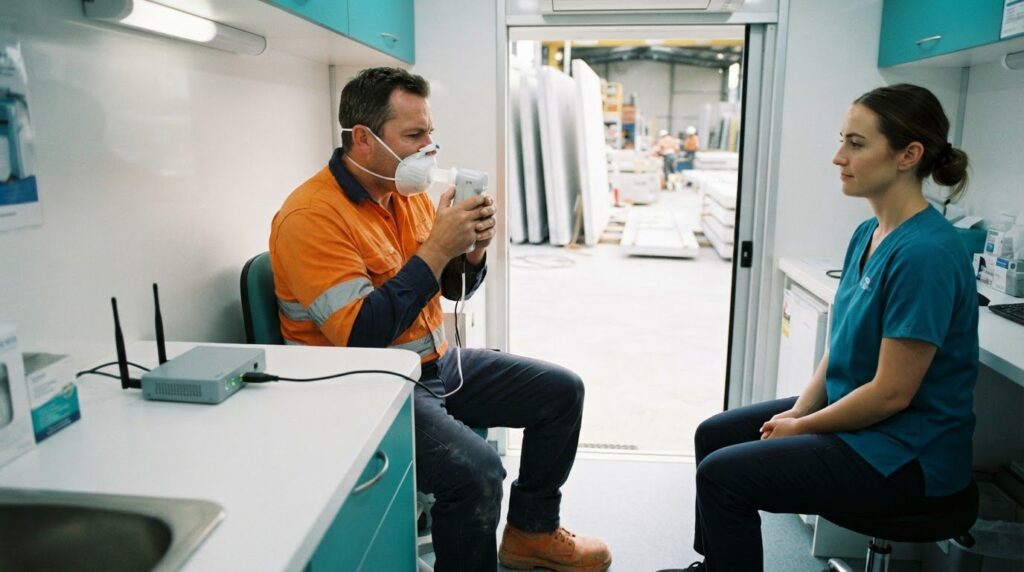
A monitoring device is useful only when its readings reach the people responsible for care. In Sydney, mobile health surveillance infrastructure can use workplace Wi-Fi and cellular networks to support monitoring on and away from site. These connections help mobile health applications send information to clinical teams for review.
It is understandable to focus on the device or app, but connectivity is also important. Signal strength, the monitoring environment and how information moves between devices and clinical systems can all affect how smoothly the process works.
This article explains how Wi-Fi and cellular connectivity support clinical monitoring and mobile health applications in Sydney. It covers what can affect reliable information flow, why connectivity needs vary between workplaces and mobile settings, and what to consider when planning the infrastructure behind a monitoring service. The aim is to clarify the technical side of practical, professionally managed health surveillance.
Key Takeaways
- Understand how Wi-Fi and cellular connections help monitoring devices share information with clinical teams, and why the work setting matters.
- Learn what technology may support a mobile health surveillance visit and how equipment needs relate to the assessments being delivered.
- See how privacy and record-handling considerations shape the use of health information in workplace surveillance.
- Know what information about your workforce, site and surveillance needs helps a provider plan a suitable visit.
- Explore when on-site health surveillance may suit Sydney workplaces, including sites where employees cannot easily attend a clinic.
Continuous monitoring services and mobile applications
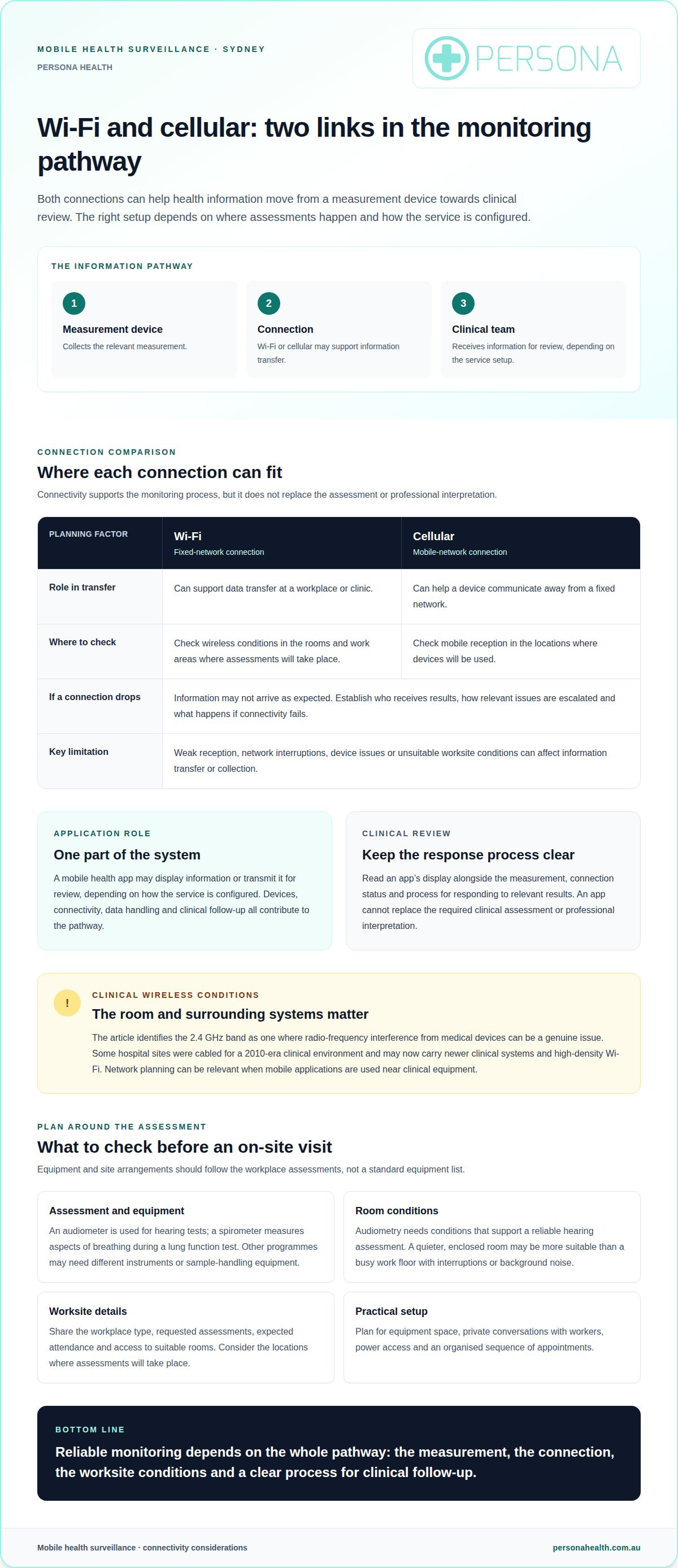
Continuous monitoring connects a measurement device, a communications network and a clinical team. A mobile health application may display information or transmit it for review, depending on how the service is configured. The app is only one part of the pathway: devices, connectivity, data handling and clinical follow-up all affect how useful the information is.
Wi-Fi can support data transfer at a workplace or clinic, while cellular connectivity can help a device communicate away from a fixed network. If a connection drops, information may not arrive as expected. Read an app’s display alongside the measurement, connection status and process for responding to relevant results.
Major Sydney infrastructure projects illustrate how monitoring systems depend on coordinated equipment, though they are not clinical health services. The Sydney Harbour Bridge monitoring system continuously monitors the structural health of 800 steel and concrete supports under the roadway. The Warringah Freeway Upgrade monitoring service in North Sydney is scheduled for 2024 to 2026, with 16 in-place inclinometers, 16 dataloggers and 1 gateway. Its initially planned inclinometers had an average depth of 10 metres. These examples concern civil structures, not people’s health, but show why sensors and communication links must work together.
Clinical environments also need attention to wireless conditions. The 2.4 GHz band is identified as one where radio-frequency interference from medical devices can be a genuine issue. Some hospital sites were cabled for a 2010-era clinical environment and may now carry newer clinical systems and high-density Wi-Fi. That combination can make network planning relevant when mobile applications are used near clinical equipment.
Compared with clinic-based screening in Sydney, mobile surveillance can bring assessments to the workplace and reduce employee travel. A clinic provides a dedicated clinical setting. The appropriate option depends on the assessment, equipment and worksite arrangements.
There are limitations. Weak mobile reception, network interruptions, device issues or unsuitable worksite conditions can affect how information is transmitted or collected. An app cannot replace the required clinical assessment or professional interpretation of a result.
For employers, the practical question is how the service manages information from collection through review. A clear process identifies who receives results, how issues are escalated and what happens if connectivity fails. On-site health surveillance can be arranged around the workplace setting and assessment requirements, with details available on on-site health surveillance.
What equipment and technology do mobile health surveillance units use?
A mobile health surveillance service is planned around the workplace assessments, rather than a standard equipment list. Hearing and lung function assessments, for example, require different equipment. The provider matches instruments, work areas and information systems to the clinical task and site conditions.
Measurement equipment is central to the assessment. An audiometer is used for hearing tests, while a spirometer measures aspects of breathing during a lung function test. Other surveillance programmes may need different clinical instruments or sample-handling equipment. The purpose of each test determines what is brought to the site and how results are recorded.
Digital tools can support the process but do not replace clinical equipment. A computer or tablet may be used to enter information, record results and prepare reports. Where an application or connected system is used, the information pathway should be clear: staff collect and accurately record the relevant result, then route it for appropriate review.
Connectivity needs depend on that pathway. Wi-Fi may be available inside a workplace, while cellular service can help where a fixed network is inaccessible. Neither connection works equally well in every room or work area. Basements, metal-clad structures and remote sections of large sites can affect reception, so plan for the locations where assessments will take place.
Equipment also needs a suitable environment. Audiometry, for example, requires conditions that support a reliable hearing assessment. A busy work floor may bring interruptions or background noise, making a quieter enclosed room more suitable. The layout should provide space for equipment, private conversations with workers and an organised assessment sequence.
Before a visit, establish which equipment the assessment plan requires and what the site can accommodate. Share the workplace type, requested assessments, expected attendance and access to suitable rooms. This helps plan transport, setup, power access and the day’s appointments.
For on-site health surveillance, the technology serves a practical purpose: collecting relevant information consistently and supporting clear follow-up. It does not make every assessment suitable for every setting. If you’re planning a workplace visit, you can discuss the site and assessment requirements as part of organising the service.
What NSW and Australian rules govern mobile health surveillance, medical records and privacy?
Mobile health surveillance involves health information, so employers should plan how it is collected, used and shared. In Australia, the Privacy Act 1988 and Australian Privacy Principles provide a national privacy framework. NSW workplace health and safety legislation is also relevant to managing work-related risks. The practical details depend on the purpose of the assessment and the information involved.
Start by defining the purpose of each assessment. A workplace hearing assessment, for example, may produce clinical results and a separate summary for an employer. These records serve different purposes. Specify what information is collected, who needs it and how results will be communicated. Clear boundaries help keep unrelated personal details out of workplace reporting.
Agree on access before using a mobile application or digital record system. The clinician needs information relevant to the assessment, while an employer may need a work-related outcome or recommendation. Set role-based access so people see only what they need for their tasks. A supervisor arranging appointments, for example, may need attendance details, not an employee’s clinical notes.
Digital transfer needs a defined pathway. Map how a result moves from the assessment device to the clinical record and then to any authorised recipient, including transfers over Wi-Fi or cellular networks. If a connection drops during a visit, staff need a clear process to record results securely and transfer them later, without leaving records on an unattended device.
Understand retention and correction processes before creating records. Decide which system holds the clinical record, who maintains it and how to report an error. A mobile spreadsheet or shared inbox can cause confusion if it becomes an unofficial record store. Documenting the approved system and access roles gives the employer and provider a consistent reference.
For a Sydney worksite, privacy planning should account for the physical setting. A consultation in an open lunchroom could expose a conversation to colleagues. A private room, controlled check-in and discreet communication can reduce unnecessary disclosure. Take the same care when workers receive appointment details or results through shared phones or workplace email accounts.
Before the visit, the employer and provider should clarify responsibilities for collection, clinical review, reporting, storage and access requests. Align the plan with the assessment purpose and relevant privacy and workplace frameworks. A silica health assessment and a general employment screen, for example, may have different information and reporting needs. A defined process supports careful handling and keeps clinical records distinct from routine workforce administration.
How to organise mobile health surveillance in Sydney?
Start with the reason for surveillance and the workforce involved. At a Sydney construction site, for example, identify workers whose roles involve crystalline silica exposure. A transport workplace may have a different assessment purpose. A clear brief helps the provider plan the clinical service, equipment and appointments around the work.
Share the practical details needed to plan the visit: the worksite address, requested assessments, expected attendance and access arrangements. A site with controlled entry, for example, may require visitor names before the clinical team arrives. Shift patterns can also help determine appointment timing.
Choose assessments based on the workplace health surveillance purpose, not convenience alone. Audiometry and spirometry require different equipment and room conditions. The provider can match each assessment to the relevant employees and identify whether the visit needs a private room, a quieter area or other site arrangements.
Next, agree on visit logistics. Confirm where the clinical team can unload equipment, how workers will reach the assessment area and who will coordinate attendance. At a large Sydney distribution site, a contact person can direct staff from separate work zones without disrupting operations. Include any site-specific entry or induction process in the plan.
Employee communication is another part of planning. Explain why assessments are taking place, what workers should expect and how appointments will be organised. Clear, respectful communication can reduce uncertainty, especially when employees have questions about health information. The provider and employer should also agree how individual results and workplace-level reporting will be handled.
Before the visit, confirm the assessment list, attendance arrangements and room setup with the provider. Pass on changes to a worker’s role or assessment needs before finalising the schedule. Adding a different assessment late may affect equipment and appointment order. A designated contact between the worksite and clinical team helps keep updates organised.
After the assessments, reporting should follow the agreed purpose. Clarify who receives clinical results, what information goes to the employer and how follow-up is communicated. A manager may need a work-related outcome, for example, while individual clinical details require appropriate handling. Agreeing on the pathway before the visit makes next steps clearer for everyone.
Mobile health surveillance in Sydney works best as a coordinated workplace service, not simply a date in the diary. A concise brief covering the workforce, assessment purpose, site access and reporting needs gives the provider a practical basis for planning. These details help align the clinical visit with site conditions and the needs of the people being assessed.
Which Sydney areas and workplaces can mobile health surveillance providers service
Mobile health surveillance can be arranged for Sydney workplaces, with the visit planned around site and assessment needs. Persona Health’s Sydney clinic locations include Parramatta, Rosebery, Gregory Hills and Dee Why. In Melbourne, clinic locations include Cairnlea and Craigieburn. Clinic appointments can be an alternative when a workplace visit is not suitable.
The workplace type helps shape arrangements. Construction projects, transport depots, warehouses and offices each have different access needs and work patterns. A depot may require appointments to fit around vehicle movements, while an office may have a private room available. The assessment purpose, site layout and workforce schedule guide the plan.
Access matters as much as the suburb. The clinical team needs clear directions, information about entry procedures and a suitable assessment space. A site contact can coordinate arrival and guide workers to the assessment area. This is especially useful at large industrial sites and locations with security-controlled entry.
Workforce distribution also affects visit planning. Employees may be spread across buildings, shifts or locations instead of gathering in one room. Identify the teams included and their work patterns so the provider can plan appointment flow. A warehouse team and an administration team, for instance, may need different appointment windows.
Some employers have workers spread beyond one Sydney location. Persona Health provides Australia-wide mobile workplace services and has a network of 100 affiliate clinics nationwide. The mobile service can suit a workplace needing on-site arrangements, while affiliate clinics provide another option for appointments. The best approach depends on the assessment, workforce location and site logistics.
For employers in south-west Sydney, Gregory Hills is an option for clinic appointments. Rosebery is another Sydney clinic location for employees nearer the inner south. The Gregory Hills occupational health clinic may suit cases where a workplace visit is impractical for the assessment or employee.
Before arranging a visit, provide the worksite address, access instructions, assessment requirements and workforce schedule. A clear site brief helps plan travel, equipment movement and appointment flow. It also helps determine whether workplace assessments or clinic appointments are more practical for the people being assessed.
Mobile health surveillance is relevant to Sydney employers who need assessments coordinated around their workplace and workforce. Whether the site is a depot, construction project, warehouse or office, location and working arrangements inform the plan. Similar considerations apply when coordinating clinic appointments in Parramatta, Rosebery, Dee Why, Gregory Hills, Cairnlea or Craigieburn.
Persona Health: On-Site Health Surveillance
Persona Health provides on-site Health Surveillance for employers who need workplace assessments organised around their workforce and site. Its employer-focused approach, responsive customer service, fast turnaround and digital reporting support a practical process from planning through to reporting.
This service can suit workplaces where arranging employee travel to a clinic is difficult, including programmes for crystalline silica exposure. Planning begins with the assessment purpose, employee roles and site arrangements, so the visit can be shaped around workplace needs.
Contact Persona Health to discuss on-site health surveillance.
Plan a monitoring approach that fits your workplace
Turn the technology discussion into a clear service brief. Identify the work groups, assessment purpose, site arrangements and preferred reporting pathway. This gives Persona Health a practical basis for planning mobile health surveillance infrastructure in Sydney around your workplace, rather than treating connectivity as a stand-alone solution.
Persona Health’s services include Pre-Employment Medicals, Crystalline Silica Medicals and Workplace Injury Management. For workplace injury triage, InjuryQR is a free AI-powered service for Australian businesses, providing free posters, stickers, keyrings and fridge magnets. Workers scan a QR code without downloading an app, describe an injury by voice, then answer AI follow-up questions. Outcomes can include self-care advice, telehealth appointments typically within 3-4 hours, direction to an Emergency Department or instructions to call 000. Certificates of Capacity can be issued immediately where appropriate. This process supports clearer reporting and can help reduce Lost Time Injuries.
With a clear brief, the next conversation can focus on your workforce and site needs.
A considered plan is a practical starting point for workplace health surveillance that suits your people and operations.
Frequently Asked Questions
What does mobile health surveillance infrastructure mean in Sydney?
It means the people, clinical equipment and digital systems that support workplace health assessments away from a fixed clinic. In Sydney, a provider can attend a business site, conduct agreed assessments and manage resulting records through an appropriate clinical process. An employer with workers across several locations, for example, can plan a coordinated service around each site’s workforce and assessment needs.
Which mobile health surveillance services and providers operate in Sydney?
Persona Health provides on-site Health Surveillance for Sydney employers. Depending on the workplace programme, assessments can include audiometry, spirometry, drug and alcohol testing, heavy-metal screening, skin checks, mobile ILO chest X-rays, and vaccinations or serologies. The appropriate mix depends on the surveillance purpose and roles being assessed. Describe your workforce and site requirements to plan a service suited to your operations.

Article by
Ian Nicholson
Ian is the Business Support Manager at Persona Health, where he plays a key role across IT, sales, marketing and business operations. With a broad skill set and a practical, solutions-focused approach, Ian helps drive the systems, communication and commercial strategy that support Persona Health’s continued growth across Australia.