
Is your business prepared for the December 2026 shift from exposure standards to strictly enforceable Workplace Exposure Limits? Keeping up with shifting SafeWork NSW regulations while managing a busy site can feel like an uphill battle. You understand that protecting your team from occupational lung disease is vital, yet the fear of long term liability and the potential for testing downtime often creates unnecessary stress. Implementing professional spirometry testing for workplaces sydney shouldn’t be a source of frustration; it should be a seamless part of your commitment to staff wellbeing.
At Persona Health, we believe that clinical excellence should go hand in hand with employer convenience. This 2026 guide provides everything you need to know about protecting your workers and ensuring full compliance through professional lung function testing and smart respiratory health surveillance. We will cover the latest TSANZ standards, the advantages of mobile on-site assessments across Sydney, and how digital innovations like InjuryQR can provide immediate triage support. By the end of this article, you’ll have a clear roadmap for maintaining a healthy workforce and meeting your WHS obligations with confidence.
Key Takeaways
- Understand the updated 2026 TSANZ standards to ensure your business meets the latest SafeWork NSW respiratory health monitoring requirements.
- Discover how professional spirometry testing for workplaces sydney helps establish essential baseline data for workers in high-risk sectors like construction and manufacturing.
- Learn how to prepare your team for lung function assessments to ensure accurate, repeatable results and minimise operational downtime.
- Compare the benefits of clinic-based testing in Parramatta or Rosebery with mobile on-site services for larger Sydney workforces.
- Explore how integrating InjuryQR can streamline your incident reporting and provide immediate digital triage for workplace injuries.
Understanding Spirometry Testing for Sydney Workplaces
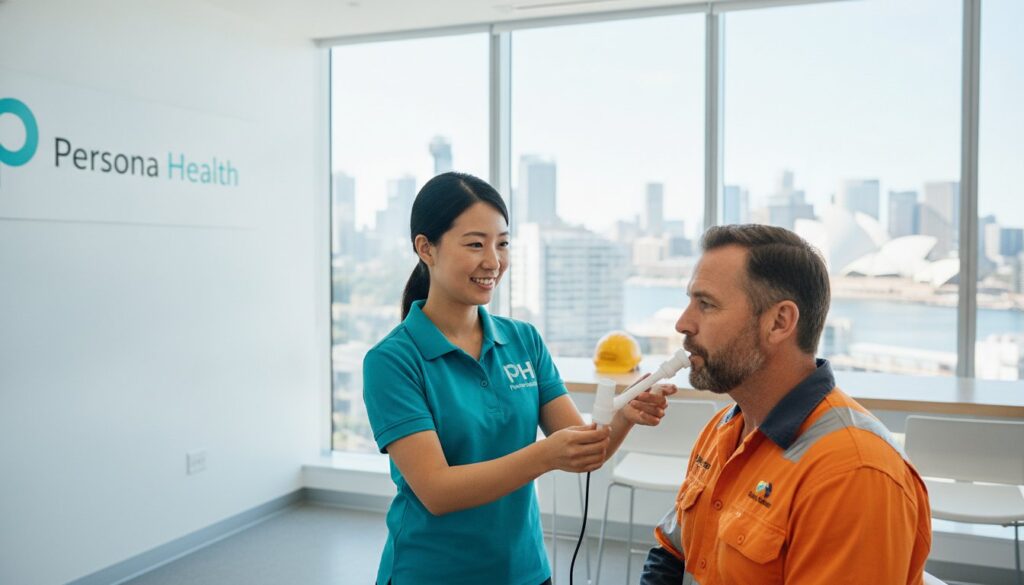
Spirometry is the gold standard for assessing respiratory health in industrial and commercial settings. It is a simple, non-invasive clinical test that measures the volume and speed of air an individual can inhale and exhale. For employers looking to understand the technical foundations, What is Spirometry? defines it as the primary tool for measuring lung capacity and identifying airflow obstructions. By implementing professional spirometry testing for workplaces sydney, businesses can identify early signs of occupational asthma, Chronic Obstructive Pulmonary Disease (COPD), and other lung conditions before they become debilitating.
Establishing a respiratory baseline for every new worker in high-risk roles is a fundamental part of a modern WHS strategy. This initial data allows medical professionals to monitor a worker’s lung function over time, ensuring that any decline is detected early. This proactive approach is essential for meeting SafeWork NSW health monitoring obligations and protecting your team from the long term effects of hazardous dust and chemical exposure.
To better understand how these tests are performed and what the results indicate, watch this helpful video:
The Difference Between Pre-Employment and Periodic Testing
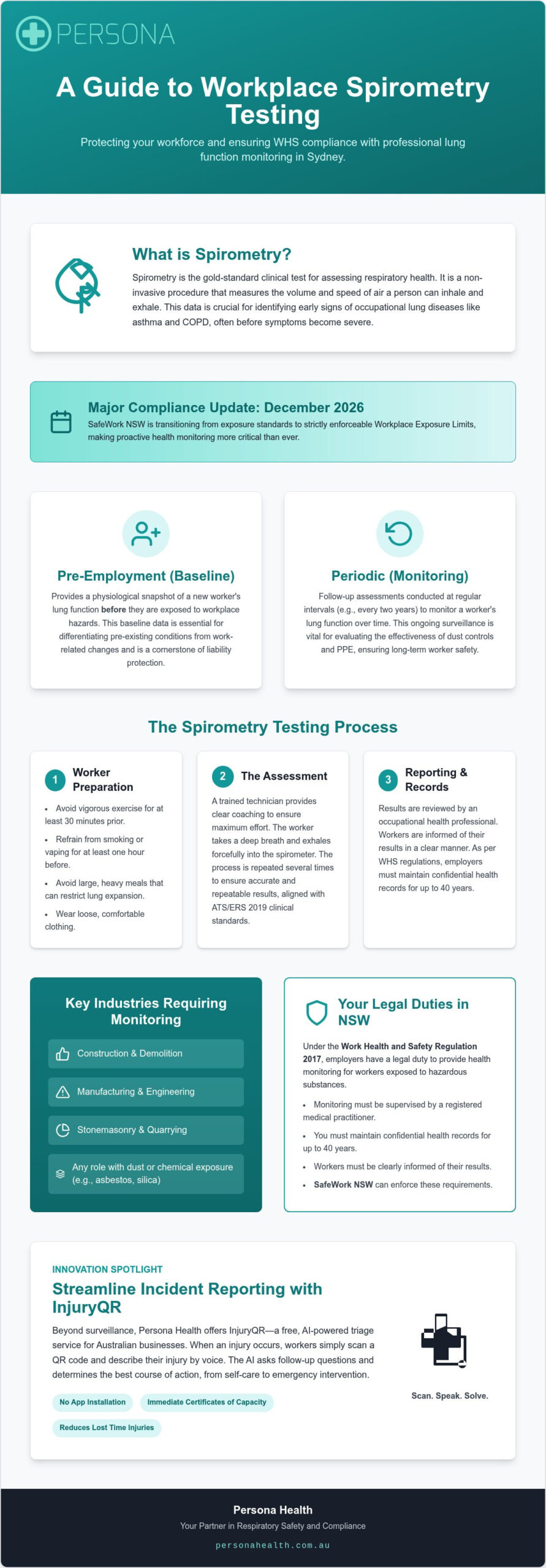
A baseline test conducted during a pre-employment medical provides a physiological snapshot of a worker’s health before they enter a hazardous environment. This is critical for future liability protection, as it clearly differentiates between pre-existing conditions and any issues that might arise during their tenure. Periodic spirometry testing for workplaces sydney should then follow at regular intervals, typically every two years, or more frequently if the exposure risk is high. These follow up assessments are vital for evaluating the effectiveness of workplace dust controls and ensuring that personal protective equipment is providing the necessary level of safety.
NSW Legislation and Health Monitoring Requirements
The Work Health and Safety Regulation 2017 sets out clear requirements for health surveillance in New South Wales. Employers have a legal duty to provide health monitoring for workers if they are carrying out ongoing work using, handling, or generating hazardous substances, such as crystalline silica or asbestos. SafeWork NSW specifies that this monitoring must be conducted under the supervision of a registered medical practitioner with experience in occupational health. Your responsibilities as an employer include maintaining confidential health records for up to 40 years and ensuring workers are informed of their results in a clear, supportive manner. This structured approach ensures compliance while fostering a culture of safety and care within your organisation.
The Spirometry Testing Process: What to Expect
Organising spirometry testing for workplaces sydney involves more than just booking an appointment. It requires a clear understanding of the clinical steps involved to ensure the data collected is both accurate and legally defensible. The quality of a lung function test depends heavily on the interaction between the worker and the technician. Because the test is effort-dependent, our team focuses on providing clear, empathetic coaching to help workers achieve their best possible results while feeling at ease throughout the process.
Accuracy starts well before the worker enters the testing room. To ensure results aren’t skewed by external factors, workers should follow specific pre-test instructions. We recommend avoiding vigorous exercise for at least 30 minutes prior and refraining from smoking or vaping for at least one hour before the assessment. Large, heavy meals should also be avoided as they can restrict full lung expansion. Our technicians follow strict protocols aligned with the ATS/ERS 2019 clinical standards, which represent the global benchmark for high-quality lung function testing. This level of precision is maintained through rigorous NIOSH-approved spirometry training, ensuring every assessment meets the highest professional standards.
A Step-by-Step Guide to the Assessment
The process begins with a brief health questionnaire to identify any current respiratory symptoms or recent illnesses that might affect the test. Once the worker is ready, they’ll be asked to take the deepest breath possible and then blast the air out into the spirometer as hard and fast as they can. This “forced expiratory manoeuvre” continues until the lungs are completely empty. Because consistency is vital, the technician will typically ask the worker to repeat this process at least three times. This ensures the results are repeatable and provides a reliable data set for the occupational health physician to review.
Interpreting the Results: FVC, FEV1, and Ratios
Clinicians look at several key metrics to determine lung health. Forced Vital Capacity (FVC) measures the total volume of air a person can exhale, giving us a clear picture of overall lung capacity. Forced Expiratory Volume in 1 second (FEV1) measures the volume of air exhaled during the first second of that blast, which is a critical indicator of whether the airways are obstructed. By calculating the ratio between these two figures, we can identify specific patterns associated with conditions like asthma or chronic bronchitis. These results are always compared against “predicted values” tailored to the individual’s age, height, and ethnicity to ensure a fair and accurate assessment of their respiratory health. If you are managing a large team, our on-site health surveillance services can streamline this entire process, bringing this clinical expertise directly to your Sydney worksite.
Why Sydney Industries Require Regular Lung Function Monitoring
Sydney’s industrial landscape is currently defined by massive infrastructure growth and the constant redevelopment of older urban areas. From the extensive tunnel networks of WestConnex to the high density residential projects in the CBD, workers are frequently exposed to airborne hazards that can have long term health implications. Implementing regular spirometry testing for workplaces sydney is a proactive way to monitor these risks and ensure your team remains fit for duty. Following the Australian standards for workplace spirometry ensures that your health surveillance program provides the accurate data needed to make informed safety decisions.
Beyond construction, Sydney’s manufacturing and transport sectors face their own unique challenges. Workers in joinery or furniture making are often exposed to wood dust, while those in transport and logistics may spend significant time in tunnels or high traffic corridors where urban pollution and diesel particulates are concentrated. With the transition to new Workplace Exposure Limits (WELs) on 1 December 2026, including stricter limits for wood dust and flour dust, regular lung function monitoring has become an essential tool for verifying that your workplace controls are actually working.
Crystalline Silica: The Modern Workplace Challenge
SafeWork NSW has placed a significant focus on the risks associated with silica dust, making crystalline silica medicals a top priority for employers in stone masonry, construction, and mining. When workers cut, drill, or grind materials containing silica, they release microscopic particles that can travel deep into the lungs. This exposure can lead to silicosis, a progressive and irreversible scarring of the lung tissue. Because early stage silicosis often presents with few symptoms, regular spirometry is vital for detecting subtle changes in airflow that might otherwise go unnoticed until significant damage has occurred.
Asbestos and Other Hazardous Fibres
Despite being banned for decades, asbestos remains a significant risk during the demolition and renovation of Sydney’s older commercial and residential buildings. Employers involved in remediation or site preparation must provide asbestos medicals to ensure their workers are not suffering adverse effects from accidental exposure. While chest X-rays are often the primary tool for detecting physical changes in the lung tissue, spirometry serves as a critical functional complement. It allows clinicians to measure the actual impact on breathing capacity, providing a more holistic view of a worker’s respiratory health. This dual approach is particularly important in Sydney’s older industrial corridors, where legacy contaminants are a constant factor in workplace safety management.
Implementing Spirometry in Your Workplace: Clinic vs On-site
Choosing the right delivery model for spirometry testing for workplaces sydney depends on your team’s size and operational rhythm. For small businesses or those hiring occasionally, clinic based assessments are often the most practical choice. Conversely, large scale operations or those managing tight project deadlines usually benefit from the logistical ease of having a clinical team come to them. At Persona Health, we provide both options to ensure that your respiratory health monitoring is as non-disruptive as possible.
The transition from testing to reporting is where many employers feel the most pressure. We have designed our systems to provide fast turnaround times, ensuring you receive clear, actionable data without unnecessary delays. Our medical team focuses on providing a seamless experience, whether your workers are visiting us or we are visiting you, so you can focus on your core business operations while we handle the clinical complexities.
Sydney Clinic Locations and Accessibility
Persona Health operates strategically placed clinics in Parramatta, Rosebery, Gregory Hills, and Dee Why. This geographic spread ensures that whether your workers are based in the Inner West, the North Shore, or the growing South West corridor, professional testing is always within reach. These facilities are ideal for pre-employment medicals, allowing you to clear new starters quickly and safely. For businesses with distributed workforces, our 100-clinic affiliate network extends this reach across Greater Sydney and regional NSW, ensuring high clinical standards regardless of where your team is located.
Mobile On-site Testing: Maximising Efficiency
For larger teams or 24/7 manufacturing environments, on-site health surveillance is the most efficient choice. We can set up a mobile lung function station directly at your Sydney construction site or warehouse, significantly reducing the downtime associated with workers travelling to and from a clinic. By scheduling testing in 15-minute slots, we keep your site active and your production lines moving. Despite the mobile setting, we maintain strict privacy and clinical standards, ensuring every worker feels supported and every data point is accurate. This approach is particularly effective for managing the regular monitoring required for workers exposed to silica or wood dust.
If you are ready to organise a compliant testing program for your team, speak with the Persona Health team today to discuss the best location for your next round of assessments.
Persona Health: Your Partner in Respiratory Safety and Compliance
Persona Health isn’t just a service provider; we’re a dedicated partner in your organisation’s safety journey. We understand that spirometry testing for workplaces sydney is often seen as a regulatory hurdle. However, we take a different approach. By viewing respiratory health through an employer focused lens, we provide fast turnaround times and clear, clinical communication that helps you make informed decisions. Our modern digital reporting systems mean you’re never left waiting for results, allowing you to maintain operational momentum while ensuring your team is protected.
Integrating these assessments into a broader injury management framework is what sets us apart. We don’t treat lung function as an isolated metric. Instead, we use it as a proactive tool to identify risks before they lead to Lost Time Injuries (LTIs). Our experienced medical team, operating out of our clinics in Parramatta, Rosebery, Gregory Hills, and Dee Why, ensures that every worker receives individualised attention. This holistic view ensures that your health surveillance strategy actually contributes to a more resilient and productive workforce.
Introducing InjuryQR: Immediate Triage for Respiratory Incidents
In the event of an accidental exposure to dust or fumes, every second counts. This is why we have integrated InjuryQR into our service offering. This free, AI powered triage tool allows workers to scan a QR code on site and describe the incident using their voice. There’s no app to download. The system provides immediate, AI guided next steps, such as self care, telehealth, or emergency direction. Key benefits include the immediate issuance of Certificates of Capacity where appropriate, reduced LTIs, and significantly improved incident reporting. You can even order free physical InjuryQR assets like posters and magnets to keep your Sydney worksite prepared and your workers informed.
Building a Long-term Health Surveillance Strategy
Compliance with SafeWork NSW isn’t a one time event. It’s an ongoing commitment. We help you move beyond one off tests toward a structured annual monitoring program that tracks trends in your workforce data. This longitudinal approach allows us to spot subtle changes in respiratory health across your entire team, giving you the insights needed to refine your dust and fume controls. As regulations evolve toward 2026 and beyond, we ensure your business remains at the forefront of Australian occupational health practice, protecting both your workers’ lungs and your organisation’s reputation.
A strong reputation is built on both safety and presentation; for businesses hosting corporate events or managing hospitality spaces, Personalised Glasses Australia provides the custom branded drinkware needed to leave a lasting impression.
Securing Your Workplace Health for 2026 and Beyond
Transitioning to the new Workplace Exposure Limits in December 2026 requires more than just a box ticking exercise. It demands a proactive strategy that combines accurate baseline data with regular, high quality monitoring. By prioritising professional spirometry testing for workplaces sydney, you’re not only meeting your SafeWork NSW obligations but also building a culture of genuine care and long term liability protection. Whether you choose the convenience of our mobile on-site services or visit one of our modern clinics, the goal remains the same: a safe, compliant, and healthy workplace.
Persona Health is here to simplify this clinical journey for you. With our specialised medical team, Sydney wide clinic locations, and fast turnaround for clinical reports, we ensure your health surveillance is both thorough and efficient. All our clients also gain access to free InjuryQR triage assets, providing your team with immediate, AI guided support the moment an incident occurs. Protecting your workers’ respiratory health is an investment in the future of your business.
Ready to protect your workers and streamline your compliance? Contact Persona Health to book your Sydney workplace spirometry testing today and take the first step toward a healthier, more resilient workforce.
Frequently Asked Questions
How long does a workplace spirometry test take for each worker?
A standard spirometry test typically takes between 15 and 20 minutes per individual. This timeframe allows our technicians to explain the procedure, gather a brief respiratory history, and perform the necessary number of repeatable breaths to ensure data quality. Providing this dedicated time ensures that workers don’t feel rushed, which is essential for obtaining the effort-dependent results required for clinical accuracy.
Is spirometry testing mandatory for all workers in NSW?
Spirometry is not mandatory for every employee, but it is a legal requirement for those exposed to specific hazardous airborne substances as defined by SafeWork NSW. Under the Work Health and Safety Regulation 2017, if your workers are handling materials like crystalline silica, asbestos, or certain chemicals, you must provide health monitoring. This includes professional spirometry testing for workplaces sydney to detect early signs of lung impairment.
What is the difference between a lung function test and a spirometry test?
Spirometry is actually a specific type of lung function test, often considered the gold standard for workplace screening. While lung function testing is a broad category that can include complex hospital based procedures like gas diffusion studies, spirometry is the most practical and common method used in occupational health. It focuses specifically on measuring how much air a worker can breathe out and how quickly they can do it.
How often should my employees undergo spirometry testing?
SafeWork NSW generally requires a baseline test within three months of a worker starting in a high risk role, followed by periodic testing at least every two years. However, the frequency can increase based on the specific level of exposure or if a previous result showed a decline in function. Regular monitoring is the only way to identify subtle changes in lung health before they progress into chronic conditions.
What happens if a worker receives an abnormal spirometry result?
If an abnormality is detected, the worker is typically referred to their GP or a respiratory specialist for further clinical investigation. As an employer, you’ll receive a report stating whether the worker is fit for their current duties, with or without restrictions. It’s vital to review your workplace dust controls immediately if results suggest that current safety measures aren’t providing adequate protection.
Can spirometry testing be done on-site at a construction project in Sydney?
Yes, we frequently conduct spirometry testing for workplaces sydney directly on-site using our mobile health surveillance units. This is a highly efficient option for construction projects or large manufacturing facilities where sending dozens of workers to a clinic would cause significant downtime. We only require a quiet, private room with a power point to maintain clinical standards while your team stays on the job.
What are the legal requirements for recording spirometry results in NSW?
Employers are legally required to keep health monitoring records, including spirometry results, for 40 years. These records must be kept confidential and stored securely to comply with the Privacy Act 1988. You must also ensure that workers are provided with a copy of their results and that SafeWork NSW is notified if a worker is found to have a work related illness.
Do workers need to do anything special to prepare for a spirometry test?
Workers should avoid vigorous exercise for 30 minutes and refrain from smoking or vaping for at least one hour before their appointment. It’s also best to avoid eating a very large meal immediately before the test, as a full stomach can make it difficult to take the deep breaths required. Our team provides clear pre-test instructions to ensure every worker is prepared to give their best effort on the day.

Article by
Ian Nicholson
Ian is the Business Support Manager at Persona Health, where he plays a key role across IT, sales, marketing and business operations. With a broad skill set and a practical, solutions-focused approach, Ian helps drive the systems, communication and commercial strategy that support Persona Health’s continued growth across Australia.