
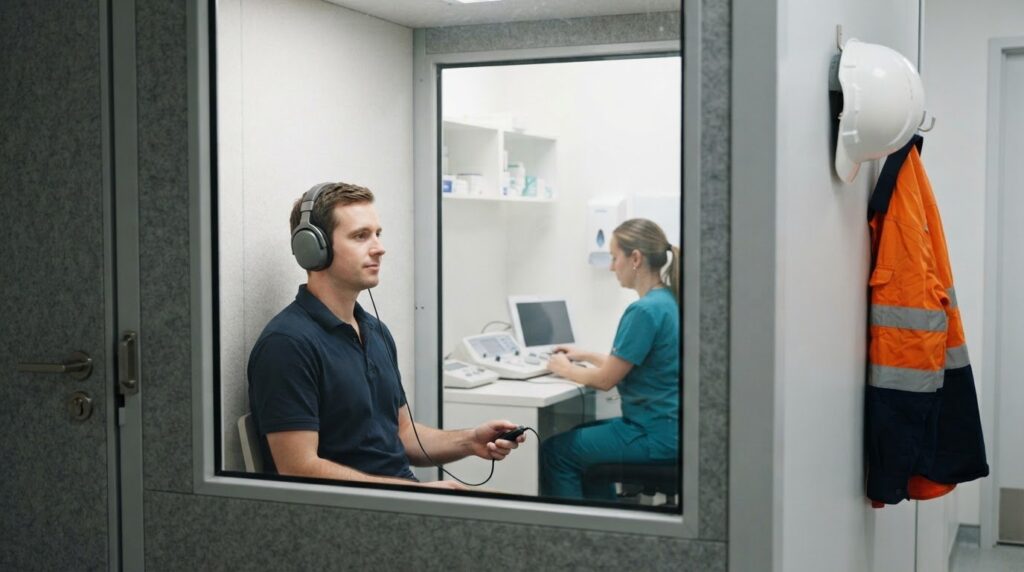
A TBM medical result does not have one fixed turnaround time. For medicals for TBM operators in Sydney, timing depends on the checks required, whether further investigations are needed and how long the clinician takes to review the results. Your employer’s role requirements also determine what the assessment needs to cover.
It’s understandable to want a clear timeframe when your next shift or job placement depends on the outcome. The assessment itself is only part of the process: additional tests and review of their findings can affect when the result is ready.
This guide explains what a TBM operator medical may assess, what to bring and how to prepare, and what can affect result timing. It also outlines how periodic reviews work and what to expect if an assessment identifies a need for follow-up, helping you understand the next steps.
Key Takeaways
- The assessment considers your medical history and health functions in relation to the demands of TBM work.
- Vision, hearing and cardiovascular checks help assess factors relevant to working safely in a tunnelling environment.
- Having your identification, relevant medical information and employer requirements ready can help the appointment run smoothly.
- Health conditions are considered in context, including how they may affect your ability to perform the role safely.
- Result timing depends on the checks required and whether any follow-up is needed, so the steps involved matter as much as the appointment itself.
Doctor review of medical history and health functions
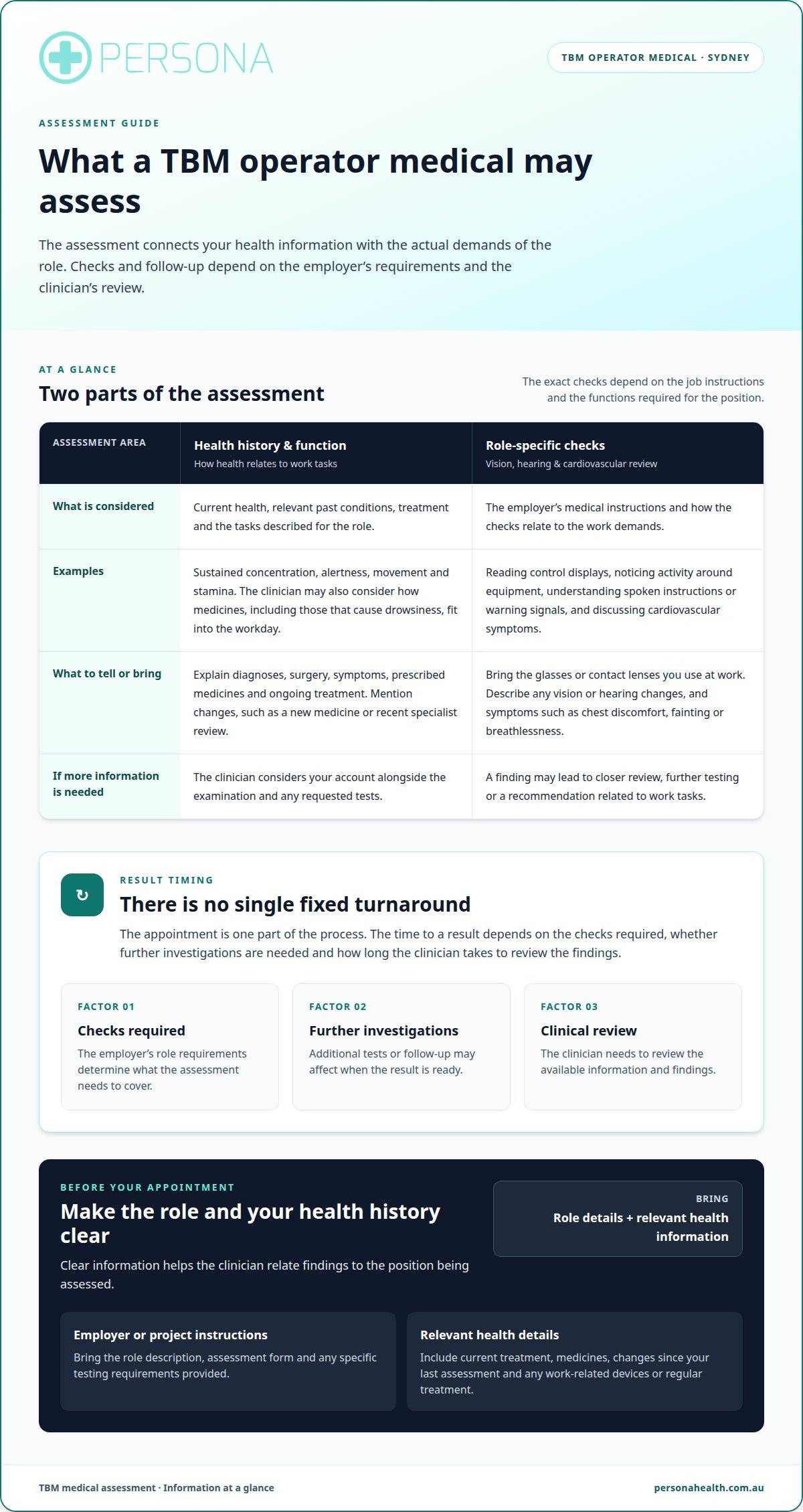
The medical history review connects your health information with the practical demands of operating a tunnel boring machine. The doctor considers your current health, relevant past conditions, treatment and the tasks described for the role. For example, sustained concentration, shift work and responding to equipment warnings may be relevant to the discussion.
Expect questions about previous diagnoses, surgery, symptoms, prescribed medicines and ongoing treatment. Be specific about what you experience and when. A history of dizziness, for instance, may prompt questions about its frequency, possible triggers and effect on tasks requiring alertness. The doctor considers this context alongside the examination and any requested tests.
Give the doctor a clear account of your health rather than trying to decide which details matter. Include changes since your last assessment, such as a new medicine or recent specialist review. If you use a device or need regular treatment, explain how it fits into a normal workday. This helps the doctor assess your function in the context of the actual job.
Health functions are considered in practical terms:
- Concentration and alertness: discuss symptoms or treatment that could affect sustained attention during machine operation.
- Movement and stamina: explain any difficulty with walking, climbing, lifting or maintaining a position required by the role.
- Medication effects: identify medicines that cause effects such as drowsiness, and explain when you take them.
- Ongoing conditions: describe the management plan and any changes that could affect attendance or safe task performance.
The employer’s role description provides the work context for the assessment. TBM duties can differ across tunnelling projects, so a medical for a control-room operator may focus on different functions from one for a worker entering a tunnel. Clear duties help the doctor relate health findings to the position instead of treating every job as identical.
The term Authorised Health Professionals may appear in employer or project instructions. It refers to professionals authorised under the relevant assessment process, so the required clinician and reporting pathway depend on the job instructions. Bring any assessment form or role-specific requirements provided for your appointment. This gives the doctor a clear basis for reviewing your medical history and health functions.
Workplace health surveillance has a different focus from an individual fitness assessment. It monitors health in relation to workplace exposures, such as silica dust or noise, when an employer’s program calls for it. A TBM role assessment instead considers your health against the stated work functions. If both apply, each process addresses a distinct occupational health question.
Vision, hearing and cardiovascular checks
Vision, hearing and cardiovascular checks can help assess functions relevant to operating tunnel machinery. The exact assessment depends on the role requirements and the employer’s medical instructions. Operating controls, monitoring displays and responding to alarms, for example, place different demands on sight and hearing from office-based duties.
A vision assessment may consider how clearly you see at different distances, whether you use corrective lenses and whether your vision affects work tasks. Reading a control display and noticing activity around equipment are practical examples. Tell the clinician if your eyesight has changed or if glasses or contact lenses are part of your usual work routine.
Hearing matters when operators need to understand spoken instructions or notice warning signals amid machinery noise. An assessment may include questions about hearing changes, previous ear conditions and hearing protection. If workplace health surveillance includes hearing checks, that monitoring has a separate purpose from assessing fitness for a particular role.
A cardiovascular review may include questions about symptoms, medical history and treatment, as well as measurements selected for the assessment. Mention experiences such as chest discomfort, fainting or breathlessness, and explain when they happen. The clinician can consider these details in the context of the tasks and environment described by the employer.
- Before vision testing: bring the glasses or contact lenses you use for work, and explain any recent changes.
- During hearing checks: describe difficulty following conversation or distinguishing alarms, including where it occurs.
- For cardiovascular review: provide accurate information about symptoms, diagnoses and current treatment.
Results are interpreted in light of the job’s stated requirements, not as isolated readings. A finding may lead to closer review, further testing or a recommendation related to work tasks. For example, the clinician may need to establish whether corrective lenses address a vision concern or whether a reported symptom affects a specific duty. The result should reflect the available clinical information and the role being assessed.
Drug and alcohol testing is separate from vision, hearing and cardiovascular checks. An employer may require it as part of a workplace process with its own instructions and reporting arrangements. Do not assume it is part of every TBM medical. Read the employer’s assessment instructions so the appointment covers the required components.
Clear instructions help keep the assessment relevant. Bring any role description, medical form or specific testing requirements supplied by your employer. If the assessment includes drug and alcohol testing, the employer’s instructions should explain the required process. This gives the clinician a clear basis for completing the requested checks.
Appointment preparation and required documents
Start with the employer’s appointment instructions. They identify the assessment type, forms to complete and role details the clinician needs. A TBM operator position may involve different duties from a control-room role, so an accurate job description helps keep the review relevant. Bring any documents or instructions that name particular tests.
Prepare documents that clearly explain your health. Bring photo identification, your referral or employer medical form, and a current list of medicines. Include each medicine’s name, dose and reason for taking it. A pharmacy list or written medication record, for example, can help you provide accurate information during the consultation.
Previous medical information can clarify a diagnosis or ongoing treatment. Bring relevant specialist letters, investigation reports or details of recent surgery. There is no need to collect unrelated records. Focus on information connected to a condition, symptom or treatment that may affect your work duties. If a document is digital, have it accessible on your phone or another device.
- Identification: photo ID requested in the appointment instructions.
- Employer paperwork: referral, role description and any supplied assessment forms.
- Health information: current medicines and relevant specialist or investigation documents.
- Usual aids: glasses, contact lenses or hearing aids used during work.
Before attending, read all preparation instructions. Some appointments include specific tests, and requirements differ by test. Follow the directions provided rather than assuming you need to fast or change your usual medication. If the instructions mention fasting, medication or another preparation step, follow them and raise any uncertainty with the appointment team.
Plan your trip to the Sydney clinic using the appointment address and travel details. Allow time to arrive, check in and complete forms without rushing. If you’re travelling from a tunnelling project, bring the employer’s paperwork rather than relying on a verbal summary of the role.
During the appointment, answer health questions accurately and describe relevant symptoms in plain language. Explain what happens, when it occurs and whether treatment helps. For example, say whether a symptom appears during exertion, at rest or after taking a medicine. These details help the clinician interpret your answers alongside the assessment findings.
Before you leave, clarify the next step in the reporting process. Ask which documents or tests remain outstanding and how the result will be communicated under the employer’s arrangements. If more information is needed, understanding what it concerns helps you provide the relevant report or treatment details promptly.
What medical conditions can affect fitness to operate a TBM?
A health condition matters when its symptoms or treatment affect tasks involved in operating a tunnel boring machine. The assessment considers alertness, safe movement, communication and the ability to respond to changing conditions. A diagnosis alone does not show how someone functions at work. The doctor considers its effects alongside the role’s duties and available health information.
Conditions that may need closer review include:
- Heart or circulation conditions: symptoms such as fainting, chest discomfort or breathlessness during exertion.
- Neurological conditions: seizures, episodes of altered awareness, dizziness or problems with coordination.
- Sleep disorders: excessive daytime sleepiness that could affect concentration during a shift.
- Musculoskeletal conditions: pain or restricted movement affecting access, posture or control operation.
- Respiratory conditions: breathing symptoms that may affect tasks in a demanding work environment.
For example, a history of seizures calls for information about episodes, treatment and any effects on awareness. A worker with back pain may need their ability to sit, turn or reach assessed against specific control-room duties. These examples show why the same diagnosis can have different practical effects across TBM roles.
Mental health conditions can also be relevant if symptoms affect concentration, decision-making or workplace interactions. The discussion should focus on current function and treatment, not assumptions based on a diagnosis. Explain any symptoms that vary across shifts, such as anxiety that disrupts sleep or treatment that causes daytime drowsiness.
Medicines and treatment plans form part of the review. Some medicines can cause effects such as dizziness or reduced alertness. Tell the doctor what you take, why you take it and whether you’ve noticed side effects. Do not stop or change prescribed treatment to influence an assessment. Accurate information helps the clinician consider any work-related effects of treatment.
Fitness is assessed against the essential tasks and environment described for the position. Relevant factors include symptom frequency and severity, how well symptoms are controlled with treatment, and the chance of sudden impairment. The clinician may need further information or testing to understand a finding. A stable condition with an effective management plan presents different functional information from unpredictable symptoms that affect awareness.
If a concern arises, the assessment may identify a need for more clinical information or a review of particular duties. A specialist report, for example, may clarify how stable treatment is, while a role description can show which tasks require sustained attention. Clear records help connect medical findings to actual TBM work rather than relying on the condition’s name alone.
What are the steps to book and complete a TBM operator medical in Sydney?
Start with the employer’s instructions, which define the assessment requested for the role. A TBM operator medical may involve different checks from those for another tunnelling position. The employer’s referral, role description and required forms help the clinic understand which assessment to arrange. Use the instructions supplied for your appointment to identify the relevant documents.
- Provide the assessment details. Give the clinic the employer’s referral, job title and role description. Include any named tests or forms so the appointment can be organised around the requested assessment.
- Arrange an appointment. Select an available appointment in Sydney that suits your schedule. Allow for travel to the clinic and bring the appointment details with you.
- Prepare your information. Gather photo identification, a current medicine list and relevant medical records. Include specialist letters or test reports related to a condition that may affect your work.
- Attend the assessment. The clinician reviews your history and completes the checks requested for the role. Answer questions accurately and explain symptoms with practical examples, such as when they occur.
- Complete any follow-up. If further information or testing is needed, the outstanding step is explained as part of the assessment process.
Before the appointment, read the instructions for each requested test. Preparation can vary, so follow the directions provided instead of assuming you need to fast or change medication. If the employer requests drug and alcohol testing, its instructions should clarify whether this is part of the appointment or a separate process.
At check-in, provide the requested forms and identification. Tell the clinician if your health has changed since you completed the paperwork. Report a new diagnosis, recent treatment or a medicine change, for example. This helps ensure the consultation reflects your current circumstances rather than an outdated form.
After the examination, the clinician reviews the findings and any reports provided. Result timing depends on the checks required, whether all information is available and whether follow-up tests or clinical records are needed. A straightforward assessment can proceed to review without those additional steps, while outstanding results can extend the process.
The report is handled through the employer’s agreed reporting arrangement. The assessment outcome relates to the role requirements and information considered, rather than simply listing test results. If follow-up is recommended, clarify which information or test remains outstanding and how the next step will be communicated. This helps you understand what is needed to complete the assessment.
For a Sydney appointment, have the employer’s paperwork ready before booking and bring it to the assessment. Clear role details, accurate health information and completed tests help the clinician review the right requirements and support an orderly reporting process.
Persona Health: Pre-Employment Medicals
Persona Health provides Pre-Employment Medicals for employers assessing a person’s health against role requirements. Its employer-focused approach, responsive customer service, fast turnaround times and modern digital reporting help keep the process clear and organised.
For workplace injuries, Persona Health also provides Workplace Injury Management and InjuryQR, a free AI-powered workplace injury triage service available to all Australian businesses. Workers scan a QR code without downloading an app, describe the injury by voice, and answer AI follow-up questions. The service can provide self-care advice, telehealth appointments typically within 3-4 hours, Emergency Department direction or instructions to call 000. Certificates of Capacity can be issued immediately where appropriate. Early triage supports clearer reporting and can help reduce Lost Time Injuries.
Take the next step with confidence
Use your employer’s assessment instructions to make a clear plan for your role. If you’re arranging medicals for TBM operators in Sydney, share the job requirements and requested assessment details when you contact Persona Health. This gives the appointment process the right context and helps clarify the pathway for any follow-up.
Persona Health provides Pre-Employment Medicals, Workplace Injury Management and Crystalline Silica Medicals for relevant workplace needs. The right service depends on the purpose of the request: an employment assessment reviews role-related health information, while silica medicals address exposure monitoring.
Take the next step when you’re ready. Contact Persona Health to discuss the medical assessment that fits your work or hiring process.
A clear plan makes the process easier to approach, one step at a time.
Frequently Asked Questions
How long will it take to get the results?
Result timing depends on the checks requested and whether the clinician needs further information. A report may take longer if an additional test or specialist document is needed before review. The employer’s reporting arrangements also affect when you receive the outcome. If the result is delayed, ask which step remains outstanding so you know whether the delay relates to testing, clinical review or report delivery.
How long will the assessment take?
There is no single appointment length for every TBM role. Timing depends on the assessment components, the information available and whether the clinician needs to explore a health issue in more detail. An appointment with several requested tests may involve more steps than a focused examination. Follow the appointment instructions and allow time for check-in and discussion rather than scheduling another commitment immediately afterwards.
What medical examinations are required for TBM operators in Sydney?
For medicals for TBM operators in Sydney, the examinations depend on the employer’s role requirements, not a universal checklist. A pre-employment assessment may include a medical history, physical examination, vision, hearing and respiratory tests, with drug and alcohol screening or industry-specific components where requested. The assessment for a control-room role may differ from one involving tunnel-based duties. The referral identifies the components required for your position.
Are TBM operators in NSW required to pass a rail industry worker medical?
Not every TBM operator role automatically requires a rail medical. The relevant distinction is whether the job falls within rail transport work and its applicable health and fitness program. The Transport (Rail Safety) Act 2010 is identified in rail-worker guidance in connection with such programs. A tunnelling project’s employer or rail operator sets the assessment pathway for the role, so follow the medical instructions provided for your position.
What are the fitness-for-work medical standards for tunnel boring machine operators in Australia?
There is no single fitness-for-work standard that applies identically to every TBM position. The assessment is guided by the job’s functions, work environment and employer requirements. A control-room operator and a worker undertaking tunnel-based duties may have different functional demands. The clinician considers relevant health information against those demands and communicates the outcome through the employer’s reporting process. Rail safety roles may follow a separate applicable medical framework.
Which Sydney clinics provide pre-employment medicals for TBM operators?
Persona Health provides Pre-Employment Medicals in Sydney and Melbourne. Sydney clinic locations include Parramatta, Rosebery, Gregory Hills and Dee Why; Melbourne locations include Cairnlea and Craigieburn. Its network includes 100 affiliate clinics nationwide, with mobile workplace services available Australia-wide. The appointment location and process should align with your employer’s referral and assessment requirements, helping the medical information follow the intended reporting pathway.
What tests are included in a construction or rail worker medical in NSW?
Tests vary with the job and the employer’s requested assessment. Pre-Employment Medicals can include a medical history assessment, physical examination with a musculoskeletal exam, vision, hearing and respiratory tests, and drug and alcohol screening. An optional cardiovascular fitness test or an industry-specific component, such as a CAT 1-3 Rail Medical, may also be relevant. A construction medical should reflect the actual role, not an assumed standard package.
What documents should I bring to a TBM operator medical appointment?
Bring the appointment or employer referral form, photo identification and any role-specific paperwork supplied by your employer. A concise list of current medicines and relevant reports about an ongoing condition can also help the clinician understand your history. If you use corrective lenses or hearing aids at work, bring them. Keep electronic records accessible and make sure the files can be opened during the consultation.

Article by
Ian Nicholson
Ian is the Business Support Manager at Persona Health, where he plays a key role across IT, sales, marketing and business operations. With a broad skill set and a practical, solutions-focused approach, Ian helps drive the systems, communication and commercial strategy that support Persona Health’s continued growth across Australia.