

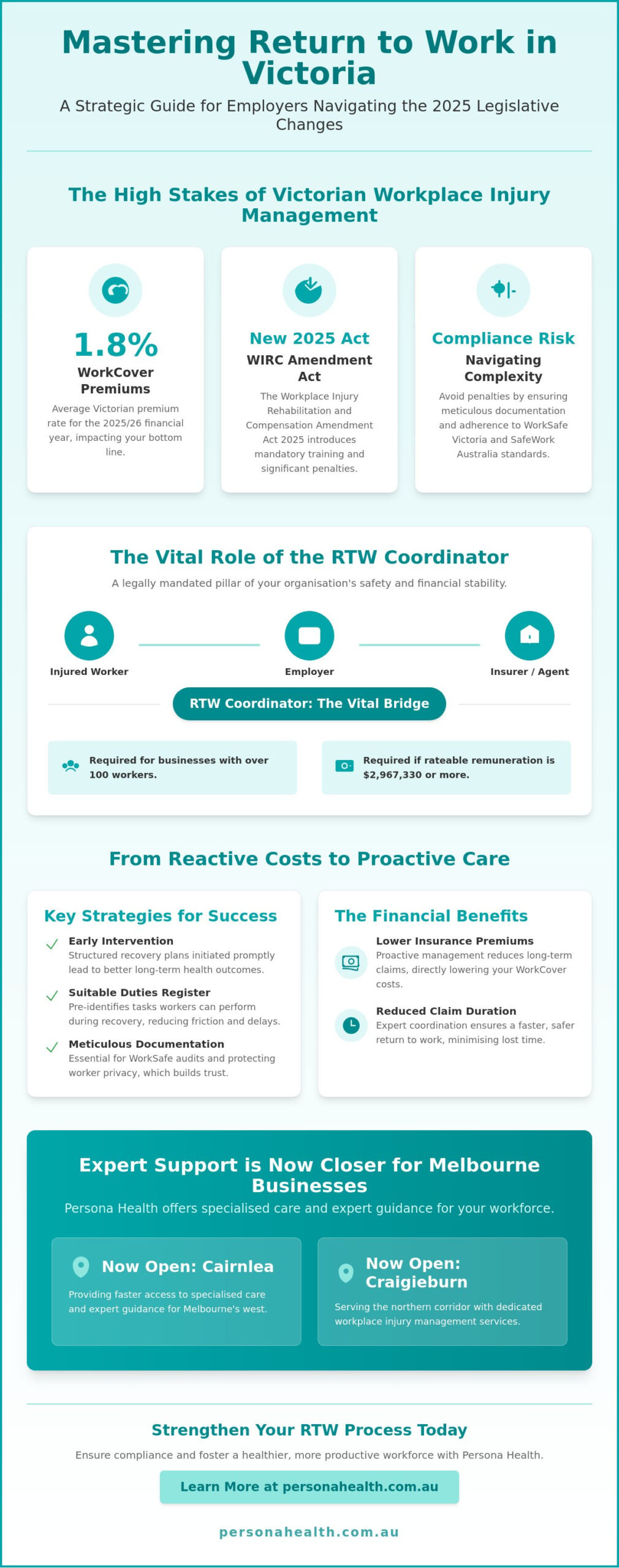
With the average Victorian WorkCover premium rate sitting at 1.8% for the 2025/26 financial year, finding expert return to work coordinator support melbourne has become a priority for businesses looking to protect their bottom line. You likely feel the mounting pressure of rising compensation costs and the weight of the Workplace Injury Rehabilitation and Compensation Amendment Act 2025. This new legislation mandates approved training for all coordinators; it’s natural to feel overwhelmed by the risk of significant penalties or the difficulty of communicating with insurers. We understand that behind every claim is a person who needs care and a business that needs stability.
Discover how professional assistance helps your business navigate these legislative hurdles while ensuring safe, sustainable employee recovery. This guide explores how expert workplace injury management at our new Cairnlea and Craigieburn clinics can reduce claim durations and foster a healthier, more productive workforce. We’ll walk you through the latest SafeWork Australia standards and Victorian compliance requirements to help you move from uncertainty to a position of clinical and professional confidence.
Key Takeaways
- Learn how to meet the latest WorkSafe Victoria requirements and avoid the significant penalties introduced by the 2025 legislative amendments.
- Understand how professional return to work coordinator support melbourne provides the clinical expertise needed to bridge the gap between treating doctors and insurers.
- Discover the importance of maintaining a Suitable Duties Register to ensure a seamless transition for injured workers back into the workplace.
- Explore ways to manage workers’ compensation costs by integrating proactive injury management with regular health surveillance.
- Find out how our new clinics in Cairnlea and Craigieburn provide faster access to specialised care and expert guidance for your Melbourne workforce.
Understanding the Return to Work Coordinator Role in Victoria
In Victoria, a Return to Work (RTW) Coordinator is much more than an administrative contact; it’s a legally mandated pillar of your organisation’s safety structure. Under the Workplace Injury Rehabilitation and Compensation Act 2013, your Melbourne business must appoint a qualified coordinator if your rateable remuneration reaches $2,967,330 or more, or if you employ more than 100 workers. This role serves as the vital bridge between the injured worker, the employer, and the WorkSafe agent. It’s about finding a balance between clinical recovery and operational needs. By providing professional return to work coordinator support melbourne businesses can ensure that this bridge remains stable, even during complex claims.
The coordinator’s primary goal is early intervention. We know that the sooner a worker begins a structured recovery, the better their long term health outcomes. This process often involves the principles of vocational rehabilitation, which focuses on adapting the work environment to suit the individual’s current capacity. Our teams at the new Cairnlea and Craigieburn clinics see first hand how a coordinated approach transforms a difficult recovery into a successful return to duty. It’s not just about compliance; it’s about valuing the unique contribution of every employee.
Key Responsibilities and Legal Obligations
A coordinator’s duties are diverse and demanding. They must facilitate the return to work of injured employees as soon as it’s safely possible, often by identifying suitable duties that match medical restrictions. They ensure the employer meets all obligations under Victorian Workers Compensation Legislation, including the recent 2025 amendments that mandate specific training for coordinators. Acting as the primary point of contact for WorkSafe inspectors and medical providers, they translate clinical jargon into actionable workplace plans. Their presence ensures that no one feels lost in the system.
The Impact of Effective Coordination on Premiums
Efficient workplace injury management is one of the most effective ways to lower your WorkCover insurance costs. When a coordinator is proactive, they reduce the “tail” of long term claims, which are the primary drivers of premium increases. Proactive management ensures that small injuries don’t spiral into permanent disabilities. Every day an employee is away from the workplace increases the total claim cost significantly. By investing in expert return to work coordinator support melbourne employers can protect their financial health while fostering a supportive culture that prioritises worker wellbeing.
Navigating WorkSafe Victoria Compliance and Legal Obligations
Meeting WorkSafe Victoria compliance and legal obligations isn’t just about ticking boxes. It’s about protecting your people and your business from unnecessary risk. A robust internal policy must align with both SafeWork Australia’s national framework and Victoria’s specific legislative requirements. One of the most effective tools for this is the Suitable Duties Register. This document pre-identifies tasks that workers can perform during their recovery. It reduces friction when a claim occurs and provides immediate options for the treating doctor. Providing expert return to work coordinator support melbourne helps employers maintain a meticulous documentation trail. This is vital for WorkSafe audits and reviews where every interaction must be recorded. You must also handle sensitive medical data with absolute confidentiality. Protecting worker privacy builds the trust necessary for a successful recovery journey.
Working with SafeWork Australia Guidelines
SafeWork Australia provides the overarching national standards for health and safety. While Victoria operates under its own specific Act, these federal guidelines offer a blueprint for best practice injury prevention. When you integrate these standards, you create a safer environment that naturally reduces the need for complex return to work processes. Our new clinics in Cairnlea and Craigieburn help local businesses translate these high level guidelines into practical, on-site strategies. Proactive on-site health surveillance can often identify risks before they become WorkCover claims. It’s a method that values the individual’s long term health while safeguarding the company’s productivity. This approach ensures that your safety culture is grounded in both empathy and clinical evidence.
Communication with Treating Health Practitioners
A common pain point for Melbourne employers is the communication gap between the workplace and a worker’s General Practitioner. Often, medical certificates focus solely on what a worker cannot do. We work to shift this focus toward capacity. Effective return to work coordinator support melbourne involves active dialogue with GPs to ensure they understand the available suitable duties in your specific workplace. In complex cases, involving an Occupational Physician or an Independent Medical Examiner provides the clinical clarity needed to resolve disputes. This empathetic yet professional approach ensures the worker feels supported and heard. If you’re finding it difficult to bridge this gap, our team can help facilitate these vital clinical conversations to ensure a smoother recovery process.
Benefits of Specialist Return to Work Coordinator Support
Engaging specialist return to work coordinator support melbourne provides your business with a depth of clinical knowledge that standard HR departments rarely possess. While your internal team is excellent at managing people and culture, they may lack the medical background required to interpret complex injury reports or understand the nuances of physical recovery. A specialist coordinator acts as an independent and impartial mediator. This is particularly valuable in disputed cases where tension might exist between a supervisor and an injured employee. By introducing a professional third party, you can de-escalate these situations and rebuild trust through transparent, evidence based decision making. This level of support ensures that every decision is grounded in the individual’s actual capacity for work.
Another significant advantage is the seamless integration with other health services. Professional coordination doesn’t happen in a vacuum. It works best when linked directly to workplace injury management and existing health data. Our teams at the Cairnlea and Craigieburn clinics use this holistic view to ensure that return to work plans are realistic and sustainable. This clinical oversight reduces the administrative burden on your management team, allowing them to focus on their core roles while we handle the intricate details of claim documentation and medical liaison. It’s a method that values the person while protecting the productivity of the business.
Internal vs Outsourced RTW Coordination
Many Melbourne businesses struggle to decide whether to keep this role in-house or seek external help. Keeping it in-house can offer familiarity, but it carries the risk of “managing by spreadsheet” without a true clinical understanding of the injury. This can lead to stalled recoveries or re-injury. External experts bring a fresh perspective and can even provide training for your internal staff. This hybrid approach ensures your team has the skills to handle minor issues while having expert return to work coordinator support melbourne available for more complex scenarios. It’s about having the right level of expertise at the right time.
Managing Complex and Psychological Claims
Psychological claims present unique challenges that require a highly empathetic and specialised approach. Unlike physical injuries, mental health recovery often involves navigating invisible barriers and sensitive personal circumstances. We use clinical support to identify these hurdles early and develop tailored strategies that prioritise the worker’s psychological safety. Our approach at Persona Health is built on the belief that everyone’s journey is unique. By integrating on-site health surveillance and proactive support, we can often identify the early signs of stress before they result in a long term claim. This proactive care is essential for fostering a resilient and supportive workplace culture.
Key Strategies for Successful Injury Management and Recovery
Successful recovery is never a one-size-fits-all process. It requires a deep understanding of the individual’s current physical and psychological capacity. By utilising Functional Capacity Evaluations (FCE), we can move beyond the vague ‘light duties’ description often found on medical certificates. An FCE provides objective data on what a worker can safely lift, how long they can stand, or their ability to perform repetitive tasks. This data allows us to build a tailored plan that evolves alongside the worker’s recovery. As the individual regains strength, the expert return to work coordinator support melbourne provides ensures that duties are adjusted in real time. This dynamic approach prevents the frustration of being under-utilised and the danger of being over-exerted.
Integrating proactive injury management with your existing health data is the next step in sophisticated coordination. At our new clinics in Cairnlea and Craigieburn, we see how this connection prevents the revolving door of workplace injuries. When we understand a worker’s baseline health, we can more accurately predict their recovery trajectory and identify potential setbacks before they occur. It’s about looking at the whole person, not just the injury.
Specialised Medicals and Return to Work
For workers in high-risk industries, the return to work process must be even more precise. We often use crystalline silica medicals to ensure that a worker returning to a construction site isn’t being exposed to risks that could complicate their recovery. Similarly, for those in the transport sector, ensuring that rail medicals align with safety-critical duty requirements is non-negotiable. Using on-site health surveillance allows us to monitor these workers in their actual environment. This provides an extra layer of safety that standard clinical visits can’t offer, ensuring that the return to work coordinator support melbourne businesses rely on is backed by hard clinical data.
Creating a Supportive Workplace Culture
Recovery doesn’t just happen in a clinic; it happens on the shop floor and in the office. Training your supervisors to be empathetic leaders is a core strategy for success. When a supervisor understands how to support a returning worker, it reduces the stigma often associated with modified duties. This cultural shift is vital for long term retention. Regular check-ins during the first few weeks are essential. They provide a safe space for the worker to voice concerns and for the employer to offer reassurance. If you want to improve your internal culture, our workplace injury management team can provide the guidance your leaders need to succeed.
Partnering with Persona Health: New Melbourne Clinics in Cairnlea and Craigieburn
Our expansion into the Victorian market marks a significant milestone in our mission to provide accessible, high quality occupational health care. With the opening of our state-of-the-art clinics in Cairnlea and Craigieburn, we’re bringing our signature blend of clinical authority and empathetic care directly to Melbourne’s northern and western suburbs. These locations were chosen strategically to serve the heart of Victoria’s industrial and transport sectors. By being physically present in these hubs, we can offer faster access to workplace injury management, reducing the time between an incident and the start of a structured recovery. This local presence is essential for providing the responsive return to work coordinator support melbourne businesses need to maintain compliance and protect their workforce.
Our team of occupational health experts understands the unique challenges faced by Melbourne employers. Whether you’re managing a local manufacturing site or a major logistics hub, our support is tailored to your specific operational needs. We don’t believe in generic solutions because we know that every worker’s body and every workplace’s culture is unique. Persona Health offers a modern professional partner for Victorian businesses, combining deep legislative knowledge with a genuine commitment to individual wellbeing. This partnership ensures that you aren’t just meeting legal minimums but are actively fostering a culture of health and safety.
Local Expertise for Melbourne Employers
Proximity matters when it comes to effective injury recovery. Having clinics conveniently located for workers across Melbourne’s northern and western suburbs means less travel time and less stress for your employees. We also provide on-site services for major infrastructure projects in the region, ensuring that safety-critical industries have immediate access to expert care. This “boots on the ground” approach allows us to see the working environment first hand, which is vital when determining suitable duties. This level of local insight ensures that the return to work coordinator support melbourne employers receive is both practical and clinically sound.
Booking Your RTW Support and Medical Assessments
We’ve designed our referral process to be as simple and transparent as possible. You can easily book injury management consultations or engage our coordinators for complex case mediation. For total risk management, we recommend combining our RTW services with comprehensive pre-employment medicals. This ensures that you’re hiring people who are fit for their specific roles from day one, significantly reducing the likelihood of future claims. Contact our Melbourne team today to discuss your specific needs and discover how we can help you build a healthier, more productive workforce. We’re here to guide you through every step of the process with professional integrity and a welcoming, localized approach.
Strengthening Your Workplace Through Professional Recovery Support
Effective injury management is a journey that requires both clinical precision and genuine human empathy. By mastering the 2025 legislative changes and moving beyond administrative tracking, your business can foster a culture where workers feel truly valued during their recovery. You’ve seen how integrating functional assessments with specialised medical data ensures that return to work plans are safe and sustainable. This proactive approach doesn’t just reduce your insurance premiums; it protects your most valuable asset: your people. It’s about ensuring every individual has the resources they need to activate their own internal strength and return to productivity safely.
With our new clinics now open in Cairnlea and Craigieburn, we’re ready to provide the expert return to work coordinator support melbourne employers need to navigate the complexities of WorkSafe Victoria and SafeWork Australia standards. Our specialists in industrial and transport injury management are here to bridge the gap between clinical requirements and your operational reality. We’re committed to helping you build a resilient, productive workforce through tailored solutions that respect the uniqueness of every individual. Contact Persona Health for expert Return to Work support in Melbourne today to discuss how we can support your team. Let’s work together to create a safer, more supportive future for your organisation.
Frequently Asked Questions
What is the difference between a Return to Work Coordinator and an Injury Management Advisor?
A Return to Work Coordinator is a specific role required by Victorian legislation focused on the administrative and internal facilitation of a worker’s return. An Injury Management Advisor or Consultant provides broader clinical oversight and strategic guidance. While the coordinator manages the process, the advisor often handles complex medical liaison and helps resolve clinical barriers to ensure the recovery plan is sustainable and safe for the individual.
Does every Melbourne business need a Return to Work Coordinator?
No, you are only legally required to appoint a coordinator if your business meets specific thresholds. In Victoria, this applies if your rateable remuneration is $2,967,330 or more, or if you employ more than 100 workers. Even if you fall below these numbers, having a designated person to manage injuries is a best practice that helps protect your staff and your business stability.
How can external support help reduce my WorkCover premiums in Victoria?
Seeking professional return to work coordinator support melbourne allows you to leverage clinical expertise that reduces claim durations. By proactively managing the recovery process, you minimise the impact of long term claims on your experience rating. This is essential for controlling your costs, especially with the 2025/26 average premium rate at 1.8%. Our team ensures that every step of the recovery journey is efficient and evidence based.
What should a Return to Work Coordinator do if a GP refuses to provide a capacity certificate?
The coordinator should initiate a respectful dialogue with the GP to explain the available suitable duties in the workplace. Often, doctors lack detailed knowledge of your operational flexibility. If communication stalls, engaging an Independent Medical Examiner can provide a clear, objective assessment of the worker’s actual functional capacity. This clinical clarity helps move the process forward while ensuring the worker’s safety remains the priority.
Can Persona Health provide on-site support for my RTW Coordinator in Melbourne?
Yes, we offer comprehensive on-site health surveillance and injury management consulting to support your internal team. Our experts can visit your facility to help identify suitable duties and ensure your processes align with SafeWork Australia standards. This “boots on the ground” approach provides your internal coordinator with the clinical confidence they need to handle complex cases effectively while maintaining a supportive workplace culture.
How do the new Cairnlea and Craigieburn clinics support local Melbourne businesses?
Our new clinics provide immediate access to medical assessments and clinical expertise in Melbourne’s northern and western industrial hubs. Proximity is vital for early intervention, as it allows injured workers to be seen quickly without the stress of long travel times. These state-of-the-art facilities are equipped to handle specialised medicals and provide the expert return to work coordinator support melbourne industries require for high-risk roles.
What are the penalties for not having a Return to Work Coordinator in Victoria?
Failing to comply with the 2025 legislative requirements can lead to significant financial consequences for your business. Corporations face penalties of up to 600 penalty units, while individuals can be fined up to 120 penalty units. Beyond these fines, the lack of a qualified coordinator often leads to poorly managed claims and higher insurance premiums, creating a long term financial burden on your organisation.
Is a Return to Work Coordinator responsible for preventing future injuries?
While their primary focus is managing the return of workers after an injury, they play a vital role in prevention. By identifying risks during the return to work process and recommending task modifications, they help improve overall site safety. Integrating their insights with regular health surveillance ensures that your workplace evolves to protect every individual, reducing the likelihood of recurring injuries and fostering a more resilient workforce.

Article by
Ian Nicholson
Ian is the Business Support Manager at Persona Health, where he plays a key role across IT, sales, marketing and business operations. With a broad skill set and a practical, solutions-focused approach, Ian helps drive the systems, communication and commercial strategy that support Persona Health’s continued growth across Australia.