

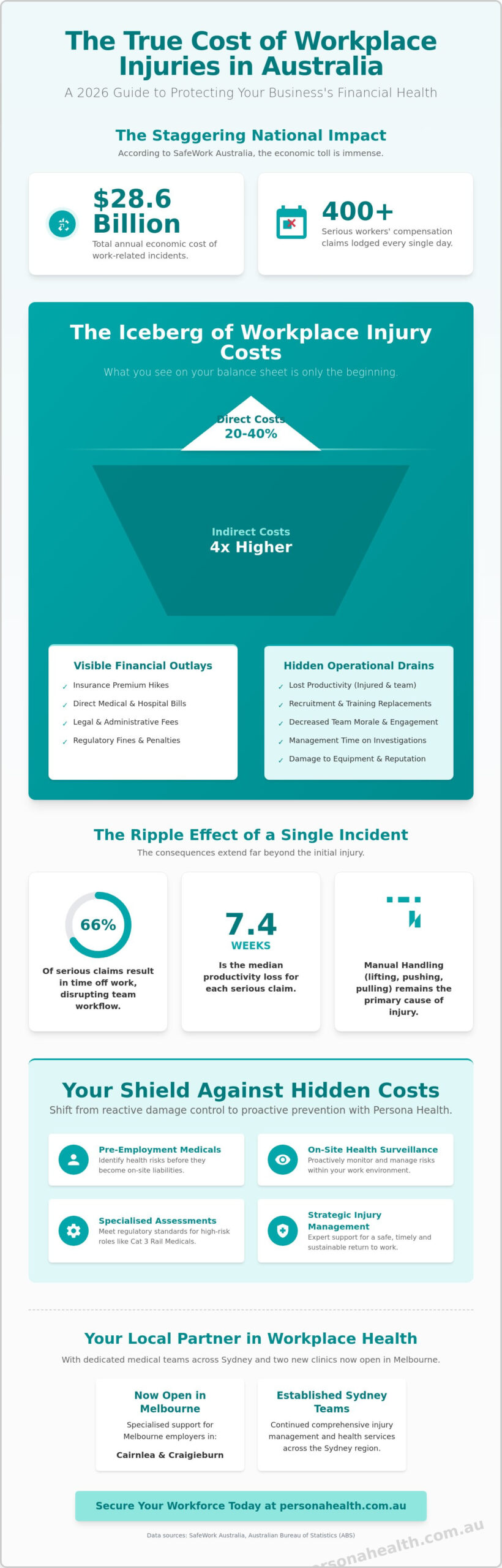
Did you know that the direct expenses of a workers’ compensation claim represent only 20 to 40 per cent of the total financial impact? According to SafeWork Australia, the total economic cost of work-related incidents reaches a staggering $28.6 billion annually; this means the “silent tax” of indirect losses often outweighs visible costs by a ratio of four to one. Understanding the true cost of workplace injuries australia is no longer just a matter of compliance; it’s a critical factor in your business’s long-term financial stability.
Beyond medical oversight, many organisations also partner with Epigroup for health and safety consulting and training to ensure their workforce is fully prepared for high-risk operations.
We understand the pressure you face with rising premiums and the complex challenge of keeping your skilled workforce healthy and productive. You deserve a partner who views your employees as unique individuals rather than just numbers on a spreadsheet. This 2026 guide reveals the hidden financial drains on your operations and provides a clear framework for proactive prevention. We’ll also introduce you to our dedicated medical teams across Sydney and our two new Melbourne locations in Cairnlea and Craigieburn, where we specialise in tailored Workplace Injury Management and On-Site Health Surveillance to ensure your team stays safe and your business remains resilient.
Key Takeaways
- Gain a clear understanding of why indirect expenses like lost productivity and recruitment costs can be four times higher than your visible insurance premiums.
- Navigate the evolving 2026 landscape by learning how the total economic cost of workplace injuries australia impacts your compliance with SafeWork Australia standards.
- Discover how specialised assessments, including Cat 3 Rail Medicals, help high-risk industries mitigate regulatory pressure and maintain workforce stability.
- Learn to use pre-employment medicals and on-site health surveillance as proactive tools to identify health risks before they become costly financial liabilities.
- Find out how our new Melbourne facilities in Cairnlea and Craigieburn offer localised expertise in injury management to support your team’s recovery and return to work.
Understanding the Economic Impact of Workplace Injuries in Australia
SafeWork Australia analysis indicates that the total economic cost of work-related injuries remains a staggering $28.6 billion every year. This figure represents a profound challenge for the national economy and individual business owners alike. The 2026 landscape shows a clear shift in how we approach these numbers. Regulators are no longer just looking at immediate physical accidents; they’re focusing on psychosocial hazards and long-term health risks that often stay hidden until they become significant liabilities. Understanding the true cost of workplace injuries australia requires looking past the surface of insurance premiums to the deeper impact on your people and your productivity.
The Australian Bureau of Statistics (ABS) reports a 3.5 per cent injury rate across the national workforce, which translates to over 400 serious claims every single day. This statistic isn’t just a number; it represents thousands of individuals whose lives and careers have been interrupted. Workplace safety legislation in Australia has evolved to meet these challenges, placing more responsibility on employers to provide holistic care that addresses both physical and mental well-being. We believe that every worker is unique, and our approach to Workplace Injury Management reflects this by focusing on individual recovery pathways.
To better understand the scale of these financial and human impacts, watch this helpful video:
The National Statistics: Why 2026 is a Turning Point
Current data identifies manual handling tasks, specifically lifting, pushing, and pulling, as the primary causes of physical trauma in Australian workplaces. These incidents are rarely minor; approximately 66 per cent of reported cases result in time off work. SafeWork Australia has set a rigorous 2026 safety agenda that prioritises early intervention. By identifying these risks through On-Site Health Surveillance, we can help you prevent the median loss of 7.4 weeks of productivity that typically follows a serious claim. This proactive stance is essential for maintaining a stable, healthy workforce.
Why Every Australian Business is Affected
Whether you manage a corporate office in Sydney or a large-scale construction site in Melbourne, the risk is universal. A single incident creates a ripple effect that touches every member of your local team, often leading to decreased morale and increased pressure on remaining staff. This is why we’ve expanded our reach with new clinics in Cairnlea and Craigieburn, ensuring Melbourne employers have local, reliable partners to manage these risks. The total economic burden for Australian businesses in 2026 is projected to rise as the cost of workplace injuries australia continues to be driven by complex psychological and long-term health claims.
Direct vs Indirect Costs: What Your Balance Sheet Does Not Show
Many business owners view workers’ compensation as a fixed cost of doing business. However, focusing only on your annual premium is like looking at the tip of an iceberg. Beneath the surface lies a massive collection of hidden expenses that can quietly erode your profitability. When calculating the true cost of workplace injuries australia, it’s essential to distinguish between the payments you see on your ledger and the productivity losses you feel on the floor. According to Safe Work Australia’s economic impact analysis, direct costs such as medical payments and insurance premiums only account for a fraction of the total burden.
Direct Financial Outlays and Insurance Premiums
Direct costs are the visible outlays that immediately impact your budget. In New South Wales, average premium rates sit at approximately 1.8 per cent of wages, while Victoria ranges from 1.3 to 1.8 per cent. These figures are rising. NSW recently saw an 8 per cent increase in average rates, and total claim costs in that state reached $5.3 billion in the 2023-24 financial year. A significant driver of this is the surge in psychological injury claims; the average cost of such a claim in NSW has increased by 97.6 per cent over the last five years. Investing in professional injury management isn’t just a compliance step; it’s a strategic move to stabilise these volatile expenses and support your employees’ unique recovery needs.
The Hidden Productivity Drain
The real damage often happens away from the ledger. Indirect costs represent 60 to 80 per cent of the total impact of an incident. When a skilled worker is injured, you don’t just lose their labour; you lose the momentum of the entire team. The median time lost for a serious claim is 7.4 weeks. During this time, you’re likely paying for temporary staff, recruitment, and the time spent training a replacement. There’s also the administrative burden of managing a complex WorkCover claim, which can distract your leadership team from growth activities. This cycle often leads to a dip in collective output and can damage your brand’s reputation as a safe place to work.
We understand these pressures intimately. It’s why our teams in Sydney and our new Melbourne clinics in Cairnlea and Craigieburn focus on getting people back to their best as safely and quickly as possible. If you’re noticing a trend of minor incidents, it’s worth reviewing your pre-employment medical processes to ensure your team is fit for the unique demands of their roles. By taking a proactive approach, you can protect your people and your bottom line from the rising cost of workplace injuries australia.
Industry-Specific Risks and Regulatory Pressure
While the financial burden of an incident is felt across every sector, the concentration of risk is not uniform across the Australian economy. Data indicates that 61 per cent of serious compensation claims are concentrated in just six industries; these include healthcare, construction, manufacturing, and transport. In these high-stakes environments, the cost of workplace injuries australia can escalate rapidly due to the safety-critical nature of the work. Employers in these fields face intense regulatory pressure from SafeWork Australia to maintain rigorous safety standards. A single failure in these sectors can lead to catastrophic outcomes for both the individual and the organisation, making specialised medical oversight a necessity rather than an option.
High-Risk Sectors: Rail and Infrastructure
Rail and infrastructure projects are the backbone of our growing cities, yet they present unique physical and cognitive demands. In the rail industry, the consequences of a medical episode while on duty can be devastating for the public and the workforce. This is why Cat 3 Rail Medicals are a mandatory requirement for non-safety critical workers who still need to work safely within the rail corridor. These assessments ensure that every person on site possesses the physical capacity and awareness to stay out of harm’s way. By prioritising fitness for duty assessments, you don’t just comply with the law; you build a culture of safety that protects your most valuable assets from preventable harm. It’s about ensuring that each individual’s unique health profile is compatible with their specific operational environment.
The Cost of Non-Compliance and Hazardous Exposure
Regulatory bodies have significantly increased their focus on long-tail liabilities, particularly regarding hazardous dust exposure. Failing to monitor your team’s health can lead to severe legal consequences that go far beyond a simple fine. For instance, Category 1 offences under the Work Health and Safety Act can result in corporate fines of up to $3 million. Occupational diseases like silicosis or asbestos-related conditions carry a heavy emotional and financial toll that can haunt a business for decades. This makes regular crystalline silica medicals essential for construction and masonry businesses in Sydney and Melbourne.
Our new clinics in Cairnlea and Craigieburn are specifically equipped to help Melbourne employers manage these specialised health surveillance requirements. We provide a supportive environment where workers feel cared for, ensuring your business stays ahead of regulatory changes while providing the high-quality clinical care your workers deserve. This proactive approach is the most effective way to mitigate the long-term cost of workplace injuries australia and ensure that your workers return home in the same condition they arrived.
Proactive Prevention: Reducing Costs Through Medical Surveillance
Prevention is the most effective financial strategy for any business owner. While we’ve discussed the staggering cost of workplace injuries australia, the most sustainable solution lies in identifying health risks before they manifest as costly claims. Implementing a robust on-site health surveillance program allows you to monitor the well-being of your team in real-time. This isn’t just about ticking a compliance box; it’s about creating a protective shield around your employees and your profit margins. By being proactive, you demonstrate a commitment to your staff that builds trust and long-term loyalty.
The ROI of Pre-Employment Assessments
The first line of financial defence begins before a worker even steps onto the site. By utilising pre-employment medicals, you ensure that an individual’s unique physical capacity aligns perfectly with the specific demands of their role. This matching process significantly reduces the likelihood of musculoskeletal injuries, which remain a primary driver of workers’ compensation costs. Early detection of pre-existing conditions protects the worker from further harm and protects the employer from inheriting liabilities that were present before the first day of work. It is a simple, clinical step that provides immense peace of mind for everyone involved.
Ongoing Health Monitoring and Early Intervention
For industries involving hazardous materials or high-risk environments, regular monitoring is vital. We provide specialised asbestos medicals and lung function testing to catch the earliest signs of exposure. Early intervention programs are proven to be highly effective, often halving the duration of a WorkCover claim by providing immediate, expert care. Our new clinics in Cairnlea and Craigieburn offer these essential services to Melbourne businesses, ensuring your local team has access to the highest standard of clinical support. Maintaining a safe workplace also requires a clear stance on substance use; drug and alcohol testing provides a measurable return on investment by reducing the frequency of accidents caused by impairment.
A comprehensive medical surveillance program should include these essential components tailored to your industry:
- Audiometric testing: Essential for workers in noisy environments to prevent permanent hearing loss.
- Lung function (Spirometry): Vital for monitoring exposure to dust, silica, or chemicals.
- Drug and alcohol testing: Ensures an alert workforce and reduces the risk of catastrophic site failures.
- Functional capacity evaluations: Confirms a worker is physically ready for the specific rigours of their job.
We understand that every business has different needs. Our team is here to help you design a surveillance program that fits your specific operational requirements. Contact us today to book your on-site health surveillance and start proactively managing the cost of workplace injuries australia.
Strategic Injury Management with Persona Health
Managing the cost of workplace injuries australia requires more than just reactive policies; it demands a partnership with experts who understand the intricate balance between clinical care and industrial requirements. At Persona Health, we position ourselves as your dedicated modern professional partner in occupational medicine. We believe that every individual’s health journey is unique, and our services are designed to reflect this. By combining authoritative clinical knowledge with a deeply empathetic approach, we help you navigate the complexities of SafeWork Australia compliance while ensuring your workers feel truly cared for throughout their recovery.
Professional Injury Management Solutions
Our approach to Workplace Injury Management is built on providing a seamless bridge between the general practitioner and the workplace. Often, a standard GP may not fully grasp the specific physical demands of your industry, leading to unnecessarily long periods of time off work. We specialise in creating tailored return to work programs that prioritise safe, sustainable recovery. By focusing on the individual’s specific capacity and the requirements of their role, we can significantly reduce the duration of claims and the associated productivity losses. This specialised oversight is essential for businesses in Sydney and Melbourne looking to mitigate the rising financial impact of workplace incidents.
Expanding Support in Melbourne and Sydney
We are proud to announce the expansion of our services in Victoria with the opening of two new clinics in Cairnlea and Craigieburn. These facilities are designed to provide Melbourne employers with accessible, high-quality occupational health support right where they need it. Whether you require pre-employment medicals to build a resilient team or need a reliable partner for ongoing health monitoring, our new sites are ready to assist. Across the Sydney metropolitan area, we also offer comprehensive on-site services, bringing our clinical expertise directly to your facility to minimise operational disruption. This local footprint ensures that your business has the stability and professional guidance needed to manage risks effectively.
Your business deserves a health strategy that is as unique as your team. If you’re concerned about the cost of workplace injuries australia or if your current safety protocols feel outdated, now is the time to act. We invite you to book a consultation with our experts to review your current on-site health surveillance needs. Together, we can build a proactive framework that protects your employees, reduces hidden costs, and ensures your business remains a leader in workplace safety. Contact Persona Health today to start your journey toward a healthier, more productive workplace.
Secure Your Workforce and Your Bottom Line
Building a resilient business in 2026 requires a shift from reactive measures to a proactive health culture. We’ve explored how the true cost of workplace injuries australia is often hidden beneath the surface, impacting your team’s morale and your operational efficiency long after the initial incident. By implementing tailored medical surveillance and robust pre-employment assessments, you can identify potential risks early and ensure every worker is physically matched to their unique role.
Persona Health is your dedicated partner in this journey, offering deep expertise in SafeWork Australia compliance and comprehensive injury management. We’re committed to providing the clinical authority and empathetic care your employees deserve. With our specialist clinics now open in Cairnlea and Craigieburn, and our established presence across Sydney, accessing high-quality occupational medicine has never been easier for your local operations. You don’t have to navigate these complex regulatory landscapes alone; our team is ready to help you audit your current strategy and protect your most valuable assets.
Protect your business and book a consultation with Persona Health today. We look forward to helping your team thrive in a safer, more productive environment.
Frequently Asked Questions
What is the average cost of a workplace injury in Australia?
The financial impact varies significantly depending on the nature of the claim and the industry involved. While the median compensation for all injuries is approximately $16,300, mental health claims are far more expensive with an average compensation payment reaching $103,053.94. These figures only represent direct payments; when considering the total cost of workplace injuries australia, the burden on the employer is often four times higher due to significant productivity losses.
How do workplace injuries affect workers’ compensation premiums?
In Australia, workers’ compensation premiums are experience-rated, meaning your claims history directly determines your future costs. A single serious injury can cause your premiums to rise for three to five years, potentially costing a medium-sized business over $500,000 in additional payments. This makes proactive Workplace Injury Management essential for maintaining stable overheads and protecting your company’s financial health over the long term.
Are pre-employment medicals a legal requirement in Australia?
There is no universal law mandating these assessments for every job, but they are often a practical necessity to meet your duty of care. Under the Work Health and Safety Act, you must ensure workers are fit for their specific tasks. For safety-critical roles, such as those requiring Cat 3 Rail Medicals, they are a strict regulatory requirement to prevent catastrophic site failures and protect the public.
What are the indirect costs of a workplace injury?
Indirect costs represent the hidden 60 to 80 per cent of the total financial impact following an incident. These include lost productivity, the expense of recruiting replacement staff, and the administrative time required to manage a complex WorkCover claim. You may also face a dip in team morale or damage to your brand’s reputation, which can make it harder to attract skilled labour in a competitive Australian market.
How does SafeWork Australia define workplace safety compliance?
SafeWork Australia defines compliance as the fulfilment of legal duties to eliminate or minimise risks to health and safety so far as is reasonably practicable. This includes protecting workers from physical hazards and psychosocial risks. Failure to comply can result in significant penalties, with Category 1 offences carrying corporate fines of up to $3 million. Our clinical team helps you stay compliant through expert health surveillance and tailored medical advice.
Can proactive health surveillance actually save my business money?
Yes, investing in proactive measures provides a measurable return on investment by reducing the frequency and duration of claims. Early intervention programs are proven to be highly effective, often halving the time a worker spends away from the job. By identifying health trends through regular On-Site Health Surveillance, you can address risks before they escalate into expensive liabilities that drain your resources and impact the cost of workplace injuries australia.
What should I look for in an occupational health provider in Melbourne or Sydney?
You should seek a partner who understands Australian industrial law and offers accessible local facilities. It’s vital to find a provider that balances clinical authority with an empathetic, individual-focused approach. Persona Health offers this expertise across Sydney and at our new Melbourne clinics in Cairnlea and Craigieburn. We ensure your workers are in expert hands while providing you with the clear, professional guidance needed to manage your workforce effectively.
How often should employees undergo health monitoring for hazardous substances?
The frequency of health monitoring depends on the specific hazardous substances present and the relevant state regulations. For example, workers exposed to crystalline silica or asbestos require regular assessments to catch early signs of occupational disease. SafeWork Australia provides specific guidelines for these high-risk roles. Our teams in Sydney and Melbourne can help you design a schedule that meets these legal requirements and protects your team’s long-term well-being.

Article by
Ian Nicholson
Ian is the Business Support Manager at Persona Health, where he plays a key role across IT, sales, marketing and business operations. With a broad skill set and a practical, solutions-focused approach, Ian helps drive the systems, communication and commercial strategy that support Persona Health’s continued growth across Australia.