

Did you know that an estimated 3.8% of the Australian workforce is regularly exposed to hand arm vibration levels above the recommended action limit of 2.5 m/s²? For many business owners and safety managers, these vibrations represent a silent hazard that can lead to permanent, irreversible damage to a worker’s nerves and blood vessels. We recognise that managing these risks is often a source of significant stress. The complexity of measuring exposure and the uncertainty regarding when health surveillance becomes a legal requirement can make compliance feel like a moving target. You want to protect your people from life-altering disabilities while avoiding the heavy burden of workers compensation claims.
This article provides a clear, professional framework to help you manage these challenges with confidence. You’ll learn how to identify early symptoms of Hand-Arm Vibration Syndrome (HAVS), understand your duties under Australian WHS legislation, and implement effective exposure controls. At Persona Health, we support businesses across Sydney and Melbourne, including our clinics in Rosebery and Craigieburn, with expert on-site health surveillance and tools like InjuryQR for immediate injury triage. We will guide you through the process of safeguarding your team’s long-term wellbeing while ensuring your operations remain fully compliant with SafeWork Australia standards.
Key Takeaways
- Identify which Australian industries, such as civil construction and mining, face the highest risks and learn to recognise the early signs of Hand-Arm Vibration Syndrome.
- Understand your legal obligations under WHS legislation, including when health surveillance becomes mandatory for workers exposed to vibration.
- Discover how to implement the hierarchy of controls to effectively reduce hand arm vibration exposure and prevent permanent worker disability.
- Learn how professional clinical monitoring can detect early neurological and vascular changes before they lead to long-term compensation claims.
- Explore modern triage solutions like InjuryQR to provide immediate support for workers reporting symptoms such as tingling or numbness.
Understanding Hand-Arm Vibration (HAV) in the Australian Workplace
Hand-arm vibration refers to the mechanical vibration transmitted from work processes directly into a worker’s hands and arms. This typically occurs when operating handheld power tools, guided equipment, or holding materials being processed by stationary machinery. It’s a cumulative hazard. Unlike an acute injury that happens in a single moment, the damage from hand arm vibration builds up slowly over months or years of exposure. By the time a worker notices significant symptoms, the underlying damage to nerves and blood vessels is often permanent.
In Australia, this risk is particularly prevalent in sectors like civil construction, mining, road maintenance, and manufacturing. Workers in these industries frequently operate high-risk equipment that generates intense vibration energy. Common examples include:
- Jackhammers and concrete breakers
- Chainsaws and brush cutters
- Pedestal grinders and hand-held angle grinders
- Impact wrenches and nut runners
The Mechanics of Vibration Exposure
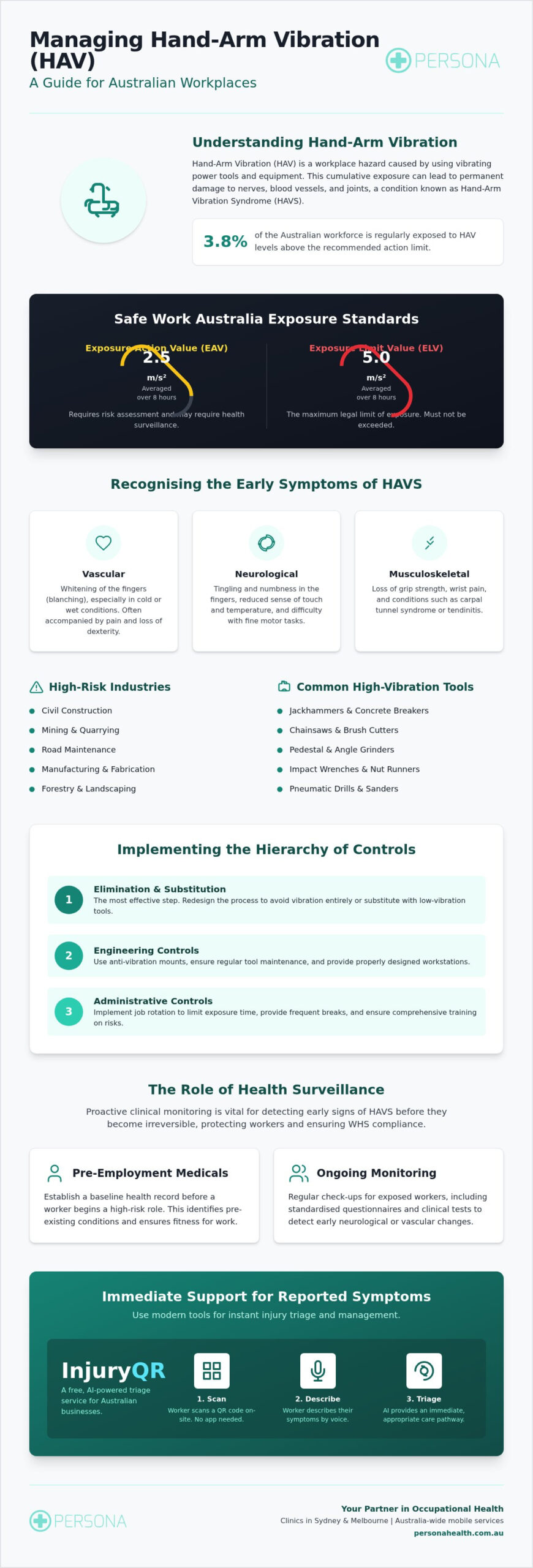
The level of risk a worker faces depends on the total vibration dose, which is determined by both the frequency of the vibration and the acceleration of the tool. However, the physical environment also plays a critical role in how the body absorbs this energy. Cold weather can reduce blood flow to the fingers, while a tight grip force increases the amount of vibration transmitted into the bone and soft tissue. Poorly maintained tools often vibrate more than their technical specifications suggest, further accelerating potential damage. Under Australian WHS standards, the daily exposure action value is 2.5 m/s² averaged over an eight-hour day, while the absolute exposure limit value is 5.0 m/s².
Why HAV Recognition is Essential for WHS Compliance
Under the Work Health and Safety Act, PCBUs (Persons Conducting a Business or Undertaking) have a primary duty of care to eliminate or minimise risks to health and safety so far as is reasonably practicable. SafeWork Australia provides the national policy framework for managing these hazards, making it clear that vibration is a known workplace risk that requires active management and monitoring. We understand that managing these technical requirements can feel overwhelming, but staying ahead of compliance is the best way to protect both your people and your business.
While Australian guidelines are robust, many local safety standards draw from international frameworks like the Control of Vibration at Work Regulations, which highlight the necessity of structured health monitoring. Establishing a baseline is a vital first step in this journey. By incorporating Pre-Employment Medicals into your onboarding process, you can identify pre-existing conditions and ensure that workers are fit for the specific demands of their roles before exposure begins. This proactive approach builds a foundation of trust and long-term safety for your entire workforce.
Recognising the Symptoms of Hand-Arm Vibration Syndrome (HAVS)
Many workers in high-vibration roles dismiss early sensations as an unavoidable part of the trade. Numbness or tingling after a long shift is often jokingly referred to as “vibration nerves,” but these are actually early warning signs of Hand-Arm Vibration Syndrome (HAVS). Unlike minor aches that resolve with rest, HAVS is a clinical condition that affects the vascular, neurological, and musculoskeletal systems. Because the damage is cumulative, early recognition is the only way to prevent permanent disability. Once the condition reaches an advanced stage, the damage is typically irreversible, making proactive intervention the only real cure.
The impact of advanced HAVS extends far beyond the worksite. It fundamentally alters a person’s quality of life. Simple daily tasks that require fine motor control, such as buttoning a work shirt, picking up small coins, or opening a jar, become frustratingly difficult. Sensory loss can also make it hard to feel the temperature of water, leading to accidental burns. Following Safe Work Australia’s risk management guide helps organisations implement the right checks before these symptoms become life-changing. We’ve seen how early detection through On-Site Health Surveillance can help workers adjust their habits and protect their long-term health.
Vibration-Induced White Finger (VWF)
VWF is the vascular component of HAVS. It presents as episodic blanching, where the fingers turn stark white and lose all sensation. This is often triggered by cold conditions or damp environments. The physiological cause is chronic damage to the small blood vessels in the hand, which eventually lose their ability to regulate blood flow. While it looks similar to Raynaud’s disease, VWF is specifically caused by occupational hand arm vibration exposure. It’s a preventable condition, but only if the exposure is managed before the vessel damage becomes permanent.
Neurological and Musculoskeletal Impacts
The neurological effects of hand arm vibration often manifest as persistent numbness or a “pins and needles” sensation. This sensory loss significantly increases the risk of developing Carpal Tunnel Syndrome (CTS) and other nerve entrapment disorders. Over time, workers may experience a noticeable loss of grip strength. This isn’t just a health issue; it’s a safety hazard that affects a worker’s ability to safely handle tools and materials. Long-term exposure can also lead to bone cysts and joint disorders in the wrists and elbows, further compromising a worker’s long-term fitness for duty and overall wellbeing.
Workplace Risk Management and Control Measures
Effective management of hand arm vibration requires a methodical application of the hierarchy of controls. While it’s tempting to jump straight to personal protective equipment, the most impactful changes happen at the top of the hierarchy. Elimination remains the gold standard. This might involve replacing manual jackhammering with remote-controlled demolition robots or using automated grinding stations in a manufacturing setting. If a worker doesn’t need to hold the vibrating tool, the risk is removed entirely. When elimination isn’t possible, substitution with low-vibration alternatives is the next logical step.
Engineering controls and administrative strategies form the backbone of a daily safety plan. Engineering controls focus on the equipment itself, ensuring that tools are fit for purpose and equipped with modern dampening technology. Administrative controls, such as job rotation, are essential for staying below the Exposure Action Value (EAV). By limiting the duration of individual exposure and mandating regular rest periods, you allow the body time to recover between tasks. We understand that balancing productivity with these safety requirements can be challenging, but a structured approach is the best way to prevent long-term health complications.
Selecting and Maintaining Plant and Equipment
Under Australian WHS laws, designers and suppliers have a clear duty to provide vibration emission data. This information is vital for your risk assessment process, allowing you to choose tools that pose the lowest possible risk to your team. However, even the most advanced tool becomes hazardous if it isn’t maintained properly. A worn-out bearing, an unbalanced blade, or a loose handle can significantly increase the vibration output. We recommend implementing a rigorous tool maintenance schedule that includes regular inspections for wear and tear. It’s also important to manage expectations regarding anti-vibration gloves. While they are useful for keeping hands warm, they shouldn’t be relied upon as a primary defence against high-frequency vibration damage.
Organising the Work Environment
The physical environment plays a significant role in how hand arm vibration affects the human body. Because cold temperatures constrict blood vessels and accelerate vascular damage, providing heated handles or warm work areas is a highly effective control measure. Furthermore, training your team on proper technique is essential. Workers should be taught to use a light grip and avoid applying unnecessary downward pressure on tools, as a tight grip increases the amount of vibration energy absorbed by the bones and joints. To ensure your team is starting from a position of strength, we recommend conducting baseline Fitness for Duty Medicals for all high-risk roles. This allows us to assess each individual’s unique health profile and identify any pre-existing vulnerabilities before they begin work in a high-vibration environment.
The Role of Health Surveillance in Vibration Management
Under Australian WHS regulations, health surveillance is mandatory when there is a significant risk to worker health from exposure to a hazardous substance or process. In the context of hand arm vibration, this requirement is typically triggered when exposure levels are likely to exceed the action value of 2.5 m/s². The primary purpose of this monitoring is early detection. We aim to identify the very first signs of vibration damage while the condition is still in its early, manageable stages. By catching these changes before they progress to permanent disability, we can work with you to adjust controls and protect your workers’ careers.
A comprehensive vibration health check involves several clinical components. Our practitioners perform a detailed clinical history to identify subjective symptoms like intermittent numbness or tingling. This is paired with physical examinations that assess sensory perception, grip strength, and manual dexterity. In some cases, specialised vascular tests may be used to evaluate blood flow in the fingers. We recommend a baseline assessment before a worker begins a high-risk role, followed by annual reviews for the first two years. If the worker remains asymptomatic and exposure is well-managed, the frequency may move to biennial reviews.
Professional On-Site Health Surveillance
Managing the health of a large workforce across multiple projects in Sydney and Melbourne is a complex task. We understand that sending workers off-site for medical appointments can lead to significant downtime and logistical challenges. To solve this, we offer professional On-Site Health Surveillance where our team brings the necessary clinical equipment directly to your workplace. This mobile approach ensures minimal disruption to your operations while maintaining 100% compliance with safety standards. Whether you prefer to use our local clinics in Parramatta and Cairnlea or require a national solution through our network of 100 affiliate clinics, we provide a consistent and reliable service tailored to your specific needs.
Interpreting Health Surveillance Results
Collecting data is only the first step. The true value of health surveillance lies in the expert interpretation of those results. Every assessment is reviewed by an Occupational Physician who specialises in workforce health. They provide clear fitness for work recommendations that help you make informed decisions about job placement and risk management. If a worker shows early signs of injury from hand arm vibration, we provide practical guidance on how to modify their duties safely. Throughout this process, we ensure strict compliance with the Privacy Act 1988. We handle all sensitive medical information with the highest level of confidentiality, protecting both the individual worker and your organisation. If you are ready to streamline your compliance, you can request a quote for on-site vibration monitoring to keep your workforce safe and productive.
Advanced Injury Management and Triage Solutions
Effective management of hand arm vibration doesn’t end with risk assessments. It requires a seamless integration of prevention and active Workplace Injury Management. When a worker reports the first signs of numbness or tingling, the speed of your response determines the clinical outcome. Delaying intervention often allows minor nerve irritation to progress into a chronic condition. We act as a vital bridge between your worksite and traditional medical care, ensuring that workers receive specialised occupational health advice rather than just a generic medical certificate from a local GP who may not understand the specific demands of your industry.
By implementing early clinical intervention, businesses can significantly reduce their Lost Time Injuries (LTIs). Our approach focuses on keeping workers safely at work through modified duties and active recovery. This not only protects the individual’s long-term health but also minimises the financial and operational impact of workers compensation claims. We believe that every report of a “tingle” is an opportunity to prevent a disability. Having a structured pathway in place ensures that no symptom is overlooked and every worker feels supported.
InjuryQR: Immediate AI-Powered Triage
To support this rapid response, we provide InjuryQR, a free, AI-powered triage service designed specifically for Australian businesses. It requires no app installation, making it incredibly easy for workers to use on-site. When a worker feels a potential injury from hand arm vibration, they simply scan a QR code and describe their symptoms by voice. The AI then asks follow-up questions to determine the severity of the issue. The outcomes range from guided self-care and telehealth appointments to immediate emergency intervention. One of the most significant benefits is the provision of immediate Certificates of Capacity. This streamlines the reporting process and ensures that the right care pathway is established within minutes, not days.
Comprehensive Occupational Health Support
Persona Health provides high-quality clinical support across Australia. Our physical clinics are strategically located in Rosebery, Gregory Hills, and Dee Why in Sydney, as well as Craigieburn in Melbourne. For national operators, our extensive network of 100+ affiliate clinics ensures that your team has access to consistent, professional care regardless of their location. This combination of local expertise and national reach makes us a reliable partner for your long-term compliance and workforce wellbeing goals. If you’re ready to protect your team from the risks of hand arm vibration, you can book a consultation for your health surveillance needs today and speak with our experienced team.
Securing Your Team’s Future Health and Compliance
Managing vibration risks requires a careful balance of technical control and clinical oversight. By implementing a structured framework that prioritises early detection, you can prevent the irreversible effects of hand arm vibration before they impact your workers’ lives or your business’s productivity. We understand that navigating WHS regulations and monitoring requirements can feel complex; however, you don’t have to manage it alone. Professional health surveillance provides the clinical clarity needed to make informed decisions about workforce safety and long-term fitness for duty.
With specialised clinics across Sydney and Melbourne, including Rosebery and Cairnlea, plus a national network of 100 affiliate clinics, we offer a scalable solution for any Australian organisation. Our commitment to innovation, such as the free AI-powered triage via InjuryQR, ensures that your team has access to immediate support and clear recovery pathways when they need them most. We are ready to help you build a resilient, compliant, and healthy workforce through an expert clinical partnership tailored to your specific industry needs.
Contact Persona Health to organise your Hand-Arm Vibration Health Surveillance today. Let’s work together to ensure your people remain fit, healthy, and capable for the long term.
Frequently Asked Questions
What is the most common symptom of hand-arm vibration syndrome?
The most frequent early sign of hand arm vibration syndrome is a persistent sensation of tingling or numbness in the fingers, often described as pins and needles. This typically occurs after using vibrating tools and may be intermittent in the early stages. Over time, these sensations can become permanent and are often accompanied by a loss of tactile sensitivity, making it difficult to perform tasks that require fine motor control.
Is hand-arm vibration syndrome permanent?
Yes, advanced HAVS is a permanent and irreversible condition because the damage to nerves and blood vessels cannot be repaired once it reaches a certain threshold. However, if the condition is identified early through professional health surveillance, its progression can be halted. This is why baseline medicals and regular monitoring are essential; they allow for the implementation of controls before a worker develops a lifelong disability.
Do anti-vibration gloves actually work?
Anti-vibration gloves provide limited protection and should never be used as a primary risk control measure. While they can help keep hands warm, which maintains blood flow and reduces the severity of vascular symptoms, they often fail to dampen the specific frequencies that cause the most damage. Engineering controls, such as selecting low-vibration tools and ensuring regular maintenance, are far more effective at reducing actual exposure levels in the workplace.
How often should workers undergo vibration health surveillance?
We recommend that workers undergo an initial baseline assessment before starting a high-risk role. This is typically followed by annual reviews for the first two years of exposure to establish a clear health trend. If a worker remains asymptomatic and workplace exposure is well-managed, the frequency may move to biennial reviews. However, any report of new symptoms should trigger an immediate clinical reassessment to prevent further injury or disability.
What are the legal exposure limits for vibration in Australia?
While Australian WHS laws do not have a single legislated number, SafeWork Australia provides clear guidance based on international standards. The Exposure Action Value (EAV) is 2.5 m/s² averaged over an eight-hour day, which is the point where health surveillance becomes mandatory. The Exposure Limit Value (ELV) is 5.0 m/s², which represents the absolute maximum level a worker should ever be exposed to in any given shift to ensure their safety.
Can smoking make hand-arm vibration symptoms worse?
Yes, smoking significantly exacerbates the vascular symptoms of hand arm vibration. Nicotine acts as a vasoconstrictor, meaning it narrows the small blood vessels in the hands and reduces peripheral circulation. This makes a smoker much more susceptible to Vibration-Induced White Finger (VWF). During our clinical assessments, we often discuss lifestyle factors with workers, as quitting smoking can be a powerful way to protect their long-term vascular health and recovery.
What should I do if a worker reports numbness in their hands?
You should act immediately by providing the worker with access to professional triage. Using a tool like InjuryQR allows the worker to voice-describe their symptoms and receive an instant AI-driven clinical pathway. Following this, the worker should be referred for a formal medical review to determine their fitness for duty. Simultaneously, you should review your workplace risk assessments and tool maintenance schedules to identify any failures in your current vibration controls.
Is a GP the right person to assess hand-arm vibration syndrome?
While a GP can provide general care, a specialised occupational health provider is better equipped to assess HAVS. We use specific clinical protocols and vascular tests that are not typically available in a standard general practice. Our teams in Sydney and Melbourne understand the complexities of Australian WHS legislation and can provide practical, employer-focused recommendations that balance the worker’s health needs with the operational requirements of your business.

Article by
Ian Nicholson
Ian is the Business Support Manager at Persona Health, where he plays a key role across IT, sales, marketing and business operations. With a broad skill set and a practical, solutions-focused approach, Ian helps drive the systems, communication and commercial strategy that support Persona Health’s continued growth across Australia.