

An independent medical examiner is often misunderstood as a roadblock to recovery, yet they serve as a vital forensic tool for uncovering the clinical truth in complex workplace injury claims. When a worker’s recovery plateaus or medical opinions start to conflict, the clarity provided by an impartial specialist is often the only way to move forward with confidence. At Persona Health, we see these assessments not as obstacles, but as a bridge to definitive answers and safer outcomes for both the individual and the organisation.
We understand that the workers’ compensation system can feel like a maze of legal jargon and administrative delays. It is frustrating when you are stuck between different sets of advice, wondering if an assessment will truly be fair or if it will simply complicate an already stressful situation for everyone involved. You deserve a process that respects the individual’s unique recovery journey while providing the evidence-based certainty required by Australian legislation and bodies like SafeWork Australia.
This essential guide for 2026 clarifies exactly how these assessments work and why they are fundamental to a sustainable return to work plan. You will learn about the latest fee structures from bodies like WorkSafe Victoria and Comcare, the importance of clinical objectivity, and how our expert medical team delivers the insights needed to resolve claims and support your team’s long-term health.
Key Takeaways
- Understand how an independent medical examiner provides an impartial, forensic perspective to resolve conflicting medical opinions and clarify complex workplace claims.
- Learn the critical differences between the clinical role of a treating doctor and the objective, evidence-based focus required for a forensic medical assessment.
- Discover the step-by-step referral and examination process that ensures compliance with Australian WHS legislation and regulatory standards.
- Explore how proactive injury management and early intervention tools like InjuryQR can reduce claim durations and the need for disputed medical assessments.
- Find out how Persona Health’s national network of occupational physicians provides the clarity needed for safe and sustainable return to work transitions.
What is an Independent Medical Examiner (IME)?
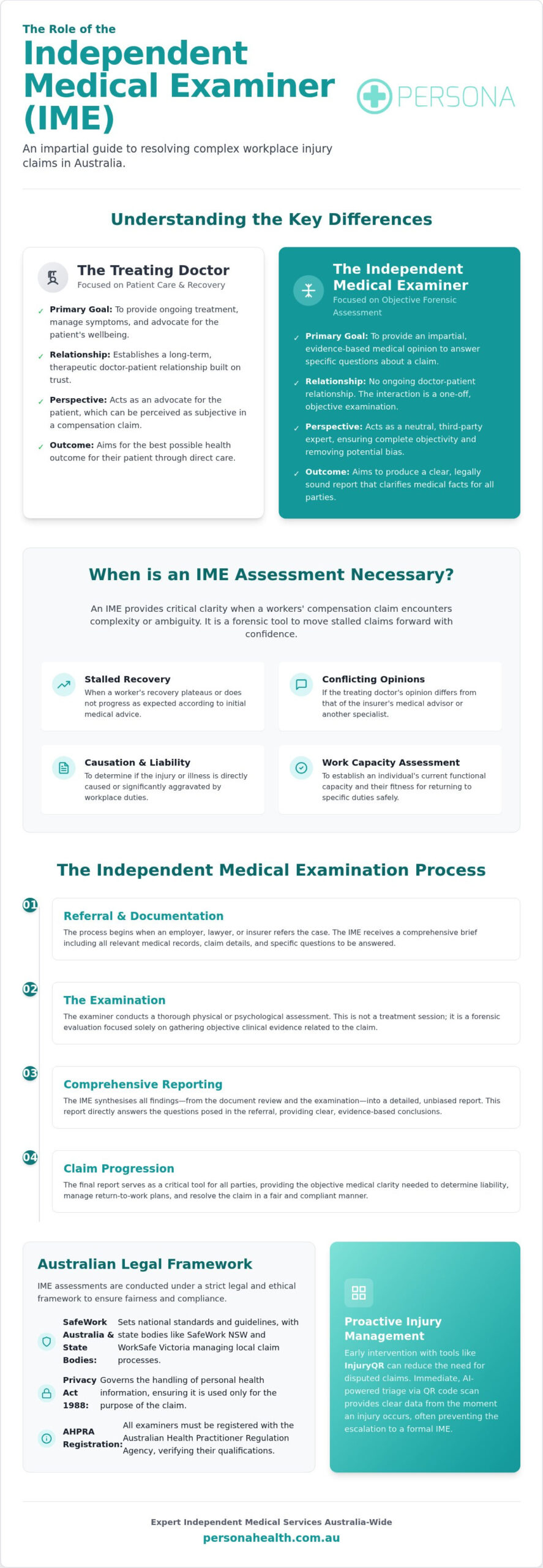
An independent medical examiner is a highly qualified medical specialist who provides an impartial assessment of a person’s health status, typically within the context of a workers’ compensation claim. Unlike a treating doctor, who focuses on day-to-day care and recovery, an IME acts as a forensic expert. They must be registered with the Australian Health Practitioner Regulation Agency (AHPRA) and usually possess years of experience in their specific clinical field, such as orthopaedics, psychiatry, or occupational medicine. At Persona Health, our specialists across our clinics in Parramatta, Rosebery, Gregory Hills, and Craigieburn focus on delivering these reports with the clinical accuracy that modern workplaces require.
The relationship between the examiner and the individual is distinct from a standard clinical consultation. It’s essential to understand that an independent medical examiner does not provide ongoing treatment, prescriptions, or referrals. Because there is no ongoing doctor-patient relationship, their focus remains strictly on providing an objective, third-party opinion to clarify specific medical questions raised by an insurer or employer. This separation ensures the report remains unbiased and evidence-based.
To better understand this concept, watch this helpful video:
The Legal Framework in Australia
Workplace injuries in Australia are governed by a robust set of regulations designed to protect both the worker and the employer. National bodies like SafeWork Australia set the standard, while state-specific organisations such as SafeWork NSW and WorkSafe Victoria manage local compliance and claim processes. When an assessment is conducted, the Privacy Act 1988 ensures that any personal health information gathered remains confidential and is only used for the purposes of the claim. This legal structure ensures that every examination is conducted under strict WHS legislation, maintaining the integrity of the medical evidence provided for all parties involved.
Why an IME is Requested
There are several reasons why a business or insurer might request an assessment. Often, it’s about gaining clarity when a worker’s recovery isn’t progressing as expected or when there are conflicting medical opinions. The examiner’s role is to confirm a diagnosis, assess the direct connection between the workplace incident and the injury, and determine the individual’s functional capacity for a safe return to work. Our teams in Dee Why and Cairnlea frequently see how these reports provide the necessary breakthrough for stalled claims.
Proactive injury management is the best way to ensure these assessments are used effectively. For example, using a tool like InjuryQR allows workers to scan a code and report an injury via voice immediately. This early intervention often provides the clear clinical data needed to avoid unnecessary disputes later in the claim process. By identifying the right path early, whether it’s self-care or telehealth, businesses can reduce Lost Time Injuries (LTIs) and provide a more supportive environment for their staff. This approach ensures that when an independent medical examiner is eventually required, they have a comprehensive history of the injury from the very first moment it occurred.
IME vs Treating Doctor: Understanding the Difference
When a worker visits their regular GP, the primary focus is on the therapeutic alliance. The doctor’s goal is to provide treatment, manage pain, and advocate for the patient’s well-being. This relationship is built on trust; however, this advocacy can sometimes create a perceived conflict of interest during a complex workers’ compensation claim. A treating doctor may naturally lean toward supporting a patient’s subjective experience to maintain that clinical bond.
An independent medical examiner operates under a different mandate. Their role is forensic rather than therapeutic. They aren’t there to prescribe medication or refer the individual for surgery. Instead, they look at the “big picture” of how an injury affects a person’s ability to perform their specific job role. By stripping away the emotional weight of the doctor-patient relationship, the examiner can provide the objective clarity that insurers and employers need to make informed decisions.
The Concept of Clinical Independence
It is common for workers to feel anxious about the independence of an examiner, especially when the assessment is requested by an insurer. It is vital to understand that medical specialists are bound by strict ethical obligations and AHPRA standards. The Comcare guidelines for independent medical examiners emphasise that these professionals must provide an unbiased opinion based on clinical facts. They rely on objective evidence, such as MRI scans, pathology reports, and physical functional tests, to support their findings rather than relying solely on anecdotal reports.
Fitness for Duty and Capacity
The findings within an IME report are often the catalyst for a successful return to work. By providing a clear snapshot of a worker’s functional limits, the report directly influences the Certificate of Capacity. This process is closely linked to formal Fitness for Duty assessments, which evaluate whether an employee can safely perform their duties without risk to themselves or others. This shift from acute care to long-term workplace management ensures that transitions are safe and sustainable. For organisations looking to streamline this process, you can contact the Persona Health team to learn how our specialists bridge the gap between clinical care and workplace safety.
The Independent Medical Examination Process: What to Expect
Understanding the timeline of an assessment helps reduce the anxiety often associated with these appointments. An examination is a methodical, evidence-based process designed to provide a clear clinical picture. At our clinics in Parramatta, Rosebery, and Craigieburn, we ensure the process is transparent and respectful for every individual. The journey typically follows five distinct stages:
- The Referral: An insurer or employer initiates the process by sending a formal referral. This document contains specific questions for the independent medical examiner to address, such as the cause of the injury or the suitability of current duties.
- Document Review: Before the appointment, the specialist reviews your entire medical file. This includes previous GP notes, specialist reports, and diagnostic imaging like MRI or CT scans.
- The Clinical Examination: During the face-to-face appointment, the doctor will discuss your medical history and perform a physical assessment. They focus on functional movement, strength, and how the injury impacts your specific job requirements.
- Drafting the Report: The examiner synthesises the clinical findings with the provided medical history to answer the referral questions. In line with 2026 industry standards, such as those set by WorkSafe Queensland, reports are typically finalised within 10 working days to ensure claim momentum.
- Implementation: The final report is sent to the requesting party. The recommendations are then used to update the return to work plan, ensuring any duties assigned are safe and sustainable.
Preparing for Your Appointment
To get the most out of your assessment, we recommend wearing comfortable, loose-fitting clothing that allows the specialist to examine the injured area easily. Please bring any recent X-rays or scan results that might not have been included in your digital file. It is vital to be honest and transparent during the history-taking. The examiner may ask about your daily activities, such as driving or household chores, to understand your functional capacity outside of the workplace. This holistic view helps in creating a more accurate recovery roadmap.
The IME Report
A standard report is a comprehensive document that covers diagnosis, causation, and capacity for work. It provides the objective evidence required by bodies like SafeWork NSW or WorkSafe Victoria to resolve disputes. Persona Health utilises modern digital reporting systems to ensure fast turnaround times and clinical accuracy. Under the Privacy Act 1988, your information is handled with the highest level of confidentiality. While the report is sent to the party who requested it, you can generally access a copy through your insurer or legal representative. Proactive injury management thrives on this level of clarity, allowing all parties to move forward with a shared understanding of the clinical truth.
Strategic Injury Management and Early Intervention
The most effective way to manage a workplace injury is to address it before it becomes a complex legal dispute. Proactive injury management is not just about compliance; it is a strategic approach that prioritises the individual’s recovery from day one. When an employer engages with a worker’s health early, they significantly reduce the friction that typically leads to the appointment of an independent medical examiner. Clear communication between the supervisor, the worker, and the medical provider ensures everyone is aligned on the recovery goals, preventing the “us versus them” mentality that often stalls claims.
Navigating the nuances of the Australian workers’ compensation system can be challenging for any business. This is where an Injury Management Consultant becomes invaluable. By acting as a bridge between all stakeholders, these consultants help identify potential roadblocks early. They ensure that the medical advice received is practical and focused on a safe return to work, which prevents minor incidents from escalating into chronic disabilities or long-term lost time.
Introducing InjuryQR for Immediate Triage
At Persona Health, we believe technology should simplify the recovery process. Our InjuryQR service provides a free, AI-powered triage solution that workers can access instantly. The process is straightforward: a worker scans a physical QR code on a poster or magnet with their smartphone. There is no app to download. They simply describe the injury by voice, and the AI provides immediate guidance. This might include self-care instructions for minor strains, a telehealth referral, or direction to the nearest emergency department if the situation is critical.
This immediate response is a game-changer for reducing Lost Time Injuries (LTIs). By providing instant next steps, InjuryQR ensures that workers feel supported immediately, rather than waiting days for a GP appointment. Where appropriate, the system can even facilitate the immediate issuance of Certificates of Capacity, ensuring the claim starts with accurate clinical data. This speed of response is essential for meeting your duty of care under Australian WHS legislation.
Reducing Complexity in Claims
One of the main reasons an independent medical examiner is requested later in a claim is a lack of clear evidence from the time of the injury. InjuryQR solves this by creating a robust evidence trail from the very first minute. This digital record captures the worker’s description of the event in their own words, providing a factual foundation that reduces ambiguity. Businesses can support this culture of safety by ordering free physical InjuryQR assets, such as posters and magnets, to be placed in high-traffic areas or on machinery. If you want to transform your workplace safety culture, you can speak with the Persona Health team about integrating these modern triage solutions today.
Expert Independent Medical Services with Persona Health
Persona Health stands as a premier partner for occupational health across Australia, specialising in providing the clinical clarity required for complex workplace claims. Our medical team consists of highly experienced professionals, including Occupational Physicians who have spent years navigating the intricate requirements of SafeWork NSW, WorkSafe Victoria, and Comcare. When your organisation requires an independent medical examiner, you need more than just a report; you need a forensic analysis that is both legally robust and clinically sound.
We’ve designed our reporting systems to be employer-focused, ensuring that the insights you receive are practical and actionable. We understand that claim delays are costly for businesses and stressful for workers, so we prioritise fast turnaround times for all assessments. While our physical clinics are strategically located in Sydney and Melbourne, our national reach is supported by a network of over 100 affiliate clinics and a fleet of mobile medical units for on-site services.
Our Clinic Locations
Our clinics are conveniently situated to serve major industrial and business hubs. In Sydney, you can find our expert teams in Parramatta, Rosebery, Gregory Hills, and Dee Why. For our Victorian clients, we operate modern facilities in Cairnlea and Craigieburn. Each location is equipped with the latest diagnostic technology to ensure every assessment is based on objective, verifiable data. For businesses with remote operations or large-scale requirements, our mobile medical units bring our high standards of care directly to your workplace.
Why Choose Persona Health for Your IME?
Choosing the right specialist is about balancing professional authority with an empathetic, person-centred approach. We treat every individual with respect, acknowledging that the assessment process can be a source of anxiety. Our commitment to objective evidence ensures that every report provides a clear path forward, reducing the likelihood of further disputes. This proactive approach is part of a total health strategy that begins with robust Pre-Employment Medicals to ensure the right fit from day one.
By integrating modern digital tools like InjuryQR with our expert clinical assessments, we help Australian workplaces foster a culture of safety and transparency. Our goal is to empower your business with the medical evidence needed to support your team’s health and maintain a productive, compliant workplace. Whether you are managing a single complex claim or looking for a national occupational health partner, the Persona Health team is ready to assist.
Securing Clarity for Your Workplace Recovery Journey
An independent medical examiner is more than just a clinical specialist; they are a bridge to the objective truth required for safe, sustainable return to work transitions. By understanding the forensic nature of these assessments and the importance of early intervention, your organisation can navigate the complexities of workers’ compensation with confidence. We have seen how clear, evidence-based reporting resolves conflicting opinions and reduces the stress associated with long-term injury management.
At Persona Health, we are committed to providing the professional authority and empathetic support your team needs. With our expert team of AHPRA-registered specialists and convenient clinics across Sydney and Melbourne, we ensure every assessment is thorough and respectful. We pride ourselves on fast turnaround times for all medical reports, helping you move forward without unnecessary delays. This commitment to clinical accuracy supports both the individual’s recovery and the employer’s duty of care.
Whether you are managing a single difficult claim or looking to refine your entire occupational health strategy, our team is here to help. Contact Persona Health today to arrange an expert Independent Medical Examination and take the first step toward a clearer, safer recovery path for your employees. You don’t have to navigate these challenges alone.
Frequently Asked Questions
Is an Independent Medical Examiner the same as my own doctor?
No, an independent medical examiner is a specialist who provides a forensic, third-party opinion rather than ongoing clinical care. While your GP focuses on your day-to-day treatment and advocacy, the examiner’s role is to provide an impartial assessment of your health status for the insurer or employer. They do not prescribe medication or provide referrals, as their mandate is purely evaluative.
Can I refuse to attend an Independent Medical Examination?
Generally, you cannot refuse to attend if the request is considered reasonable under Australian workers’ compensation legislation. In states like New South Wales and Victoria, attending a requested assessment is often a condition of maintaining your claim benefits. If you fail to attend without a valid medical reason, the insurer may have the right to suspend your weekly payments or medical expenses until the appointment is completed.
How long does an IME appointment typically take?
An appointment usually takes between 45 and 90 minutes, depending on the complexity of your injury. This time allows the specialist to conduct a thorough history-taking and a physical examination focused on your functional capacity. At Persona Health, we ensure our specialists have adequate time to understand the unique nuances of your recovery journey while maintaining a professional and efficient process.
Who pays for the Independent Medical Examination in Australia?
The party that requests the assessment is responsible for the cost, which is almost always the insurer or the employer. As a worker, you are not required to pay for the independent medical examiner or the resulting report. In many cases, you are also entitled to claim reimbursement for reasonable travel expenses incurred when attending the appointment.
Can I bring a support person to my IME appointment?
Yes, you are typically allowed to bring a friend, family member, or union representative for emotional support. However, the support person must not interfere with the clinical examination or answer questions on your behalf. It is best to notify the clinic in advance if you plan to bring someone, as some psychiatric assessments may have specific guidelines regarding the presence of third parties during the consultation.
What happens if I disagree with the Independent Medical Examiner’s report?
If you disagree with the findings, you can provide supplementary evidence to the insurer. This often involves asking your treating GP or specialist to review the report and provide a clinical rebuttal or additional data that may have been overlooked. If the dispute remains unresolved, the matter may be referred to a state-based medical panel or a workers’ compensation tribunal for a final determination.
How often can an insurer request an IME?
There is no fixed limit on the number of assessments, but the requests must be “reasonable” and necessary for the management of the claim. Insurers typically request an independent medical examiner when there is a significant change in your capacity, a plateau in your recovery, or a need to determine permanent impairment. Frequent or repetitive requests without a clear clinical justification can sometimes be challenged through regulatory bodies.
Is the IME report confidential?
Yes, the report is confidential and is protected under the Privacy Act 1988. However, because the assessment is requested for a specific legal or insurance purpose, the report is shared with the insurer, the employer, and relevant legal representatives. It is not a public document and cannot be shared with third parties who are not directly involved in the management of your claim.

Article by
Ian Nicholson
Ian is the Business Support Manager at Persona Health, where he plays a key role across IT, sales, marketing and business operations. With a broad skill set and a practical, solutions-focused approach, Ian helps drive the systems, communication and commercial strategy that support Persona Health’s continued growth across Australia.