
URL Slug: /injuryqr-workplace-injury-reporting-guide-2026/
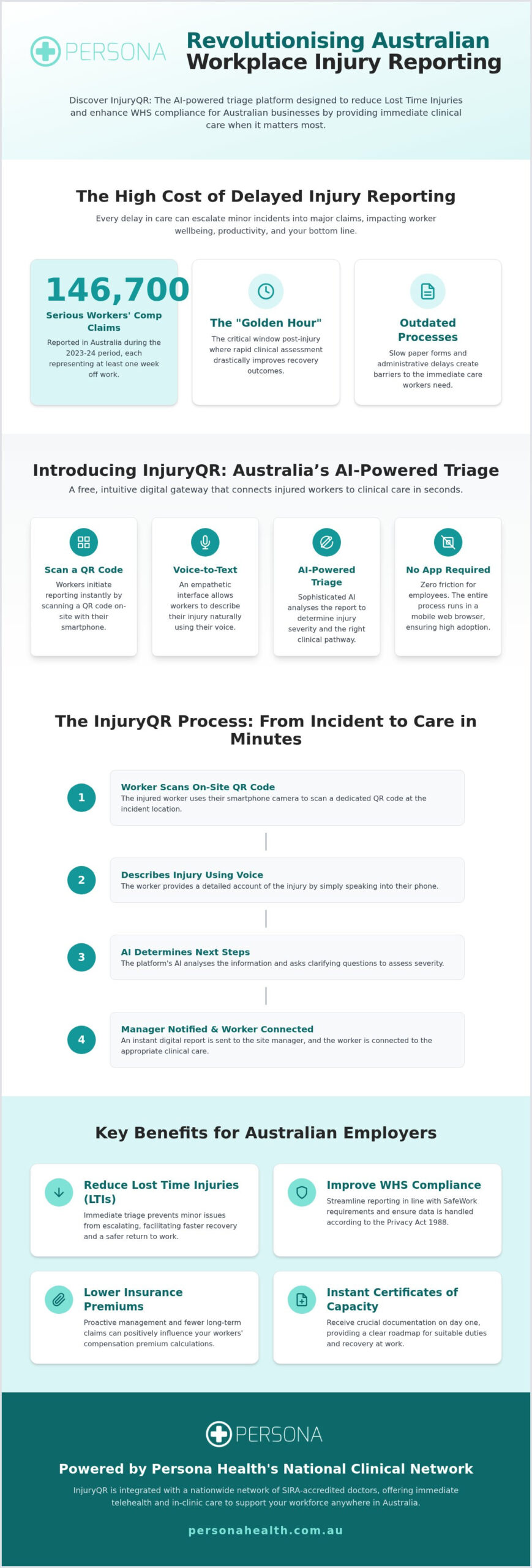
With 146,700 serious workers’ compensation claims reported across Australia in the 2023-24 period, the need for a rapid response has never been more urgent. You likely understand the immense pressure placed on your team when an injury occurs, particularly when faced with delayed medical assessments and the stress of complex paperwork. It’s a challenging time for both the injured worker and the safety manager, where every minute of delay can complicate the recovery journey and impact your business’s productivity. Acknowledging these difficulties is the first step toward building a more resilient and supportive workplace culture.
This guide explores how InjuryQR revolutionises workplace safety by providing immediate, AI-powered triage that reduces Lost Time Injuries for Australian businesses. You’ll discover how this free, app-free solution simplifies compliance with SafeWork requirements while providing your workers with the empathetic, expert care they deserve. We will walk through the innovative technology, the step-by-step reporting process, and how integrating these digital tools with a national clinical network ensures a faster, safer return to work for your entire workforce.
Key Takeaways
- Understand why immediate clinical intervention during the “Golden Hour” is vital for improving recovery outcomes and reducing long-term disability.
- Discover how InjuryQR provides an AI-powered triage gateway that requires no app installation, ensuring zero friction for workers during critical moments.
- Learn how to reduce Lost Time Injuries (LTIs) and simplify SafeWork compliance by connecting injured staff directly to occupational health specialists.
- Master the simple step-by-step process of using voice-to-text reporting and smartphone QR scans to generate instant digital reports for site managers.
- Explore the benefits of a national clinical network of SIRA-accredited doctors available for both immediate telehealth and in-clinic follow-up care.
Rethinking Workplace Injury Management: Why Speed is Critical
Injury management represents the coordinated effort to help injured workers recover and return to work safely. In the field of Occupational safety and health, practitioners often refer to the “Golden Hour”. This is the critical window immediately following an incident where rapid clinical assessment can drastically improve a worker’s long-term health trajectory. When medical intervention is delayed, minor strains often escalate into chronic issues, leading to poorer outcomes and extended absences. Digital tools like InjuryQR bridge this gap by ensuring the first point of contact is clinical rather than administrative.
The impact of Lost Time Injuries (LTIs) goes beyond simple statistics; it deeply affects Australian business productivity and team morale. According to SafeWork Australia, there were 146,700 serious workers’ compensation claims in the 2023-24 period. Each of these claims represents at least one week away from work, creating significant operational disruptions. These incidents cost the national economy billions of dollars every year. For a local employer, a single poorly managed injury can trigger a cycle of absenteeism and replacement costs that far exceed the initial investment in proactive safety technology.
The Legal Landscape: WHS Obligations for Australian Employers
The Work Health and Safety (WHS) Act places a primary duty of care on employers to provide a safe working environment. This legal obligation includes the requirement for prompt reporting and effective recovery-at-work programmes. Traditional paper-based reporting systems often fail this requirement because they are slow and prone to human error. Additionally, businesses must navigate the complexities of the Privacy Act 1988 when handling sensitive medical data. As new transparency rules regarding automated systems take effect in late 2026, ensuring your reporting platform is both compliant and secure becomes a non-negotiable priority for HSEQ managers.
Financial Implications: Workers Compensation and Premiums
Early clinical intervention directly influences how insurance premiums are calculated for your business. By facilitating immediate triage, you can prevent minor incidents from becoming major, long-term claims that sit on your books for years. A critical component of this process is the Certificate of Capacity. Securing this document on day one provides an immediate roadmap for suitable duties, keeping the worker engaged with the workplace. Professional injury management starts with speed, ensuring that the worker feels supported while the business protects its financial and operational health.
What is InjuryQR? Australia’s AI-Powered Triage Solution
InjuryQR is a proprietary digital gateway developed by Persona Health to streamline the transition from a workplace incident to clinical care. Unlike traditional reporting methods that rely on cumbersome paper forms or slow administrative chains, this platform acts as an immediate clinical “front door” for the Australian workforce. One of its most significant advantages is that it requires no app installation. This feature directly addresses common worker resistance to downloading new software on personal devices, ensuring that nothing stands in the way of a worker seeking help when they are most vulnerable. For businesses, the service is entirely free to implement, as the subsequent clinical costs are covered through standard workers’ compensation insurance at AMA rates.
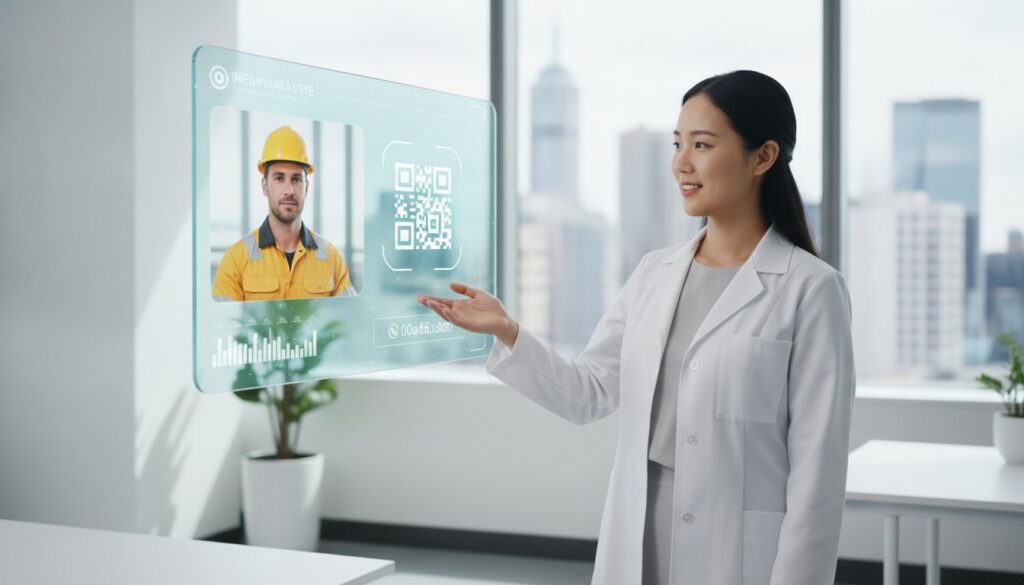
The reporting process is intuitive and deeply empathetic. By simply scanning a QR code located on-site, a worker can describe their injury using voice-to-text technology. This allows for a richer, more detailed account of the incident than a standard text box might provide, capturing the nuances of the situation while the details are still fresh. While organisations in other jurisdictions may look to international standards for mandatory injury reporting, InjuryQR is built specifically for the Australian regulatory environment, ensuring every report is compliant and clinically actionable from the first second.
The Technology Behind the Triage
At the heart of the platform is a sophisticated AI mechanism that analyses voice descriptions to determine the potential severity of an injury. Rather than a static form, the system engages in an intelligent dialogue, asking follow-up questions based on the worker’s initial input. This logic flow leads to one of several outcomes: guided self-care for minor issues, an immediate telehealth consultation, or a direct referral to emergency services for critical incidents. Security is a paramount concern, and the platform is designed to exceed the requirements of the Privacy Act 1988. It ensures that sensitive health data and technical identifiers are handled with the highest level of encryption, providing peace of mind for both the employer and the employee during the triage phase.
Accessibility and Ease of Use
In high-pressure environments like construction sites or manufacturing floors, simplicity is essential for safety. A quick smartphone scan is all it takes to trigger the triage process, utilising GPS location services to ensure the report is accurately logged to the specific site. This accessibility extends Australia-wide through an integrated telehealth network, connecting workers to SIRA-accredited doctors regardless of their location. For larger organisations with over 250 employees, custom portal options are available to integrate the data directly into existing HSEQ systems. To see how this technology can be tailored to your specific site requirements, you can explore the features of InjuryQR and begin modernising your reporting protocols today.
Key Benefits for Employers: Reducing LTIs and Improving Compliance
Employers often struggle with the “doctor shopping” phenomenon, where an injured worker visits a local GP who may not understand the specific physical demands of their role. This frequently results in overly restrictive “unfit for work” certificates that increase Lost Time Injuries (LTIs). InjuryQR eliminates this uncertainty by ensuring the worker’s first clinical interaction is with an occupational health specialist. By directing the individual toward a professional path immediately, you ensure they receive care that focuses on safe recovery and appropriate stay-at-work or return-to-work outcomes.
When a worker scans the code, the HSEQ or site manager receives an instant digital report. This immediate visibility allows for rapid incident investigation while the scene is still secure and details are fresh in everyone’s minds. Because the service connects to SIRA-accredited doctors, the medical advice provided is both authoritative and aligned with Australian clinical frameworks. This professional oversight significantly reduces the administrative burden on HR and safety departments, as they no longer need to chase missing incident details or decode vague medical notes from non-specialist clinics.
Streamlining the Claims Process
InjuryQR facilitates the rapid issuance of a Certificate of Capacity, which is the cornerstone of any successful recovery-at-work programme in Australia. By integrating with the expectations of state-based regulators and insurers, the platform accelerates the entire claims process from the moment of impact. InjuryQR reduces the paperwork lag that often delays recovery and complicates insurance lodgements. This speed ensures that workers feel supported and cared for, which is a proven factor in reducing the psychological secondary injuries often associated with complex workplace injury management cases.
Standardising Safety Across Multiple Sites
For organisations operating across multiple states or remote locations, maintaining a consistent reporting standard is a significant operational challenge. The platform offers custom posters and branded portals that ensure every site, whether a metropolitan warehouse or a remote construction project, follows the same high standard of care. You can even link the service into existing company employee apps via unique URLs, creating a seamless and familiar experience for your workforce. This level of standardisation ensures that your business remains compliant with its duty of care under the WHS Act, regardless of where your team is located. Implementing such a system demonstrates a sophisticated commitment to workforce health, much like the rigorous standards required for Cat 3 rail medicals and other high-risk health surveillance protocols.
How InjuryQR Works on the Ground: A Step-by-Step Guide
Implementing a new safety protocol often meets resistance if the technology is too complex or time-consuming. InjuryQR removes these barriers by utilising a tool that every worker already carries: their smartphone. When an incident occurs, the worker or a witness simply scans the on-site QR code using their phone’s camera. There’s no need to search an app store, remember a password, or wait for a download during a moment of distress. This immediate access ensures that the reporting process begins the moment it’s needed most.
Once the secure portal opens, the worker describes what happened using voice-to-text technology. This is a vital feature for workplace safety, as a worker with a hand injury or someone in a state of shock shouldn’t be forced to type detailed notes into small fields. The AI doesn’t just transcribe the words; it understands the clinical context. It assesses the input and asks specific follow-up questions to gauge the urgency and nature of the injury. Within seconds, the system provides a clear outcome, ranging from guided self-care advice for minor scrapes to an immediate telehealth link or a referral to a nearby clinic.
The Telehealth Experience
If the triage indicates a need for medical review, the worker is connected to a SIRA-accredited doctor via a secure telehealth platform. During this virtual assessment, the doctor conducts a thorough clinical interview and a visual inspection via video. They can reach a preliminary diagnosis, explain the recovery path in plain English, and ensure the worker feels supported. Because these are occupational specialists, they can prescribe necessary medication or refer the worker for urgent imaging like X-rays or MRIs. This happens while the worker is still on-site or at home, effectively bypassing the long wait times often found in public hospital emergency rooms.
Post-Reporting Actions for Managers
While the worker receives clinical care, the system automatically handles the administrative requirements for the employer. Site managers and HSEQ officers receive the injury report in real-time, providing immediate visibility of the incident. This allows for an early start on return-to-work planning and incident investigation while the scene is still secure. By having the medical facts early, you can organise suitable duties that align with the doctor’s initial findings. For long-term recovery support and professional guidance, you can access the Persona Health injury management page to ensure every step of the process follows Australian best practices. If you’re ready to modernise your site’s response, you can contact our injury management team to discuss a tailored implementation for your business.
Integrating InjuryQR with Persona Health’s National Network
InjuryQR serves as the vital starting point for a worker’s journey toward recovery. It’s the digital entry point that leads directly into Persona Health’s extensive clinical ecosystem, acting as a “front door” for all subsequent medical needs. Having SIRA-accredited doctors available for both immediate telehealth and follow-up in-clinic visits ensures that the medical advice remains consistent and authoritative throughout the claim. Whether a worker is in metropolitan Sydney or regional Victoria, the care they receive is grounded in the same high standards of occupational excellence.
Our Sydney clinics are located in Parramatta, Gregory Hills, Rosebery, and Dee Why. In Melbourne, we serve you from Cairnlea and Craigieburn. For businesses with a wider footprint, our network of over 100 affiliate clinics ensures that professional injury management is never out of reach. This network allows for a consistent standard of care across the country, meaning a worker in regional Western Australia receives the same clinical expertise as one in the heart of Sydney. This combination of digital speed and physical proximity provides a safety net that protects both the employee’s health and the employer’s operational continuity.
Comprehensive Injury Management and Return-to-Work
In instances where recovery is complicated by pre-existing conditions or workplace complexities, we involve Injury Management Consultants (IMCs). These specialists facilitate communication between all parties to resolve barriers to recovery and ensure the return-to-work plan is realistic. Additionally, Independent Medical Examinations (IMEs) provide an objective assessment of a worker’s status when a definitive clinical opinion is required for claim resolution. As the recovery nears its conclusion, we conduct Fitness for Duty (FFD) assessments to confirm that the individual can safely return to their specific role without risk of re-injury.
Mobile and On-Site Support
For larger infrastructure projects or remote industrial sites, we provide Australia-wide mobile services that bring the clinic to your location. This proactive approach includes on-site health surveillance, which works in tandem with InjuryQR to identify risks before they lead to an incident. By monitoring factors like silica exposure, noise levels, or lead exposure, we help prevent injuries from occurring in the first place. The “Persona Health difference” lies in this unique blend of innovative technology and expert clinical care, ensuring your workforce remains healthy, compliant, and productive.
Securing the Future of Your Workforce
Modernising your workplace safety protocols doesn’t have to be a complex or costly endeavour. By embracing the speed and precision of AI-powered triage, you protect your team during those vital first moments after an incident. InjuryQR provides a seamless, app-free gateway that connects your workers to SIRA-accredited doctors across Australia, ensuring medical intervention is both immediate and authoritative. This proactive approach not only simplifies your WHS compliance but also significantly reduces the risk of Lost Time Injuries by providing clear, clinical pathways from day one. You can bridge the gap between an incident and recovery with a solution that prioritises the individual’s well-being while safeguarding your business’s operational stability.
Whether you are managing a single site in Sydney or a national network of projects, the right technology makes all the difference in fostering a resilient culture of care. Our team is dedicated to providing the expert clinical support and innovative tools required to keep your workforce healthy and productive. Take the first step toward a safer, more efficient workplace by reaching out to our occupational health specialists today. Get started with InjuryQR for your workplace today and ensure your team is always in expert hands. We look forward to partnering with you on your journey toward excellence in workplace safety.
Frequently Asked Questions
Is InjuryQR really free for my business to use?
Yes, the InjuryQR platform is free for businesses to implement and use. Persona Health provides the digital reporting tool at no cost to employers because the subsequent medical consultations are funded through your workers’ compensation insurance. We bill these services at standard Australian Medical Association (AMA) rates. This ensures you receive specialist occupational care for your team without adding a subscription fee or software licensing cost to your operational budget.
Do my employees need to download an app to use InjuryQR?
No, there is absolutely no app installation required for a worker to access the service. Employees simply use their smartphone’s native camera to scan a QR code on-site, which opens a secure web portal instantly. This removes the common friction of forgotten passwords or lack of storage space on personal devices. It ensures that reporting remains accessible to every member of your workforce, even during the high-stress moments following a workplace incident.
What happens if an injury is life-threatening?
If the AI triage process identifies symptoms that suggest a life-threatening emergency, it will immediately instruct the user to call 000. While InjuryQR is designed to streamline occupational health reporting, it is not a replacement for emergency services. The system’s logic prioritises worker safety above all else, providing clear instructions for emergency intervention before any administrative or non-urgent clinical steps are taken by the platform or the reporting witness.
Are the doctors using InjuryQR accredited for Workers Compensation claims?
Yes, all medical practitioners within our network are SIRA-accredited and highly experienced in the Australian workers’ compensation system. This accreditation is vital because it ensures that the doctors understand the legal requirements for issuing a Certificate of Capacity and the clinical guidelines for recovery at work. You can be confident that the medical advice provided aligns with state-based regulatory frameworks like SafeWork NSW, WorkSafe Victoria, or Comcare requirements.
Can I use InjuryQR if my business is located in a regional area?
Yes, the service is available Australia-wide through our comprehensive telehealth platform and extensive affiliate clinic network. Even if your project is in a remote location, your workers can access immediate clinical triage and speak with an occupational specialist via video consultation. For more permanent regional sites, we can also coordinate follow-up care through our 100 plus affiliate clinics located in regional centres and rural hubs across the country.
How does the AI triage ensure worker privacy and data security?
We take data security seriously and strictly adhere to the Privacy Act 1988 and the Australian Privacy Principles. The platform uses high-level encryption to protect all personal and sensitive health information collected during the triage process. We are also transparent about our use of automated decision-making. This ensures that workers understand how their data is used to provide clinical outcomes while maintaining their rights to privacy and confidentiality at every step.
Can InjuryQR be integrated into our existing safety management software?
Yes, we offer custom portal options for larger organisations that allow for seamless integration with existing HSEQ or safety management systems. This ensures that the data captured on-site flows directly into your internal reporting structures, reducing the need for double-handling information. By using unique URLs or API connections, we can tailor the reporting experience to fit the specific administrative needs of your safety, HR, and insurance departments for better oversight.
What is the benefit of using InjuryQR over a standard GP clinic?
The primary benefit is immediate access to occupational health specialists who focus on safe recovery and return-to-work outcomes. Unlike a standard GP who may not understand your specific workplace risks, our doctors are experts in injury management. This expertise prevents unnecessary “unfit for work” certificates and ensures that the worker receives a tailored recovery plan. This plan considers the physical and psychological requirements of their actual job role to support a safer transition.

Article by
Ian Nicholson
Ian is the Business Support Manager at Persona Health, where he plays a key role across IT, sales, marketing and business operations. With a broad skill set and a practical, solutions-focused approach, Ian helps drive the systems, communication and commercial strategy that support Persona Health’s continued growth across Australia.