
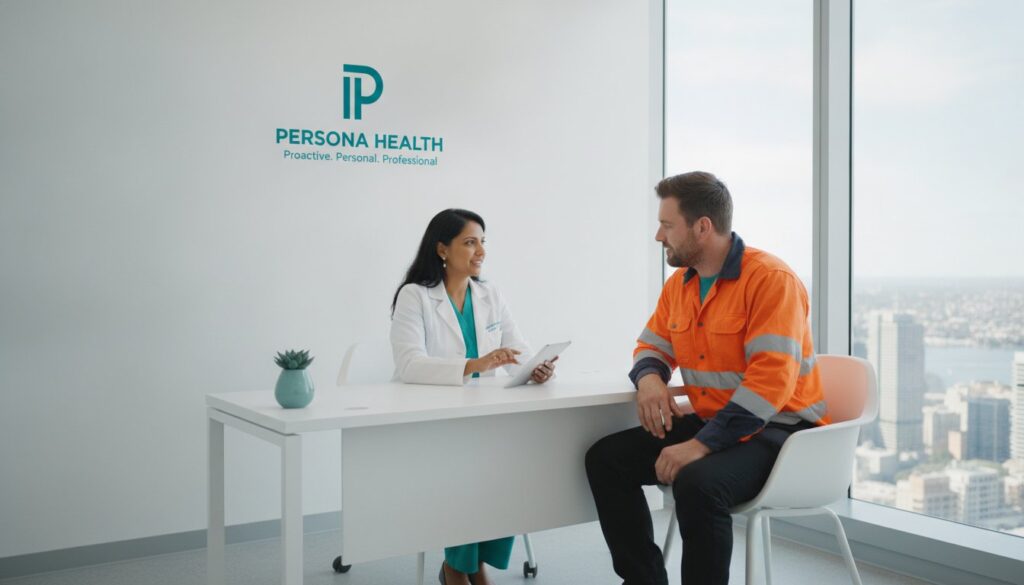
Did you know that over 4,000 Australians die each year from asbestos-related diseases, a figure that is nearly four times our annual road toll? It is a confronting statistic that underscores why a professional post-exposure asbestos health check is more than just a medical formality. If you have recently discovered potential asbestos during a renovation or on a job site, the immediate sense of anxiety is completely understandable. You are likely worrying about the long-term impact on your respiratory health while feeling unsure if a standard GP visit is enough to satisfy SafeWork requirements or provide true peace of mind.
We recognise that navigating the complexities of the Work Health and Safety Regulation 2025 and various state-based compliance codes can feel overwhelming during an already stressful time. This guide provides a clear, clinical roadmap to help you understand exactly what happens during a specialist medical assessment. You will learn about the essential health monitoring processes required by Australian law, the specific differences between standard primary care and occupational medicine, and how to ensure your workplace remains compliant. We will walk you through the essential steps to replace uncertainty with a proactive, professional plan for your long-term wellbeing.
Key Takeaways
- Learn why a specialised post-exposure asbestos health check is essential for WHS compliance, as a standard GP visit may not provide the specific occupational insights required.
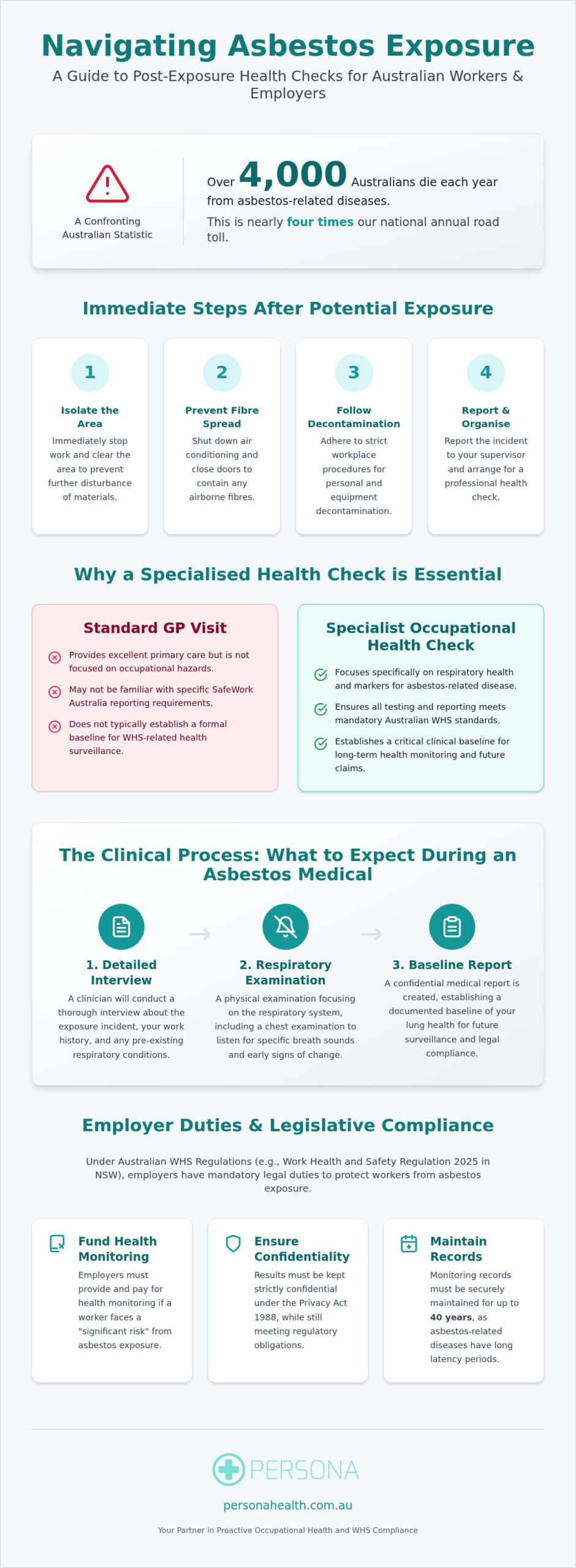
- Identify the immediate steps to take after discovering potential asbestos, from isolating the site to following correct decontamination procedures.
- Understand the clinical components of an asbestos medical, including the importance of respiratory examinations and detailed exposure history interviews.
- Clarify the legal duties of Australian employers, including the requirement to fund health monitoring and maintain records for up to 40 years.
- Discover how professional occupational health assessments provide both medical clarity for workers and regulatory security for businesses.
What is a Post-Exposure Asbestos Health Check?
A post-exposure asbestos health check is a specialised occupational medical assessment designed to document your physical health following a potential encounter with airborne asbestos fibres. Unlike a routine check-up, this process focuses on establishing a clinical baseline for your respiratory system. Because asbestos-related diseases often have latency periods spanning several decades, having a professional record of your health status at the time of exposure is vital. This assessment serves as the starting point for long-term health surveillance, ensuring that any future changes in your lung function are tracked against a verified medical standard.
Many workers mistakenly believe a standard GP visit is sufficient after a site incident. While your local doctor provides excellent primary care, they may not be familiar with the specific reporting requirements set out by SafeWork NSW or WorkSafe Victoria. A dedicated asbestos medical performed by an occupational health professional ensures that the testing meets Australian WHS standards. This specialised approach is necessary to provide the high level of clinical detail required for both your ongoing wellbeing and any future regulatory or insurance needs.
To help you understand how to determine if you have had a potential exposure and what the immediate implications might be, watch this helpful video:
The Difference Between Health Monitoring and General Check-ups
Health monitoring is a proactive, targeted process that looks for specific physiological markers related to hazardous substance exposure. During these checks, a Registered Medical Practitioner with expertise in occupational health will focus on your respiratory history and lung function. They look for early clinical signs of conditions such as asbestosis, which a general physical might overlook. This documentation is critical. In the event of a future Workers Compensation claim, these records provide the evidence needed to link health changes to historical workplace incidents. Under the Privacy Act 1988, these results are kept strictly confidential while ensuring you and your employer meet your legal obligations.
When is a Health Check Legally Required in Australia?
In Australia, the requirement for health monitoring is governed by the Model WHS Regulations. Specifically, the updated Work Health and Safety Regulation 2025 in NSW mandates that employers must provide and pay for health monitoring if there is a “significant risk” to a worker’s health due to asbestos exposure. This includes workers involved in licensed asbestos removal or those who may be exposed during demolition and refurbishment. A post-exposure asbestos health check is required whenever an accidental release occurs or when a worker is concerned they have inhaled fibres. These checks are not just a safety recommendation; they are a mandatory employer duty designed to protect the long-term health of the Australian workforce.
The Clinical Process: What Happens During an Asbestos Medical?
Understanding the clinical steps involved in a post-exposure asbestos health check can significantly reduce the stress associated with a potential incident. At Persona Health, we manage these assessments with a structured, empathetic approach at our Sydney and Melbourne clinics. The process begins with a detailed occupational exposure interview. Our medical team will discuss the specific nature of the incident, the duration of the exposure, and your previous work history in high-risk industries. This conversation allows us to build a personalised profile of your risk factors, which is more comprehensive than a standard general practice consultation.
The physical examination focuses heavily on the respiratory system. A clinician will perform a thorough chest examination, listening for specific breath sounds that may indicate early changes in lung tissue. It is important to remember that while we look for immediate signs of irritation, the primary goal is to establish a baseline. Chest X-rays are often discussed during these medicals, but they are not always performed immediately after an accidental exposure. Because asbestos-related conditions have a long latency period, an X-ray taken too soon may not show any changes. Our doctors follow evidence-based Australian guidelines to determine the appropriate timing for diagnostic imaging, ensuring you aren’t exposed to unnecessary radiation.
Respiratory Function Testing (Spirometry)
Spirometry is the cornerstone of the assessment. This test measures your forced expiratory volume in one second (FEV1) and your forced vital capacity (FVC). By measuring how much air you can blow out and how quickly you can do it, we can identify patterns that might suggest lung restriction or obstruction. To ensure the most accurate results, you should avoid smoking for at least one hour and refrain from eating a heavy meal for two hours before your appointment. These standardised tests are vital because they allow us to track your lung health with precision over several years, identifying subtle changes that might otherwise go unnoticed.
The Occupational Physician Review
Once the clinical data is gathered, an experienced occupational health professional reviews the findings. This expert interpretation is essential for determining your “fitness for duty” and your suitability to continue wearing respiratory protective equipment (RPE). A poorly fitted mask or an underlying respiratory condition can compromise your safety on site, so this review ensures your protective gear is actually doing its job. Following the review, we provide a final health monitoring report to both you and your employer. This document confirms the assessment has taken place and outlines any necessary follow-up steps, providing a clear path forward for your long-term health management. If you are responsible for a team and need to arrange these assessments, you can easily book an asbestos medical through our streamlined digital system.
Employer Duties and Legislative Compliance
In the Australian regulatory landscape, the responsibility for managing asbestos risks rests squarely with the person conducting a business or undertaking (PCBU). When a potential incident occurs, providing a post-exposure asbestos health check is not merely a recommendation; it is a strict legal obligation under the Work Health and Safety Regulation 2025 in NSW and the Occupational Health and Safety Regulations 2017 in Victoria. Employers are required to cover all costs associated with health monitoring, ensuring that financial barriers do not prevent workers from receiving essential clinical reviews. This duty extends beyond the initial appointment, requiring businesses to proactively manage the ongoing health surveillance of any individual exposed to a significant risk.
Compliance also involves specific reporting triggers. If a medical assessment reveals that a worker has developed a work-related illness, or if the occupational physician recommends remedial measures, the employer must notify the relevant state regulator, such as SafeWork NSW or WorkSafe Victoria, immediately. This transparency is vital for maintaining industry-wide safety standards and ensuring that the workplace environment is thoroughly investigated for further hazards. Businesses must also consult with their workforce when selecting a medical provider. While Persona Health offers a comprehensive on-site health surveillance service, the choice of practitioner should be a collaborative decision that respects the worker’s right to professional, impartial care.
Managing Health Monitoring Records
One of the most critical administrative duties is the long-term retention of medical records. Because of the extended latency period of asbestos-related diseases, these records must be kept for 40 years in New South Wales and at least 30 years in Victoria. These documents must be handled with extreme care, remaining strictly confidential and stored separately from a worker’s general HR file to comply with the Privacy Act 1988. Persona Health’s modern digital reporting systems are specifically designed to assist businesses with this burden. Our secure platforms ensure that baseline data and subsequent asbestos medicals are easily accessible for the required decades, providing a reliable audit trail for future compliance reviews.
Consultation and Worker Involvement
Effective health monitoring relies on open communication between management and the workforce. Employers have a duty to inform workers about the purpose of the post-exposure asbestos health check and provide them with a copy of the final report as soon as it becomes available. Engaging with Health and Safety Representatives (HSRs) during this process can help bridge the gap between clinical requirements and workplace culture. We often find that workers have significant concerns about job security following a medical assessment. It is important to reassure your team that health monitoring is a protective measure designed to support their long-term wellbeing and ability to work safely, rather than a tool for exclusion. By fostering a culture of health-first compliance, you build trust while meeting your legislative requirements.
Immediate Steps to Take After Potential Exposure
The moments following the discovery of suspected asbestos are critical for containing risk and protecting your long-term health. If you suspect you have disturbed asbestos-containing materials (ACMs), you must stop work immediately. Do not attempt to clean up the debris or sweep the area, as this will only cause more respirable fibres to become airborne. Isolate the affected area by locking doors or using hazard tape to prevent others from entering. By creating a physical barrier, you significantly reduce the risk of secondary exposure for your colleagues and the public.
Personal decontamination is the next priority. If your clothing is contaminated with dust, do not shake it out. Where possible, use a fine water mist to damp down any dust on your clothes before carefully removing them. Place all contaminated items and personal protective equipment (PPE) into heavy-duty plastic bags, seal them with adhesive tape, and label them clearly as asbestos waste. Showering thoroughly is essential to ensure no lingering fibres remain on your skin or in your hair. Once the site and your person are stable, you must report the incident to your supervisor and document every detail, including the duration of the encounter and the specific materials involved.
Using InjuryQR for Rapid Incident Response
In the high-pressure environment of a site incident, traditional paperwork can be slow and prone to errors. We recommend businesses utilise InjuryQR for immediate triage and incident logging. This free AI-powered service requires no app download. Workers simply scan a QR code on a site poster or magnet, describe the incident using their voice, and receive immediate AI-guided next steps. For employers, this system is a powerful tool for reducing Lost Time Injuries (LTIs) by ensuring workers receive the right advice instantly. Businesses can also order free physical InjuryQR assets, such as posters and magnets, to ensure these resources are prominently displayed across their sites. If the exposure is coupled with a physical injury, the system can even facilitate the immediate issuance of a Certificate of Capacity where appropriate.
Contacting an Occupational Health Specialist
While the immediate physical risk is managed on-site, the clinical management of your health must begin shortly after. You should aim to book a post-exposure asbestos health check within a few days of the incident. This allows our medical team to capture your baseline respiratory health while the details of the exposure are still fresh in your mind. For businesses managing larger teams after a significant site event, we can organise on-site health surveillance to ensure every worker is assessed efficiently without the need for multiple clinic visits. Taking these steps promptly demonstrates a clear commitment to worker safety and ensures that your business remains compliant with the latest Australian WHS standards. If you need to arrange urgent reviews for your team, contact Persona Health today to speak with our occupational medical specialists.
Why Choose Persona Health for Asbestos Medicals?
Selecting the right partner for a post-exposure asbestos health check involves finding a balance between strict legislative compliance and the genuine need for worker reassurance. At Persona Health, we don’t view these assessments as a mere administrative requirement. Our medical team brings years of specialised Australian occupational health experience to every consultation, ensuring that each clinical review is as thorough as it is compassionate. We understand the deep-seated anxiety that often follows a potential exposure incident. Our approach is designed to alleviate that stress by providing clear, evidence-based answers and treating every worker as a unique individual with specific health concerns.
Accessibility and efficiency are core to our service delivery. We operate modern, well-equipped clinics across Sydney in Parramatta, Rosebery, Gregory Hills, and Dee Why, alongside our Melbourne locations in Cairnlea and Craigieburn. This geographical spread is paired with a commitment to industry-leading turnaround times for medical reports. We recognise that for employers, business continuity depends on rapid, accurate reporting, while for workers, waiting for results can be the most difficult part of the process. Our streamlined digital systems ensure that once your post-exposure asbestos health check is finalised, the results are delivered promptly to all relevant parties, ensuring full compliance with SafeWork NSW or WorkSafe Victoria standards.
Our National Network and Mobile Services
For organisations managing teams across regional areas or large-scale infrastructure projects, we offer an extensive affiliate network of over 100 clinics across Australia. This ensures that regardless of your location, your workforce has access to the same high standard of clinical care and consistent reporting. Our mobile on-site services also allow us to bring our medical expertise directly to your construction or demolition site. This is particularly effective for large-scale projects where bringing a specialised medical team to the workforce is more efficient than sending workers to a clinic, ensuring that health monitoring remains a seamless part of your project safety culture.
Integrated Injury Management Solutions
Our clinical scope extends beyond initial screenings to provide a holistic health solution for the modern workplace. We specialise in bridging the gap between proactive health surveillance and active injury management. By having a dedicated medical team that understands both the clinical nuances of asbestos exposure and the operational demands of your industry, we can provide more tailored advice for your business. We are committed to maintaining the highest standards of clinical care and legislative compliance, ensuring that every worker feels they are in expert hands and every employer feels secure in their regulatory standing. Our focus is always on the long-term wellbeing and regeneration of the workforce, providing the stability and professional guidance needed to manage workplace health risks effectively.
Protecting Your Long-Term Health and Workplace Compliance
Managing the aftermath of potential asbestos exposure requires a balance of immediate site safety and long-term clinical oversight. By following the correct decontamination protocols and establishing a medical baseline through a post-exposure asbestos health check, you transform a moment of uncertainty into a structured plan for the future. It is vital to remember that Australian legislation places a clear duty on employers to fund this monitoring and maintain records for up to 40 years, ensuring workers are supported throughout their entire careers.
At Persona Health, we are here to guide you through every step of this process. Our experienced occupational medical team provides assessments that are fully SafeWork NSW and WorkSafe Victoria compliant, backed by fast digital reporting systems that deliver peace of mind when it matters most. Whether you are a worker seeking clarity or an employer fulfilling your duty of care, professional support is always available to help you navigate these requirements with confidence.
Taking proactive steps today ensures a safer, healthier tomorrow for everyone on site.
Frequently Asked Questions
How soon after asbestos exposure should I have a health check?
You should arrange a post-exposure asbestos health check as soon as possible, ideally within days of the incident. While asbestos-related diseases take years to develop, an immediate assessment allows a clinician to document the exposure details while they are fresh and establish a clear respiratory baseline. This initial record is vital for your long-term health surveillance and ensures that any future changes in your lung function can be accurately monitored against your current health status.
Will a standard chest X-ray show asbestos exposure immediately?
No, a chest X-ray will not show evidence of asbestos fibres or damage immediately after an exposure event. Asbestos-related conditions have a long latency period, often taking 20 to 40 years to manifest as visible changes on an imaging scan. While an X-ray may be ordered to establish a baseline or if you have a significant historical exposure, its primary value is in long-term monitoring rather than acute diagnosis following a single recent incident.
Does my employer have to pay for my post-exposure asbestos medical?
Yes, under Australian Work Health and Safety laws, your employer is legally required to pay all costs associated with health monitoring. This includes the medical consultation, any required testing such as spirometry, and the time you spend attending the appointment. If there is a significant risk to your health due to asbestos exposure at work, the PCBU must ensure this process is carried out at no financial cost to you.
What is the difference between asbestosis and mesothelioma in a medical report?
Asbestosis is a chronic lung disease caused by the scarring of lung tissue following prolonged exposure to asbestos fibres, which leads to long-term breathing difficulties. Mesothelioma is a rare and aggressive form of cancer that develops in the lining of the lungs, abdomen, or heart. While both are serious and linked to asbestos, asbestosis is a restrictive lung condition, whereas mesothelioma is a malignant primary tumour. Your medical report will clearly distinguish between these clinical findings.
Can I choose my own doctor for an asbestos health monitoring check?
You have the right to be consulted regarding the choice of doctor, but the practitioner must be a Registered Medical Practitioner with experience in occupational health. Employers often have established relationships with specialised providers like Persona Health to ensure the assessments meet SafeWork standards. If you have a preference, you should discuss this with your employer or Health and Safety Representative (HSR) before the appointment is booked to ensure the chosen doctor has the necessary expertise.
What happens if the health check reveals a problem with my lung function?
If your results show a decline in lung function, the occupational physician will provide a report outlining the findings and any necessary medical follow-up. Your employer is then legally required to notify the relevant state regulator, such as SafeWork NSW or WorkSafe Victoria, and conduct a thorough review of workplace risk controls. The focus of this process is to protect your health and determine if you are still fit to perform your current duties safely with the appropriate protective equipment.
How long are asbestos health monitoring records kept in Australia?
Asbestos health monitoring records must be kept for a minimum of 40 years in most Australian jurisdictions, including New South Wales. In Victoria, the requirement is at least 30 years. These extended timeframes are mandatory because asbestos-related diseases often don’t appear until decades after the initial exposure. Keeping these records for 40 years ensures that you have access to your clinical history if you need to make a health or compensation claim later in life.
Do I need a health check if I only breathed in a small amount of dust?
Yes, you should seek a professional opinion if the dust you inhaled is suspected to contain asbestos fibres. The World Health Organisation maintains that there is no known safe minimum level of exposure to asbestos. Even a brief encounter can cause significant anxiety, so a post-exposure asbestos health check is an important step to document the event and receive professional reassurance. It is always better to have a clinical record of the incident than to leave your future health to chance.

Article by
Ian Nicholson
Ian is the Business Support Manager at Persona Health, where he plays a key role across IT, sales, marketing and business operations. With a broad skill set and a practical, solutions-focused approach, Ian helps drive the systems, communication and commercial strategy that support Persona Health’s continued growth across Australia.