

What if the most dangerous part of a workplace injury isn’t the initial incident, but an unsupported return to the tools? For many Australian managers, the pressure to reduce Lost Time Injuries (LTIs) often clashes with the genuine anxiety of a worker who isn’t sure they’re ready. A formal return to work assessment is the essential bridge that turns this uncertainty into a structured, safe, and compliant pathway forward.
We understand that managing the complexities of WorkCover and shifting WHS regulations can feel like a full-time job. It’s frustrating when GP certificates lack the detail you need to modify duties, or when communication breaks down between the clinic and the job site. This 2026 guide will show you how a professional assessment ensures a supportive transition that protects both your people and your business. We’ll look at the latest legislative changes in NSW and Victoria, the role of specialised medical partners like Persona Health, and how digital tools such as InjuryQR are changing the way we manage the first moments of an injury. You’ll gain a clear roadmap for staying compliant with SafeWork while ensuring your team feels valued and protected throughout their recovery.
Key Takeaways
- Understand your legal obligations under Australian WHS legislation and state-based workers’ compensation schemes to ensure a compliant transition.
- Learn how a professional return to work assessment uses objective clinical data and job-specific testing to prevent re-injury and support recovery.
- Discover the clinical advantages of using an occupational physician to provide a clear, authoritative roadmap between medical recovery and workplace duties.
- Identify the essential documents and preparation steps for managers and employees to ensure a smooth, fast-turnaround evaluation process.
- Explore how integrating immediate triage tools like InjuryQR can significantly reduce Lost Time Injuries (LTIs) and improve incident reporting accuracy.
Understanding Return to Work Assessments in the Australian Context
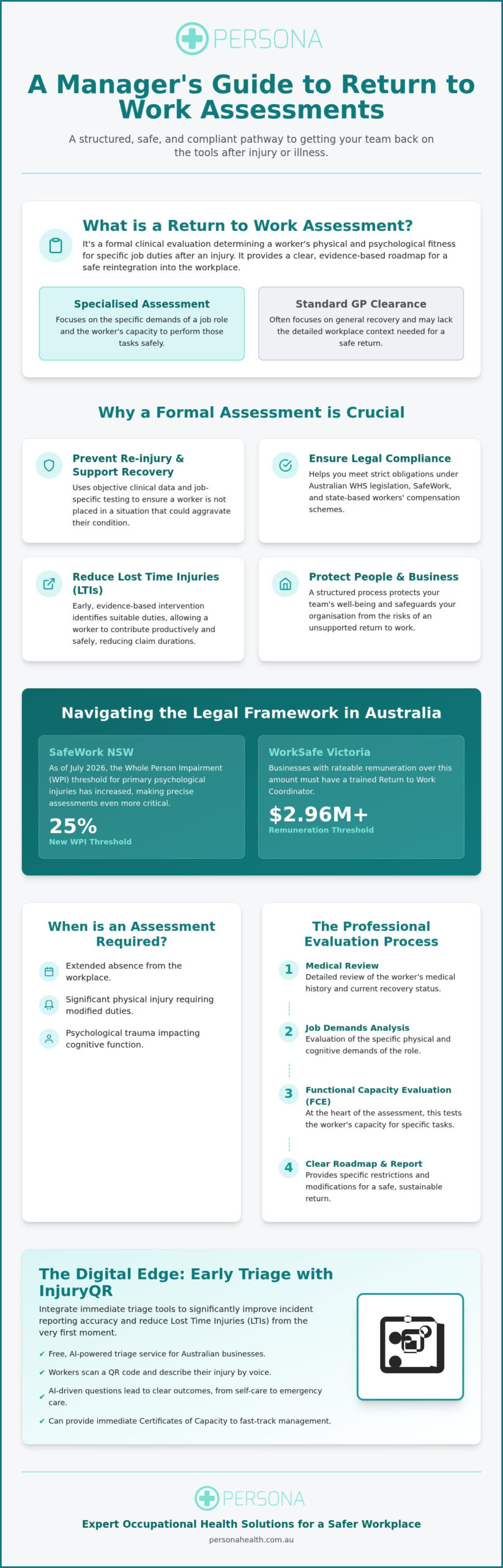
A return to work assessment is far more than a simple medical clearance. It’s a formal clinical evaluation that determines a worker’s physical and psychological fitness for duty after an injury or illness. While a standard GP visit focuses on general recovery, this specialised evaluation looks specifically at the intersection of a person’s health and their unique job requirements. In the landscape of 2026, where the boundary between physical health and mental well-being is more recognised than ever, these assessments serve as a critical safety net for both the employee and the organisation.
The process is deeply rooted in the broader field of Occupational safety and health, ensuring that no worker is placed back into an environment that could aggravate their condition. At Persona Health, our medical team across Sydney and Melbourne clinics, including Parramatta and Cairnlea, focuses on creating a supportive bridge between clinical recovery and operational reality. We use objective data to move beyond guesswork, providing employers with a clear, evidence-based roadmap for reintegration.
The Legal Framework: SafeWork and WorkCover
Employers must navigate a complex web of obligations under Australian WHS legislation and the Privacy Act 1988. Compliance with SafeWork NSW and WorkSafe Victoria standards is mandatory, not optional. As of July 2026, new regulations in New South Wales have increased the Whole Person Impairment (WPI) threshold for primary psychological injuries to 25 per cent. This shift makes the precision of a professional assessment even more vital. It’s important to distinguish between the Nominated Treating Doctor (NTD), who manages the worker’s ongoing care, and an Independent Medical Examiner or occupational physician who provides an objective, third-party view on fitness for duty. For Victorian businesses, remember that if your rateable remuneration exceeds $2,967,330, you’re legally required to have a trained Return to Work Coordinator in place at all times.
When is an Assessment Required?
Several trigger points should prompt a formal evaluation. These include an extended absence from the workplace, a significant physical injury requiring modified duties, or psychological trauma that impacts cognitive function. The primary goal is to identify “suitable duties” that allow a worker to contribute productively without risk of re-injury. Early intervention is the most effective way to reduce claim durations and prevent long-term disability. Tools like InjuryQR can assist in this early phase by providing immediate AI-powered triage and incident reporting. By engaging in professional injury management early, you ensure that the transition back to the office or job site is managed with clinical authority and genuine empathy.
The Components of a Professional Return to Work Evaluation
While the administrative side of injury management often focuses on the paperwork, the clinical return to work assessment is where the actual safety of the transition is verified. It’s a comprehensive process that begins with a detailed review of the worker’s medical history and current recovery status. Our clinicians look beyond the primary injury to understand how a person’s unique physiology and overall health impact their ability to perform. This holistic approach, consistent with the guidelines set by Safe Work Australia, ensures that we aren’t just clearing a worker for a job, but clearing them for a sustainable career.
The evaluation must also account for the risk of re-injury within the specific environment of the workplace. By evaluating the physical and cognitive demands of the role alongside the worker’s current capacity, we can pinpoint exactly where the gaps lie. This allows us to determine specific restrictions or modifications, such as altered shift lengths or reduced weight-bearing duties, which are essential for a safe reintegration. If you need assistance with complex cases, our team can provide tailored injury management solutions across our clinic network.
Functional Capacity Evaluation (FCE) Explained
At the heart of a robust assessment is the Functional Capacity Evaluation (FCE). This involves a battery of standardised physical tasks designed to measure mobility, strength, and cardiovascular endurance. Instead of relying on subjective pain reports, we gather objective data on what a worker can safely achieve. These findings are instrumental in supporting a Certificate of Capacity, providing the medical evidence required by insurers and employers alike. Incorporating Functional Capacity Evaluations into the recovery journey helps remove the guesswork from the reintegration process, giving everyone involved the confidence that the worker is physically ready.
Role-Specific Task Simulation
Generic physical tests often fail to capture the specific demands of a workplace. A warehouse worker’s needs differ vastly from someone requiring Cat 3 Rail Medicals or a heavy vehicle operator. Role-specific task simulation bridges this gap by mimicking the exact movements required on the job, such as overhead reaching, repetitive lifting, or sustained cognitive focus. By evaluating these specific actions, our medical team can identify potential ergonomic hazards and suggest modifications before they lead to a setback. This proactive approach reduces the risk of re-injury and ensures that any return to the workplace is both productive and safe.
Every assessment concludes with a clear set of recommendations. These might include temporary restrictions, such as a 5kg lifting limit, or permanent workplace modifications like height-adjustable workstations. By providing these specific boundaries, we help managers create a supportive environment where the worker can rebuild their confidence. If you’re unsure about the current readiness of a team member, our experienced team at Persona Health can provide the clinical clarity you need to move forward with certainty.
Why an Occupational Physician is Essential for Workplace Reintegration
A successful return to work assessment requires a deep understanding of the delicate balance between a worker’s clinical recovery and the physical demands of their specific role. While general practitioners are excellent at managing acute illness, occupational physicians are specialists who focus specifically on the intersection of health and work. They don’t just ask “is the patient better?”; they ask “can this individual safely perform their duties without risking a setback?”. This specialist perspective is vital for ensuring that a worker’s transition back to the tools is sustainable and safe for everyone on site.
Our medical team at Persona Health, operating out of clinics in Parramatta, Rosebery, and Craigieburn, provides the clinical authority needed to translate complex medical data into practical workplace instructions. Instead of vague “light duties” certificates that leave supervisors guessing, our physicians provide clear, actionable restrictions. This evidence-based approach is a core component of the National Return to Work Strategy 2020-2030, which emphasises the importance of early and tailored intervention to improve long-term outcomes for Australian workers.
The Difference Between a GP and an Occupational Physician
GPs are primarily focused on clinical recovery and patient advocacy, which is a necessary part of the healthcare system. However, they often lack the time or specific training to analyse a detailed job description or conduct a functional capacity evaluation. Occupational physicians, on the other hand, specialise in functional ability. Employers frequently prefer specialist providers because they offer more detailed reporting and faster turnaround times. A specialist return to work assessment provides the objective data required to satisfy insurers and WHS regulators, moving beyond the standard medical check to provide a comprehensive view of a worker’s readiness.
Independent Medical Examinations (IME)
There are times when a neutral, third-party opinion is necessary to resolve a dispute or clarify a worker’s long-term capacity. An Independent Medical Examination (IME) provides an impartial evaluation that is separate from the ongoing treatment provided by a GP. This process is essential for maintaining fairness for both the employee and the business, especially when finalising long-term workers’ compensation claims. In particularly complex cases, engaging an Injury Management Consultant can help facilitate communication between the worker, the employer, and the insurer, ensuring that the path forward is clear and agreed upon by all parties. This level of specialist involvement reduces friction and helps prevent the “limbo” that often occurs when medical opinions conflict.
Preparing for Your Assessment: Employee & Manager Guide
Preparation is the foundation of a successful return to work assessment. When both the manager and the employee arrive with the right information, the process becomes a collaborative safety review rather than a stressful hurdle. For the doctor, an accurate job description acts as a clinical map. It allows our medical team at Persona Health to compare your physical capabilities against the actual demands of your role, ensuring that every recommendation we make is grounded in reality. Before the appointment, ensure you’ve gathered all relevant medical reports, recent imaging results, and a current list of medications to provide a complete picture of your recovery journey.
Managers play a vital role here by ensuring the job description is up to date and reflects any changes in the workplace since the injury occurred. This isn’t just about ticking boxes; it’s about providing the assessing physician with the data they need to protect your staff. If you’re managing a team in a high-risk environment, maintaining a safe workplace often involves regular Fitness for Work Assessments to ensure everyone is operating at their best. By being proactive, you reduce the risk of secondary injuries and foster a culture of genuine support.
For the Employee: What to Expect on the Day
It’s natural to feel a bit of “white coat” anxiety before an evaluation, but remember that this isn’t an endurance test. The goal is a sustainable return, not a fast one. On the day, you’ll undergo a clinical interview followed by a physical examination. You should wear comfortable, loose-fitting clothing or activewear, as you’ll likely be asked to perform movements like reaching, bending, or lifting. Be honest about your pain levels and any physical limitations you’ve noticed during your recovery. Our clinicians aren’t there to catch you out; they’re there to ensure you don’t return to a task that could cause a setback. Professional return to work assessment results are used to build a plan that respects your body’s current boundaries while helping you regain your confidence on the job.
For the Manager: Supporting the Reintegration
Effective communication is the most powerful tool a manager has during the reintegration process. Frame the assessment as a protective measure designed to ensure the worker’s safety. Once you receive the report, review the proposed suitable duties carefully. It’s essential that these duties are genuinely available and that the worker won’t be pressured to exceed their medical restrictions. At Persona Health, we focus on fast turnaround times for our reports so you can make informed decisions without delay. If you need expert guidance on managing a complex transition, you can contact our injury management team to discuss a tailored solution for your workplace.
Expert Return to Work Solutions in Sydney and Melbourne
Persona Health provides a streamlined, clinically robust approach to workplace recovery. We understand that for HR teams and WHS managers, the speed and quality of a return to work assessment can make the difference between a successful reintegration and a costly claim escalation. Our medical team focuses on delivering fast turnaround times and employer-focused reporting that removes the ambiguity often found in standard medical certificates. We act as a professional bridge between the worker, the employer, and the insurer, ensuring that every step of the recovery journey is evidence-based and practical.
We operate physical clinics in Parramatta, Rosebery, Gregory Hills, and Dee Why across Sydney, as well as Cairnlea and Craigieburn in Melbourne. For businesses with a national footprint, our 100-clinic affiliate network and Australia-wide mobile services provide consistent, high-quality occupational health care regardless of your location. This extensive reach, combined with our modern digital reporting systems, reduces the administrative burden on your team and keeps your safety records organised and accessible. You don’t have to manage multiple providers when you have a single, reliable partner for your national workforce.
Immediate Triage with InjuryQR
Managing the first few minutes after an incident is critical for reducing Lost Time Injuries (LTIs). We offer InjuryQR as a free, AI-powered triage service to provide immediate support. The process is simple. Workers scan a QR code using their phone, no app required, and describe the injury using their voice. The AI then provides guided next steps, such as self-care advice, a telehealth referral, or emergency direction. This immediate triage leads to better outcomes during the formal return to work assessment later because it ensures the right care is provided from the very start. Businesses can also order free physical InjuryQR assets, like posters and magnets, to ensure this tool is always within reach for their team.
Booking Your Assessment with Persona Health
Our booking process is designed to be as frictionless as possible for busy managers. Whether you need to organise Pre-Employment Medicals to grow your team or require a complex RTW evaluation, our team is ready to assist. We provide customised reporting that speaks the language of both clinicians and business managers, ensuring that medical restrictions are easy for supervisors to implement on the ground. If your industry requires proactive monitoring, we can also organise on-site health surveillance to identify potential issues before they become injuries. Contact our team today to request a quote or to speak with our specialists about your specific occupational health requirements.
Building a Safer, More Resilient Workplace
A successful transition back to the tools relies on moving beyond simple administrative compliance to embrace a truly clinical partnership. By integrating a professional return to work assessment into your injury management strategy, you ensure that every decision is backed by objective data and the specialist expertise of an occupational physician. This approach doesn’t just satisfy SafeWork regulations; it builds a culture of trust where employees feel supported and managers can operate with clinical certainty.
At Persona Health, our expert medical team is dedicated to providing fast turnaround times on medical reports to keep your business moving. We offer a comprehensive suite of services across Sydney and Melbourne, supported by a national affiliate network and modern tools like InjuryQR. You can even order free physical InjuryQR assets, such as posters and magnets, to ensure your team has immediate support the moment an incident occurs.
Contact Persona Health to organise your professional Return to Work Assessment today and take the first step toward a safer, more supportive workplace environment. We are here to guide you through every stage of the recovery journey with clarity and care.
Frequently Asked Questions
How long does a return to work assessment usually take?
A standard return to work assessment typically takes between 45 and 90 minutes to complete. The exact duration depends on the complexity of your injury and the physical demands of your specific job role. This timeframe allows our occupational physicians to conduct a thorough clinical interview and perform any necessary functional capacity testing to ensure your safety.
Can I fail a return to work assessment?
You cannot fail an assessment because it is an evaluation of your current functional capacity rather than a pass or fail exam. The doctor’s goal is simply to identify what you can safely achieve at this point in your recovery. If the results show you aren’t ready for your original duties, the report will recommend suitable modifications or restricted duties to protect you from re-injury.
Does my employer have to pay for the return to work assessment?
Yes, the employer or their workers’ compensation insurer is responsible for the cost of a formal medical assessment they have requested. Under Australian WHS legislation, workers shouldn’t be out of pocket for evaluations required to determine their fitness for duty. This includes assessments conducted at Persona Health clinics in Sydney and Melbourne or through our national affiliate network.
What is the difference between a return to work plan and an assessment?
The assessment is a clinical evaluation performed by a medical professional, while the plan is an administrative document developed by your employer or return to work coordinator. The return to work assessment provides the medical evidence and functional restrictions that form the foundation of the plan. Essentially, the doctor provides the clinical boundaries, and the workplace determines how to implement them.
Can I bring a support person to my medical assessment?
You are generally entitled to bring a support person, such as a family member or union representative, to your medical appointment. It is important that they don’t interfere with the physical testing or the clinical interview, as the doctor needs to gather objective data. Their role is to provide emotional support and help you feel at ease throughout the evaluation process.
What happens if the doctor says I am not fit for my original role?
If the doctor determines you aren’t fit for your original role, the focus shifts to identifying “suitable duties” that you can perform safely. This might involve modified hours, different tasks, or ergonomic adjustments. The goal is to keep you connected to the workplace while your body continues to recover, which is a key principle for better long-term health outcomes.
Are return to work assessments confidential?
Your detailed clinical notes remain confidential and are protected under the Privacy Act 1988. However, the doctor will provide a functional report to your employer and insurer that outlines your capacity, specific medical restrictions, and any recommended workplace modifications. This specific information is necessary to ensure your employer can provide a safe environment for your return.
How soon after an injury should an assessment be organised?
Assessments should be organised as soon as it’s clear that an injury will impact a worker’s ability to perform their normal duties. Early intervention is a core principle of the National Return to Work Strategy 2020-2030. Using immediate triage tools like InjuryQR can help determine the right timing for a formal evaluation, which often occurs within the first few weeks of a claim.

Article by
Ian Nicholson
Ian is the Business Support Manager at Persona Health, where he plays a key role across IT, sales, marketing and business operations. With a broad skill set and a practical, solutions-focused approach, Ian helps drive the systems, communication and commercial strategy that support Persona Health’s continued growth across Australia.