
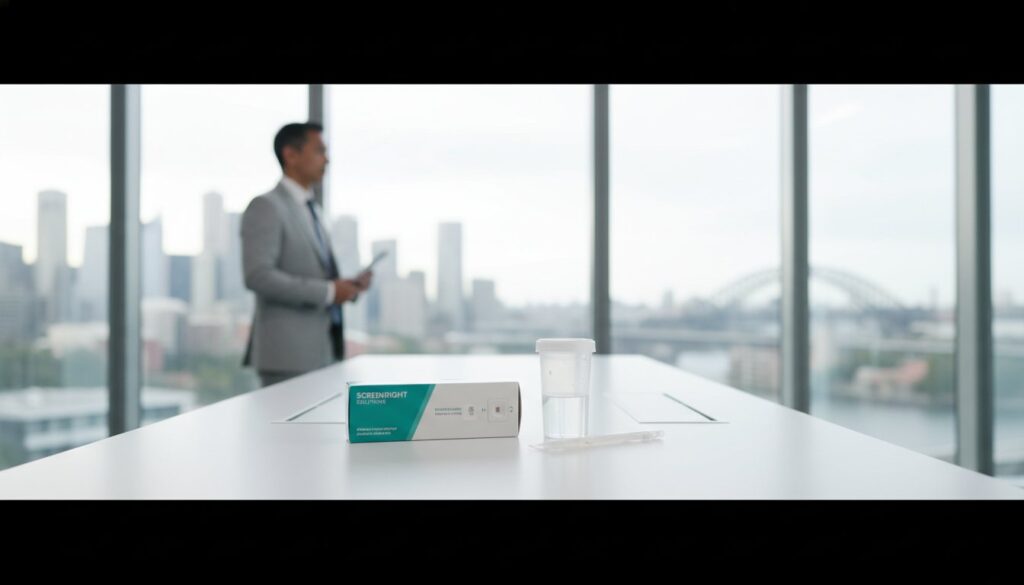
Did you know that cocaine detections in Australian workplaces jumped by a staggering 45.4% between 2025 and 2026? As an employer, you likely feel the weight of responsibility to keep your team safe while worrying about whether your screening methods are truly defensible. Deciding on a urine vs saliva drug test for workplace safety isn’t just a matter of convenience; it is a strategic choice between identifying historical drug use and catching current impairment.
It’s natural to feel uncertain about which procedure balances individual privacy with the rigorous standards set by SafeWork Australia. We understand that you need a reliable partner to guide you through these clinical complexities. This guide will help you discover the critical differences between these two methods to choose the most effective screening strategy for your specific needs. We will explore the mandatory updates to AS/NZS 4308:2023, compare detection windows, and explain how our on-site Drug and Alcohol Testing services in Parramatta, Cairnlea, and across our other clinics can support your commitment to a healthy, compliant environment.
Key Takeaways
- Learn why saliva testing is the superior choice for identifying current impairment while urine testing remains the most effective tool for detecting long term drug history.
- Understand how to select a urine vs saliva drug test for workplace scenarios, ensuring you use the right method for pre-employment checks or post-incident investigations.
- Ensure your workplace policy remains legally defensible by meeting the latest Australian Standards, including the mandatory urine testing updates coming into effect in late 2026.
- Discover practical ways to minimize the risk of sample tampering while maintaining a respectful and non-invasive experience for your employees.
- Find out how integrating professional screening into your On-Site Health Surveillance at our clinics in Parramatta or Cairnlea can create a safer, more productive environment.
Understanding Workplace Drug Testing: Saliva and Urine Methods Explained
Ensuring every team member is ‘Fit for Work’ is the primary driver behind modern safety protocols. When you implement a screening program, you aren’t just looking for a simple positive or negative result; you’re building a culture of accountability and care. This process begins with a clear understanding of the physiological differences between the two most common drug testing methods used across Australian industries.
Urinalysis, or urine testing, identifies drug metabolites. These are the chemical byproducts created after the body has processed a substance, which remain in the system long after the initial effects have faded. In contrast, saliva testing, also known as oral fluid screening, detects the “parent drug” itself within the mouth. Deciding on the right urine vs saliva drug test for workplace safety depends on whether your goal is to see a historical record of use or an indication of very recent consumption.
To better understand the practical differences between these two approaches, watch this helpful video:
The Role of Australian Standards in 2026
By November 2026, all workplace urine testing must strictly comply with the updated standard AS/NZS 4308:2023. This update follows a transition period designed to refine specimen collection and screening accuracy. For employers opting for saliva, the current standard is AS 4760:2019, which mandates the inclusion of substances like Oxycodone in the testing panel. Following these standards isn’t just about clinical precision; it’s about legal defensibility. If your business in Parramatta or Craigieburn uses non-compliant methods, you risk significant legal challenges under Australian industrial law and scrutiny from bodies like SafeWork Australia.
Why Methodology Matters for Workplace Safety
Every industrial environment has its own unique rhythm and risk profile. Balancing safety with employee privacy requires a clear, documented Drug and Alcohol Policy (DAP) that employees understand and trust. We’ve found that a supportive, transparent approach often yields better long term results than a purely punitive one. At Persona Health, we integrate professional On-Site Health Surveillance with our testing services to provide a holistic view of employee well-being. Whether you are operating in Cairnlea, Rosebery, or Dee Why, choosing the right methodology ensures your team feels respected while your site remains secure.
The Critical Difference: Detection Windows and Impairment vs History
Choosing between a urine vs saliva drug test for workplace safety requires a clear understanding of what each sample actually reveals about an individual. The most significant distinction lies in the “detection window,” which is the timeframe during which a substance remains visible in a person’s system. While one method acts like a snapshot of the present moment, the other serves as a historical record of past choices. For employers in high-risk sectors across Parramatta or Craigieburn, mistaking one for the other can lead to unfair disciplinary actions or, conversely, missed safety risks.
Saliva Testing: The Window for Recent Use
Saliva testing is often regarded as the “gold standard” for detecting current impairment because it identifies the parent drug itself. When a substance is present in oral fluid, it’s typically also present in the bloodstream and actively affecting the brain. This method offers a tight detection window, generally ranging from 12 to 24 hours for most substances. Because it focuses on recent consumption, it’s the most effective tool for post-incident investigations where you need to know if a worker was under the influence at the time of an accident. Saliva testing is the preferred method for random on-site testing in Sydney because it prioritises immediate site safety over off-duty lifestyle monitoring.
Urine Testing: Identifying Historical Consumption
Urine testing operates differently by looking for metabolites, which are the chemical leftovers produced after the body has already processed a drug. These metabolites linger in the system far longer than the active drug, appearing in urine for anywhere from 3 to 30 days depending on the substance and the individual’s metabolism. This extended window makes urine screening invaluable for Pre-Employment Medicals in Rosebery or Gregory Hills, where the goal is to identify a pattern of drug use rather than immediate intoxication. It provides a broader “lifestyle” profile, helping you ensure that new hires align with your company’s safety culture before they ever step onto the worksite.
A common misconception among managers is that a “not-negative” urine result automatically proves a worker was high while on the clock. In reality, a worker might test non-negative for cannabis in a urine screen on a Monday morning due to use on the previous Friday. According to Safe Work Australia guidelines, employers must manage the risks of drugs and alcohol through a fair and transparent process. Understanding that urine tests show history while saliva tests suggest current impairment is vital for maintaining trust and legal compliance within your team.
If you’re unsure which detection window best fits your current risk profile, our specialists at Dee Why or Cairnlea can help you design a tailored On-Site Health Surveillance program that meets your specific operational needs.
Comparing Practicality: Collection Procedures and Australian Standards
When evaluating a urine vs saliva drug test for workplace implementation, the logistics of the collection process often dictate which method is most sustainable for your operations. We understand that the collection experience is a sensitive touchpoint for employees. Balancing the need for clinical accuracy with a respectful, non-confrontational approach is essential for maintaining a positive workplace culture. Whether you are managing a team in Rosebery or Craigieburn, the physical requirements of the test will influence how your staff perceives your safety program.
Collection Logistics and Employee Experience
Urine testing requires a specific environment to ensure integrity. This involves a private, gender-neutral collection space where the water supply is secured and “blueing agents” are added to toilet bowls to prevent sample dilution. While highly accurate, some employees find the process of providing a urine sample invasive or uncomfortable. In contrast, saliva testing is remarkably simple. The collection involves a mouth swab and can be performed in almost any quiet area of the workplace. This non-invasive nature often reduces the “white coat” anxiety associated with screening, making it a less confrontational option for random testing programs.
Accuracy and the Risk of Adulteration
One of the primary concerns for any safety manager is the risk of “cheating” or sample adulteration. Urine samples are historically more susceptible to substitution with synthetic urine or dilution through excessive water intake. To mitigate these risks, professional collectors must follow strict “observed collection” protocols, which can further increase the sense of intrusion for the worker. Saliva collection offers a distinct advantage here because the process is always directly observed by the collector. It’s virtually impossible for a donor to swap or adulterate an oral fluid sample while the swab is in their mouth. This inherent security provides peace of mind that the results are a true reflection of the individual’s current state.
Regardless of the method you choose, every “non-negative” result requires professional oversight. A Medical Review Officer (MRO) plays a vital role in this process, ensuring that any detected substances are not the result of legitimate prescription medications. Relying on an MRO protects both the employer from legal liability and the employee from unfair dismissal. At Persona Health, we integrate this clinical expertise into our On-Site Health Surveillance programs. By conducting tests at our specialized clinics in Rosebery or Craigieburn, you ensure that every step of the process aligns with the highest Australian Standards and Fitness for Duty requirements. This professional approach transforms a routine check into a supportive health initiative that reinforces your commitment to a safe workplace.
Industry Specific Applications: Choosing the Best Test for Your Workforce
The decision on a urine vs saliva drug test for workplace safety is rarely a one-size-fits-all answer. Your choice should be dictated by the specific risk profile of your industry and the operational goals of your safety programme. While a corporate office in Sydney might focus on pre-employment screening, a logistics hub in Parramatta requires a more immediate approach to ensure site safety. We recommend tailoring your testing strategy to match the physical demands and legal obligations of your specific sector.
High-Risk Sectors: Rail, Transport, and Construction
For companies operating in Parramatta or Gregory Hills, a hybrid approach often provides the most robust protection. In high-risk environments, the focus is on preventing immediate accidents. This is why transport and construction firms frequently use saliva testing for random on-site checks and post-incident investigations. Saliva testing aligns perfectly with SafeWork Australia guidelines for high-risk work because it targets the window of active impairment.
Specific regulatory requirements also play a major role in your strategy. For example, Cat 3 Rail Medicals in Sydney require strict adherence to the National Standard for Health Assessment of Rail Safety Workers. In these cases, testing is not just a safety choice but a mandatory legal requirement. Integrating these screens into regular Fitness for Duty Medicals ensures that your workers are physically and mentally capable of performing their roles safely every day.
Pre-Employment vs Random Screening Strategies
In Melbourne, specifically around Cairnlea and Craigieburn, we see a strong preference for urine testing during the initial onboarding phase. Urine testing remains the industry standard for Pre-Employment Medicals because it provides that vital 3 to 30 day lookback into a candidate’s history. It helps you identify potential lifestyle risks before an individual enters your workplace culture.
Conversely, saliva is gaining significant ground for daily or weekly random checks. The speed of collection and the fact that it can be done anywhere on-site makes it a cost-effective solution for large workforces. When implementing these strategies, transparency is your best tool. Clearly communicating why you use saliva for random checks (to ensure immediate safety) and urine for pre-employment (to establish a baseline) helps build trust and reduces employee anxiety.
To find the right balance for your team, you can use this simple decision matrix:
- Random Testing: Saliva (detects recent use and impairment).
- Post-Incident: Saliva (identifies if drugs were active at the time of the event).
- Pre-Employment: Urine (provides a historical pattern of use).
- Return to Work: Urine (ensures the system is clear following a recovery period).
Are you ready to strengthen your safety protocols with a strategy that fits your unique industry needs? Book your next round of professional screening at our clinics in Parramatta or Cairnlea by visiting our On-Site Health Surveillance page today.

Implementing a Robust Drug and Alcohol Policy with Persona Health
At Persona Health, we don’t view screening as a standalone hurdle for your employees to clear. We integrate every urine vs saliva drug test for workplace safety into a comprehensive On-Site Health Surveillance program that looks at the whole person. Choosing an Occupational Health specialist over a generic testing provider means you gain access to clinical depth that simple collection agencies cannot provide. We understand the physiological nuances of detection and the legal weight of Australian Standards. Our team maintains a high standard of professional conduct, ensuring that every individual feels respected and supported during what can be a stressful procedure.
Building trust within your workforce is just as vital as catching a safety risk. When a worker walks into our clinics in Parramatta or Cairnlea, they aren’t just a donor; they’re a person. By applying clinical empathy, we reduce the friction often associated with drug and alcohol policies. This approach doesn’t just improve compliance; it strengthens your reputation as an employer who cares about well-being as much as safety. With the overall positivity rate for workplace drug screens sitting at 3.0% in early 2026, having a partner who can manage these conversations with professional grace is essential for site morale.
Beyond the Test: Injury Management and Support
A “not-negative” result is often the start of a complex journey, not the end. Within our Workplace Injury Management framework, we manage these results with precision and clinical care. Professional interpretation by a Medical Review Officer is essential to distinguish between illicit substance use and legitimate prescription medication. This step is critical for your business to avoid costly unfair dismissal claims and industrial disputes. We support employers in Gregory Hills and Dee Why by providing clear, evidence-based guidance that balances the immediate need for site safety with the long term rights of the worker. This ensures your response is always defensible under the latest SafeWork Australia guidelines.
Booking Your Workplace Health Assessments
Scheduling your assessments is a straightforward process designed to minimize operational downtime. Whether you require on-site testing at your logistics hub or clinic-based medicals in Rosebery or Craigieburn, we tailor the regime to your specific industry risk profile. We invite you to consult with our experts to determine the ideal frequency and methodology for your team, especially as the mandatory transition to AS/NZS 4308:2023 approaches in late 2026. We’ll help you navigate these regulatory shifts with confidence and clinical expertise.
Contact Persona Health to secure your workplace safety today and ensure your team remains healthy, compliant, and fit for work.
Securing Your Workplace Safety for 2026 and Beyond
Choosing between a urine vs saliva drug test for workplace safety is a strategic decision that balances legal compliance with practical site management. Saliva testing remains the superior tool for identifying active impairment during random checks, while urine screening offers the historical depth required for thorough pre-employment assessments. With the mandatory shift to the AS/NZS 4308:2023 standard approaching in November 2026, ensuring your policies are current and defensible has never been more important.
Our team is fully accredited to both AS/NZS 4308 and AS 4760, providing you with the clinical certainty your business deserves. With expert Medical Review Officers available to interpret every non-negative result, you can manage your workforce with confidence and empathy. Whether you visit our clinics in Parramatta and Cairnlea or require on-site support across Sydney and Melbourne, we’re ready to help you maintain a safe and productive environment.
Book Your Workplace Drug and Alcohol Testing with Persona Health
We look forward to partnering with you to create a safer, healthier future for your entire team.
Frequently Asked Questions
Is a saliva drug test more accurate than a urine test for workplace safety?
Both testing methods are highly accurate when conducted according to the relevant Australian Standards. Saliva testing is often considered superior for immediate workplace safety because it detects the parent drug, which indicates recent use and potential impairment. Urine testing is technically more sensitive for detecting long term use patterns, but it doesn’t necessarily correlate with a worker’s current fitness for duty at that specific moment.
Can an employee refuse a drug test in Australia?
An employee has the right to refuse a test, but doing so usually carries significant consequences under a company’s Drug and Alcohol Policy. If the requirement for testing is clearly outlined in their employment contract or safety policy, a refusal is often treated the same as a non-negative result. This can lead to disciplinary action or even termination, provided the employer has followed fair process and consulted with staff as per SafeWork Australia guidelines.
How long do drugs stay in your system for a urine test compared to saliva?
Detection windows are the primary factor when choosing a urine vs saliva drug test for workplace screening. Drugs generally remain detectable in saliva for 12 to 24 hours, making it ideal for catching recent use. In contrast, urine tests can identify metabolites for 3 to 30 days depending on the substance and the individual’s metabolism. This longer window makes urine the preferred choice for identifying chronic use patterns during onboarding.
What happens if an employee returns a non-negative result during a random check?
If an initial screen returns a non-negative result, the employee is typically stood down from safety-sensitive duties immediately. The sample must then be sent to an accredited laboratory for confirmatory testing. At Persona Health, we use Medical Review Officers to evaluate these findings, ensuring that legitimate prescription medications aren’t mistaken for illicit use. This professional oversight protects both the worker’s rights and the employer’s legal standing in locations like Rosebery or Cairnlea.
Are saliva drug tests legal for Australian workplace testing?
Yes, saliva drug tests are completely legal and widely used across Australia. They must be conducted in accordance with AS 4760:2019 to be considered legally defensible. This standard ensures that the collection and analysis processes are rigorous and fair. Many industries, particularly transport and rail safety, rely on these tests because they focus on recent consumption rather than a worker’s off-duty lifestyle choices.
Should I use urine or saliva tests for pre-employment medicals?
Urine testing remains the industry standard for Pre-Employment Medicals. Because it offers a much wider detection window of up to 30 days, it allows you to see if a candidate has a history of substance use that might pose a risk to your workplace culture. While saliva is excellent for random checks, it might miss drug use that occurred only a few days prior to the medical assessment.
Do Australian Standards require lab confirmation for all positive on-site tests?
Yes, a result can only be legally declared positive after it has been confirmed by laboratory analysis. The initial result from an on-site kit is referred to as non-negative or not-negative. Australian Standards AS/NZS 4308 and AS 4760 mandate this two-stage process to ensure accuracy and fairness. This prevents life-altering decisions from being made based on a preliminary screen that might be influenced by cross-reacting substances or medications.
How often should random drug testing be conducted in high-risk industries?
The frequency of testing should be based on a thorough risk assessment of your specific workplace. In high-risk sectors like construction in Parramatta or manufacturing in Craigieburn, testing is often conducted monthly or quarterly to act as an effective deterrent. The goal is to ensure that every worker knows they could be tested at any time, which encourages a culture of accountability and maintains a high standard of site safety.

Article by
Ian Nicholson
Ian is the Business Support Manager at Persona Health, where he plays a key role across IT, sales, marketing and business operations. With a broad skill set and a practical, solutions-focused approach, Ian helps drive the systems, communication and commercial strategy that support Persona Health’s continued growth across Australia.