
Did you know that work-related musculoskeletal disorders now cost the Australian economy an estimated $55 billion every year in lost productivity and compensation? For many businesses, this figure isn’t just a national statistic; it’s reflected in rising workers compensation premiums and the disruption caused by frequent Lost Time Injuries. You likely feel the weight of staying compliant with evolving SafeWork Australia standards while trying to maintain a truly healthy, productive team. It’s a difficult balance to strike when the physical demands of the job constantly test your workers’ limits.
This guide demonstrates how a specialised workplace musculoskeletal assessment serves as a vital tool to protect your workforce and your bottom line. By identifying physical vulnerabilities before they become claims, you can ensure legislative compliance and foster a culture of genuine care. We will examine how these clinical evaluations provide clear “fit for duty” outcomes and reduce the risk of long-term injury. You will also learn how integrating modern solutions like InjuryQR can provide an immediate safety net, helping you navigate the complexities of WHS requirements with absolute confidence and clinical authority.
Key Takeaways
- Understand how a workplace musculoskeletal assessment aligns an individual’s physical capabilities with the specific demands of their role to ensure long-term safety.
- Discover why proactive screening is essential for meeting WHS Act 2011 obligations and reducing the high financial burden of body stressing claims.
- Learn how to implement immediate injury triage using InjuryQR to prevent minor workplace strains from escalating into serious compensation cases.
- Identify the clinical red flags that occupational health professionals use to predict and prevent future injuries before they impact your team’s productivity.
- Explore how to leverage Persona Health’s nationwide clinic network to maintain consistent health standards across Sydney, Melbourne, and regional Australia.
What is a Workplace Musculoskeletal Assessment?
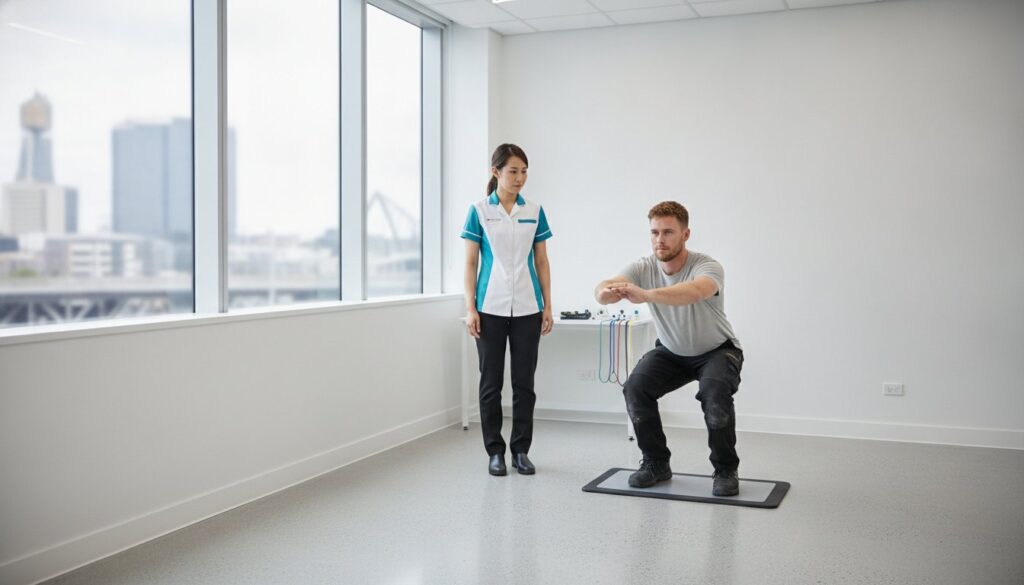
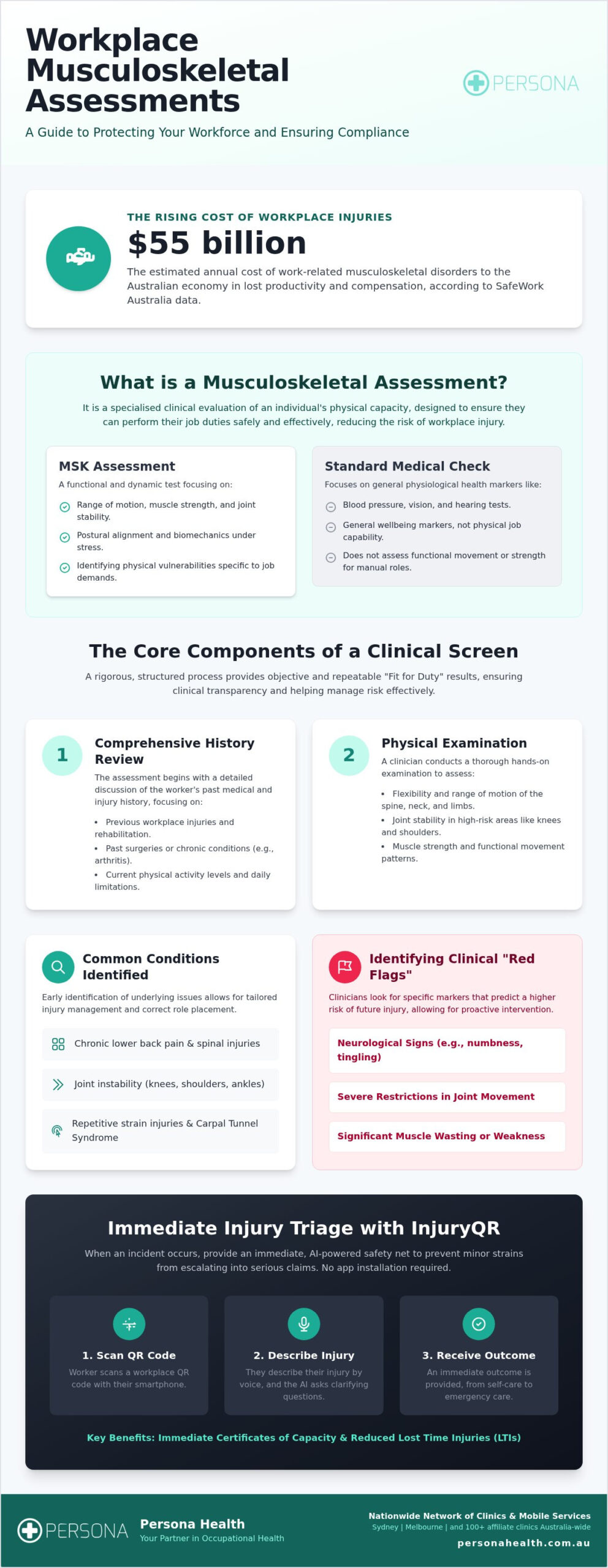
A workplace musculoskeletal assessment is a specialised clinical evaluation designed to examine the health and functional capacity of an individual’s bones, joints, muscles, and connective tissues. Unlike a general check-up, this assessment is highly targeted. Its primary purpose is to determine if a worker’s physical capabilities align with the inherent requirements of their specific role. This ensures that the individual can perform their duties safely without an unreasonable risk of injury or the exacerbation of a pre-existing condition. Understanding What is a Workplace Musculoskeletal Assessment? is foundational for any business looking to manage physical risk effectively.
These evaluations are most commonly performed as part of a pre-employment medical or a formal fitness for duty check. The scope is rigorous, focusing on range of motion, muscle strength, joint stability, and postural alignment. By looking at how the body functions as a whole, clinicians can identify specific vulnerabilities that might lead to a serious claim. At Persona Health, our occupational physicians use these assessments to provide clear, evidence-based outcomes that help employers make informed recruitment and placement decisions.
The Difference Between a Standard Medical and an MSK Assessment
A standard medical typically focuses on general physiological health markers. These include blood pressure, vision, hearing, and lung function. While these are vital for overall wellbeing, they don’t necessarily reflect how a person will cope with the physical rigours of a manual role. In contrast, a workplace musculoskeletal assessment is functional and dynamic. It tests how the body moves under load or stress, examining biomechanics and physical endurance. For roles that involve heavy lifting, repetitive movement, or prolonged standing, both assessments are necessary to build a comprehensive safety profile for the worker.
Common Conditions Identified During Screening
A thorough musculoskeletal screen can identify underlying issues before they manifest as a workplace injury. Practitioners look for chronic lower back pain or signs of previous spinal injuries that could be aggravated by specific job tasks. Assessment of joint stability in the knees, shoulders, and ankles is also crucial, as these are high-risk areas for acute strains and sprains. Additionally, clinicians can detect early-stage repetitive strain injuries or carpal tunnel syndrome. Identifying these conditions early allows for tailored injury management plans and ensures that workers are placed in roles that support their long-term physical health.
The Core Components of a Clinical Musculoskeletal Screen
A workplace musculoskeletal assessment isn’t just a series of random stretches; it follows a rigorous, structured clinical path to ensure results are objective and repeatable. During the screen, our practitioners look for specific “red flags”. These might include neurological signs like numbness, severe restrictions in joint movement, or evidence of significant muscle wasting. Identifying these markers early is essential for preventing a minor physical vulnerability from escalating into a serious long-term claim.
The outcomes are categorised to provide you with clear, actionable “Fit for Duty” results. This clinical transparency helps you understand exactly where a worker stands in relation to their job demands. We ensure the entire process is professional, non-invasive, and informative. By explaining the findings to the worker, we foster a sense of shared responsibility for their physical health and safety on site.
Step 1: Comprehensive Medical and Injury History
The process begins with a detailed review of the worker’s past medical and injury history. We look closely at previous workplace injuries and any ongoing rehabilitation or treatment they might be receiving. It’s vital to document past surgeries or chronic conditions, such as degenerative disc disease or inflammatory arthritis, that could affect the musculoskeletal system. We also discuss the worker’s current physical activity levels and any perceived limitations they experience during their daily routine. This context allows the clinician to tailor the physical examination to the individual’s specific history.
Step 2: Physical Examination and Range of Motion
Next, the clinician conducts a thorough physical examination focusing on the flexibility and movement of the spine, neck, and limbs. This involves careful palpation of joints to check for swelling, tenderness, or any structural abnormality. We pay close attention to the worker’s posture and gait to identify biomechanical imbalances that could lead to future strain. These observations are critical for ensuring the individual’s body can handle the specific ergonomic demands of their work environment, such as prolonged sitting or repetitive reaching.
Step 3: Functional Strength and Stability Testing
The final stage involves objective measures of functional strength and stability. Clinicians use specific tools, such as dynamometers, for grip strength testing and perform manual muscle testing for all major muscle groups. Core stability assessments are particularly important for roles involving lifting, as they ensure the worker can stabilise their spine under load. We also incorporate balance and coordination drills relevant to the specific workplace, such as navigating uneven surfaces or climbing ladders safely. If you want to see how these assessments fit into a broader safety strategy, you can explore our pre-employment medical services for more detail.
Why Musculoskeletal Health Matters for Australian Businesses
Work-related musculoskeletal disorders (WMSDs) aren’t just clinical issues; they are significant business risks that require careful management. In Australia, body stressing remains the primary cause of serious workplace injuries, accounting for over 33% of all compensation claims. For an employer, this translates to more than just paperwork. It represents a disruption to the team, a loss of skilled labour, and a direct hit to operational efficiency. A workplace musculoskeletal assessment acts as a frontline defence, ensuring that the physical health of your team is managed with the same rigour as your financial assets.
Healthy workers are naturally more engaged and less likely to suffer from the cycle of chronic absenteeism that often follows a poorly managed injury. When a person feels physically capable of meeting their job demands, their job satisfaction and productivity increase. Conversely, ignoring the physical strain on your workforce can lead to a culture of burnout and high staff turnover. By prioritising musculoskeletal health, you aren’t just ticking a compliance box; you are investing in the long-term sustainability of your human capital.
Navigating Australian WHS Legislation and Standards
Compliance with the Work Health and Safety Act 2011 requires more than a reactive approach to safety. SafeWork Australia sets national policy, but each state regulator, such as SafeWork NSW or WorkSafe Victoria, enforces strict benchmarks that businesses must meet. As of July 2026, approved Codes of Practice are mandatory compliance benchmarks in New South Wales. Employers have a non-delegable duty of care to provide a safe work environment, which includes assessing whether a worker can safely perform hazardous manual tasks. For high-risk sectors, following specific Australian Standards for rail or transport is a legal necessity that protects the business from indexed penalties, which can now exceed $1.2 million for certain individual breaches.
The Financial Impact: Premiums, Productivity, and LTIs
The financial burden of musculoskeletal injuries is staggering. In New South Wales alone, the average cost of a single serious MSD claim is $64,759, often resulting in an average of 20 weeks of lost time. These figures don’t even account for the hidden costs: hiring temporary staff, retraining, and the loss of institutional knowledge. For businesses operating in competitive hubs like Sydney and Melbourne, frequent claims lead to higher insurance premiums and reduced productivity. By using a workplace musculoskeletal assessment as a “preventative maintenance” strategy, you can identify risks before they manifest as Lost Time Injuries (LTIs). This proactive approach is a core component of a modern fitness for duty strategy, helping you maintain a resilient workforce while protecting your bottom line.
Managing Risks and Immediate Injury Triage with InjuryQR
While a comprehensive workplace musculoskeletal assessment is the most effective way to identify physical risks, the reality of high-risk sectors like transport, warehousing, and manufacturing is that accidents can still occur. When a worker experiences a sudden strain or sprain, the speed of the clinical response often determines whether they return to work the next day or enter a long-term compensation cycle. Immediate triage is the critical missing link in many safety strategies, providing a professional bridge between the moment of injury and formal medical intervention.
This is where InjuryQR transforms the traditional approach to Australian workplace safety. It is a free, AI-powered triage service designed to provide instant clinical guidance. By empowering workers with a digital tool that they can use the moment an incident occurs, businesses can prevent minor musculoskeletal strains from escalating into complex, costly claims that impact both the worker’s wellbeing and the company’s insurance premiums.
How InjuryQR Streamlines Workplace Safety
The system is designed for maximum accessibility in busy environments. A worker simply scans a QR code located on-site and describes their injury using their voice. There is no app installation required, which removes a major barrier to adoption for contractors or temporary staff. The AI then asks targeted, clinical follow-up questions to assess the severity and nature of the incident. Based on this voice-driven data, the system provides immediate outcomes. These range from evidence-based self-care advice for minor issues to immediate redirection toward telehealth or emergency services for more serious injuries. This ensures that every individual receives the specific level of care they need without unnecessary delay.
Benefits for the Employer: Certificates and Compliance
For safety officers and business owners, the benefits extend far beyond immediate first aid. InjuryQR generates immediate Certificates of Capacity, which are essential for facilitating early return-to-work programmes and satisfying Australian workers compensation requirements. This real-time reporting ensures that every incident is documented accurately and instantly, supporting your compliance with SafeWork Australia standards and state-specific regulations. By streamlining the triage process, businesses can significantly reduce their Lost Time Injuries (LTIs) and foster a safety culture that feels supportive rather than bureaucratic. For more complex cases requiring ongoing clinical oversight, our team provides expert workplace injury management across our clinics in Sydney and Melbourne, ensuring a seamless path from initial triage to full recovery.
Specialised Assessments with Persona Health
Persona Health provides tailored musculoskeletal assessments that recognise the unique physical requirements of every role and every individual. We believe that occupational medicine should be more than a clinical box-ticking exercise. It’s a supportive process that balances professional authority with deep empathy for the worker’s experience. Our clinics across Sydney, including Parramatta, Rosebery, Gregory Hills, and Dee Why, alongside our Melbourne locations in Cairnlea and Craigieburn, serve as centres of excellence for workforce health. We ensure that every assessment is conducted with the highest clinical standards while maintaining a welcoming, person-centred environment.
Your business doesn’t just gain access to our primary clinics. We also maintain an extensive network of over 100 affiliate clinics and offer Australia-wide mobile services. This ensures your workforce is covered regardless of their location, providing a consistent standard of care from the CBD to regional sites. Our goal is to alleviate the bizonytalanság (uncertainty) often associated with WHS compliance; we position ourselves as your reliable partner in the growth and safety of your team.
Tailoring Assessments to Your Specific Industry
A standard screen is rarely sufficient for high-risk or specialised industries. We design custom assessments for sectors like heavy transport and rail, providing comprehensive Category 3 Rail Medicals that meet strict national safety standards. For workers in construction or manufacturing who may be exposed to hazardous materials, we integrate specialised musculoskeletal checks into crystalline silica medicals. By ensuring every workplace musculoskeletal assessment is directly relevant to the physical demands of the job description, we provide you with a clearer picture of a worker’s true “fit for duty” status and long-term resilience.
The Persona Health Advantage: Fast Turnaround and Expert Support
We recognise that operational delays can be costly for any Australian business. Our team prioritises fast turnaround times for all reporting, allowing you to make informed hiring or placement decisions without unnecessary wait times. Beyond the initial workplace musculoskeletal assessment, we provide expert support through our Injury Management Consultants. These specialists guide your recovery strategies and help you interpret complex clinical results in a practical, workplace-focused context. This employer-focused approach ensures that you aren’t just receiving data, but actionable insights that protect your workforce and support your operational efficiency.
Securing Your Workforce’s Physical Future
Building a resilient workforce requires a balance of clinical expertise and modern technology. You’ve seen how a proactive workplace musculoskeletal assessment identifies physical risks before they become costly claims, ensuring your business stays compliant with SafeWork Australia standards. By prioritising the unique physical needs of your team, you foster a culture of care that directly improves productivity and reduces the burden of Lost Time Injuries. This strategic approach transforms occupational health from a compliance requirement into a genuine business asset.
Persona Health is here to guide you through every step of this process. With professional clinics in Parramatta, Rosebery, Gregory Hills, and Dee Why in Sydney, alongside Cairnlea and Craigieburn in Melbourne, we provide local expertise backed by a national network of over 100 affiliate clinics. Our clients also benefit from free access to InjuryQR, providing an immediate AI-powered triage safety net for every worker on site. We don’t just provide data; we provide the clinical authority and empathetic support your business needs to thrive.
We look forward to partnering with you to create a safer, healthier workplace for everyone.
Frequently Asked Questions
What is included in a workplace musculoskeletal assessment?
A workplace musculoskeletal assessment typically includes a review of medical history, a physical examination of joint range of motion, and functional strength testing. Our clinicians also observe posture and gait to identify biomechanical imbalances. The goal is to ensure the worker’s physical capacity matches the specific demands of their job description. This targeted approach allows for a clear clinical picture of the individual’s readiness for duty while identifying any potential vulnerabilities.
How long does a musculoskeletal assessment take to complete?
Most assessments take between 30 and 45 minutes to complete, depending on the complexity of the role. This timeframe allows our occupational physicians to conduct a thorough evaluation without causing unnecessary delays for the employer or the worker. We prioritise fast turnaround times for the final report, ensuring that you receive actionable results quickly to support your recruitment or injury management processes across our national clinic network.
Is a musculoskeletal assessment the same as a functional capacity evaluation?
No, a musculoskeletal screen is a clinical evaluation of the body’s structures, whereas a Functional Capacity Evaluation (FCE) is a more intensive assessment of specific work-related tasks. While both evaluate physical readiness, an FCE often involves simulated work activities over several hours. The musculoskeletal assessment is usually performed as a foundational component of a pre-employment medical or a standard fitness for duty check to identify underlying physical risks.
Can an employee fail a musculoskeletal assessment?
The assessment isn’t a pass or fail test; it’s a “fit for duty” evaluation based on job requirements. A worker might be cleared as fit, fit with specific restrictions, or temporarily unfit pending further treatment. If limitations are identified, we provide clear guidance on how to manage these risks. This supportive approach helps businesses maintain compliance with the WHS Act 2011 while ensuring individual worker safety is always the priority.
Do I need a musculoskeletal assessment for office-based staff?
Yes, office-based staff benefit from screening to prevent sedentary-related issues like chronic lower back pain and repetitive strain injuries. While the physical demands differ from heavy industry, the risk of carpal tunnel syndrome or postural strain is significant in corporate environments. Identifying these issues early through a workplace musculoskeletal assessment allows for ergonomic adjustments and proactive wellness strategies, reducing the likelihood of long-term claims and improving overall employee engagement.
How often should employees undergo musculoskeletal screening?
Employees should undergo screening during the pre-employment phase, following a significant injury, or when moving into a physically different role. For high-risk industries, periodic assessments every one to two years can help monitor the cumulative effects of manual tasks. This proactive screening strategy ensures that any early signs of body stressing are identified before they become serious injuries, helping to keep your Lost Time Injury rates as low as possible.
What happens if a pre-existing injury is found during the assessment?
If a pre-existing injury is identified, it doesn’t automatically mean the worker cannot perform the role. Our clinicians assess the current stability and function of the affected area in relation to the job’s inherent requirements. We then provide recommendations for risk mitigation, which might include modified duties or ergonomic aids. This ensures that the employer meets their duty of care while supporting the worker’s long-term physical health and recovery.
Are musculoskeletal assessments tax-deductible for Australian businesses?
In Australia, the cost of these assessments is generally tax-deductible for businesses as a legitimate work health and safety expense. Since these evaluations are essential for meeting legislative compliance and managing workplace risks, they are viewed as a necessary business cost. However, we always recommend consulting with a qualified tax professional to understand how these deductions apply to your specific business structure and your obligations under the Privacy Act 1988.

Article by
Ian Nicholson
Ian is the Business Support Manager at Persona Health, where he plays a key role across IT, sales, marketing and business operations. With a broad skill set and a practical, solutions-focused approach, Ian helps drive the systems, communication and commercial strategy that support Persona Health’s continued growth across Australia.