
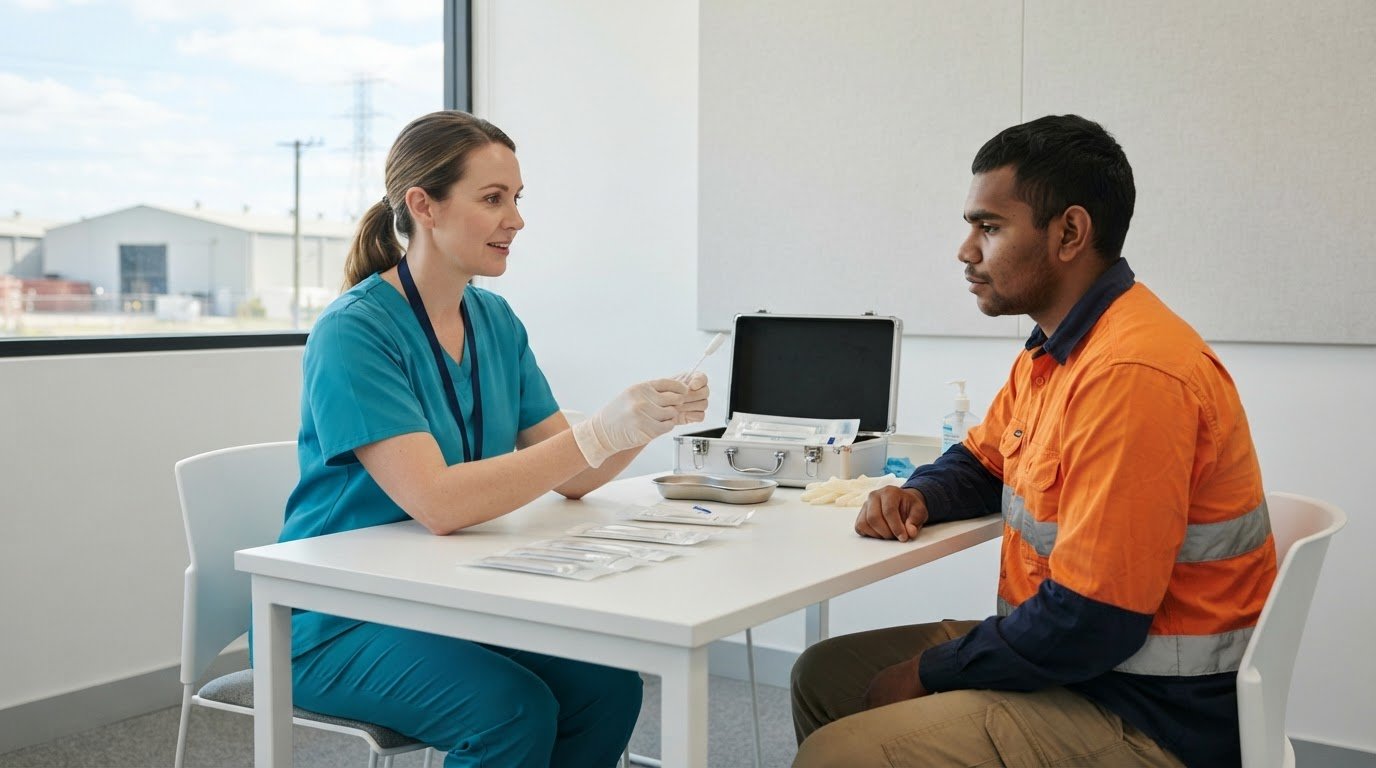
Workplace drug testing can be brought to your site, so staff can be screened without travelling to a clinic. Mobile drug testing services in Altona North can use different collection methods and screening panels, with a non-negative result potentially referred to a laboratory for further analysis. The process is designed to give employers a practical way to arrange workplace screening.
It’s understandable to want clarity about what a test involves, which substances it can detect and what happens if a result needs further review. The collection method and substances screened depend on the testing approach, and an initial screening result may not be the final step.
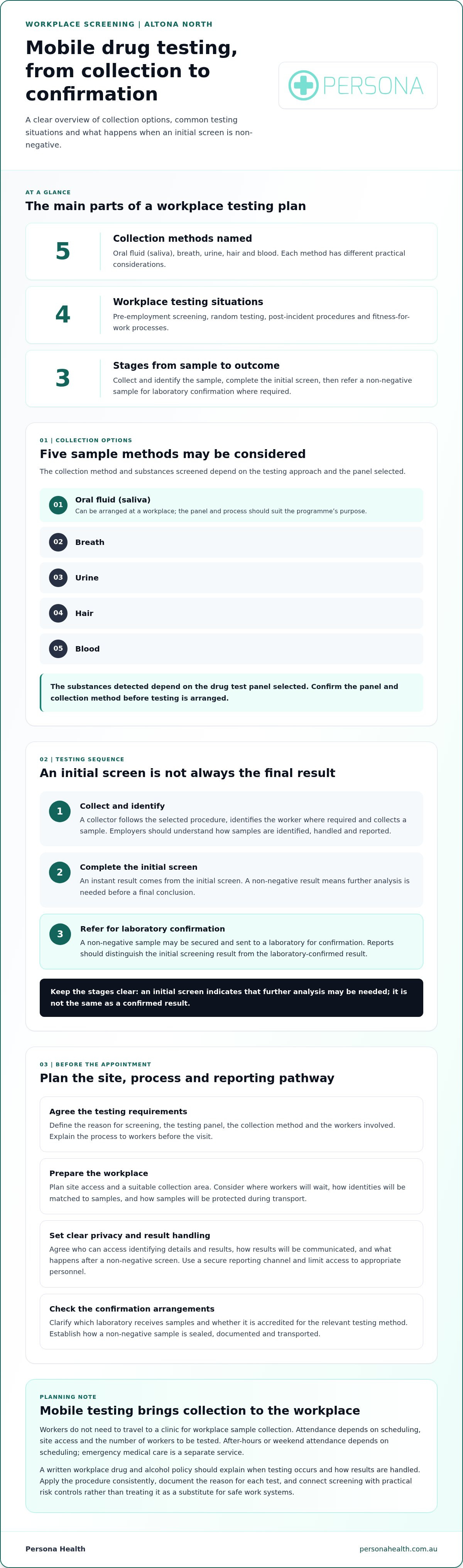
This article explains how mobile testing works, outlines common collection methods such as saliva, urine, breath, hair and blood, and describes the substances workplace panels may cover. You’ll also learn how non-negative results may be referred to a laboratory and what to consider when arranging testing for an Altona North workplace.
Key Takeaways
- Mobile testing brings workplace screening to your site, with the process shaped by your testing requirements.
- A non-negative screening result may be referred to a laboratory for confirmatory testing.
- Collection methods include oral fluid, breath, urine, hair and blood, and each has different practical considerations.
- The substances detected depend on the drug test panel selected, so understand its scope before arranging screening.
- Consider how the collection method, testing process and reporting needs fit your workplace when planning testing in Altona North.
What Is Mobile Drug Testing?
Mobile drug testing brings sample collection to the workplace, so workers do not need to travel to a clinic. After-hours or weekend attendance depends on scheduling, while emergency medical care is a separate service.
Sample Collection and Laboratory Confirmation
A collector follows the selected procedure, identifies the worker where required and collects a sample. An initial screen may produce a non-negative result, which means further analysis is needed before a final conclusion. The sample may then be secured and sent to a laboratory for confirmation. Employers should understand how samples are identified, handled and reported.
Before arranging screening, clarify which laboratory receives samples and whether it is accredited for the relevant testing method. Establish how a non-negative sample is sealed, documented and transported, and how the worker and employer will receive the laboratory result. These steps create a clear record from collection through confirmation. Reports should distinguish the initial screening result from the laboratory-confirmed result.
Confidentiality and Result Types
Workplace testing is generally not anonymous when an employer needs to match a result to a worker. Confidentiality concerns who can access identifying details and results, and how records are communicated. Define the intended recipients before testing and explain the process to workers. Results should follow the agreed reporting pathway.
An instant result comes from the initial screen, while a non-negative result may require laboratory confirmation. These are different stages: the first indicates that further analysis is needed, while confirmation provides a more detailed assessment. Employers should clarify how each result is labelled, who receives it and how workers will be told about the next step.
Mobile testing can support a workplace program by bringing collection to a suitable site. Before the appointment, plan where workers will wait, how identities will be matched to samples and how samples will be protected during transport. For example, a site could use a private collection area away from shared workspaces and schedule workers individually.
Agree on the testing panel and collection method before the collector arrives. This helps prevent confusion about which substances are tested and which results need confirmation. Give workers clear instructions about the process, including what happens after a non-negative screen. A consistent explanation can reduce uncertainty without treating an initial result as a final finding.
Confidentiality depends on practical controls, not just wording. Limit access to results, use a secure reporting channel and make the internal process clear. Workers should know who will receive the outcome and whether a non-negative result will be referred for laboratory confirmation. These steps help protect privacy while allowing the employer to manage the testing program.
Keep the sequence clear: collect and identify the sample, complete the initial screen, then refer a non-negative sample for confirmatory laboratory testing. This distinction helps employers interpret reports accurately and communicate results responsibly.
Mobile saliva drug testing for Victorian workplaces
Saliva screening can be arranged at a workplace, helping employers organise testing with less disruption to operations. Attendance depends on scheduling, site access and the number of workers to be tested.
To arrange testing, define the purpose, testing panel, number of workers and preferred site arrangements, then book a suitable time. Give workers clear instructions before the visit.
Workplace Testing Processes
A sound process starts with a written workplace drug and alcohol policy explaining when testing occurs and how results are handled. Apply the procedure consistently, document the reason for each test, and record collection and reporting steps. Define who can access results and how a non-negative screen proceeds to confirmation.
For example, a transport workplace might document one process for pre-employment screening and another for testing after a safety incident. The testing method should match the policy and the work being performed. Keep records factual, dated and accessible only to appropriate personnel.
Workplace Screening and Testing Situations
Workplace screening may be part of a pre-employment assessment, random testing, a post-incident procedure or a fitness-for-work process. The policy should explain which situations apply, how workers are notified and what happens after each result. Saliva testing is one option; the panel and collection method should suit the program’s purpose.
Employers should connect testing with practical risk controls rather than treat screening as a substitute for safe work systems. For example, a test does not replace supervision, training or incident reporting. Clear communication helps workers understand the process and supports consistent handling across teams.
For workplace injury triage, InjuryQR is a free AI-powered service available to Australian businesses. Workers scan a QR code without downloading an app, describe an injury by voice, and answer AI follow-up questions. It can offer self-care guidance, telehealth appointments typically within 3-4 hours, Emergency Department direction, or instructions to call 000. Certificates of Capacity can be issued immediately where appropriate. Early triage can help limit avoidable Lost Time Injuries and improve injury reporting. Free posters, stickers, keyrings and fridge magnets are available to support workplace access.
Arranging Workplace Testing
For mobile drug testing services in Altona North, start by defining the reason for screening and which workers are involved. Select the testing panel and collection method, identify a private and practical site area, and agree on reporting and confirmation procedures. Give workers the policy and appointment instructions before collection.
Coordinate attendance around site access, work schedules and the number of samples required. Scheduling depends on these practical details. Keep a contact person available on the day to direct the collector and manage operational changes.
Saliva screening is useful when workplace collection is preferred, but employers should consider the complete process, from policy through reporting. Persona Health’s drug and alcohol screening service outlines a related option for employers planning a consistent testing program.
Oral fluid, breath, urine, hair and blood collection
The collection method affects what a workplace test measures, how samples are taken and how results are used. Choose a method that suits the purpose of screening, the workplace program and the decisions employers need to make.
For on-site breath alcohol testing alongside drug screening, Persona Health provides drug and alcohol testing and Australia-wide mobile workplace services. Its drug and alcohol screening service is relevant for employers planning workplace testing in Altona North.
Oral fluid is collected from the mouth and can be used for workplace drug screening. It is a practical option for collection at a worksite. Check which substances the selected panel covers and how non-negative screens are managed. A saliva screen differs from a breath alcohol test, so the methods are not interchangeable.
Breath testing assesses alcohol using an exhaled breath sample. It can be included in a workplace program alongside drug tests, but it answers a different question from oral fluid or urine screening. Before testing, establish the reason for the assessment, the reporting process and how results will inform workplace decisions.
Urine testing requires a urine sample and uses a panel to screen for selected substances. Drug metabolites can remain detectable in urine for weeks after ingestion. A urine result may therefore reflect earlier exposure rather than current impairment. Employers should account for this distinction when interpreting reports and applying workplace policies.
Collection conditions matter. Explain the process to workers, provide a suitable private area and follow the collection and sample-handling procedures. If a result is non-negative, laboratory confirmation may be the next step. Keep the initial screen distinct from the confirmed report in workplace records.
Hair testing uses a hair sample and a different collection process from saliva or urine testing. Blood testing requires a blood sample and clinical collection arrangements. These methods are not interchangeable; choose according to the testing purpose, panel and reporting pathway.
Random testing is one possible program approach; other workplace situations may require different procedures. Set out the selection process in the policy and explain it to workers before collection. This makes the process clearer and helps employers apply it consistently.
Before booking mobile collection, list the required methods, whether breath alcohol testing is needed, which workers are involved and the intended reporting pathway. These details help align worksite collection with the decisions the testing program is designed to support.
Drugs detected by mobile drug tests
A mobile drug test detects only the substances included in its selected panel. There is no single universal panel for every Altona North workplace. Before booking, request the panel’s substance list and match it to your written policy, the roles being tested and the decisions the results will inform.
That distinction matters. “Drug screening” describes a process, not a promise to detect every substance. A saliva or urine screen is designed to detect the substances covered by its panel. If you need a tailored approach, first identify relevant workplace risks and specify which substances the program should screen for.
For example, an employer could compare the panel with its policy before scheduling a screening day. The procedure should name the collection method, substances included, reporting pathway and action after a non-negative result. This gives workers and managers a shared reference point and helps avoid assumptions about what a test includes.
Request the panel details in writing. Check that the description names each substance or substance group rather than relying on a broad label. Confirm whether different roles or testing situations use different panels. If a non-negative screen proceeds to laboratory analysis, document how that step fits into result reporting.
Prescription and over-the-counter medicines are another relevant consideration. Workers should disclose medicines before screening, because medication combinations can contribute to false-positive results. Explain how this information is handled and who may access it. A clear procedure lets workers raise relevant details without treating a screening result as proof of impairment or misconduct.
Results need careful interpretation. A screen relates to the panel used and the sample collected; it does not assess every substance. Follow the workplace policy, distinguish screening from confirmatory analysis and communicate outcomes through the agreed confidential process. Handle a non-negative screen according to the program’s confirmation steps before making workplace decisions.
For a workplace drug program in Altona North, use this practical sequence:
- List the substances or substance groups relevant to the policy.
- Match that list to the proposed test panel and collection method.
- Tell workers what the panel covers and how medicine disclosures are managed.
- Set out how screening and confirmatory results will be reported.
These steps help employers choose a panel that fits the program instead of assuming every mobile test covers the same substances. Clear scope, consistent procedures and documented analysis support informed decisions and protect the integrity of workplace screening.
Which mobile drug testing providers service Altona North, Victoria?
Employers in Altona North can arrange mobile workplace testing through occupational health providers that offer on-site collection in Victoria. Testing takes place at an agreed workplace location, with the method, panel and reporting process established before the visit. The practical question for a local workplace is whether collection can be coordinated at that specific site.
Attendance depends on scheduling, site access, worker numbers and the testing required. There is no single timeframe for every Altona North booking. Help plan the visit by sharing the workplace address, preferred dates, expected number of workers and whether saliva, urine or breath testing is needed.
Mobile testing can be especially practical when workers operate from one site or travel between work locations. For example, an Altona North warehouse can arrange a private collection area and stagger appointments around shift changes. A transport workplace may need to account for vehicles, work schedules and a quiet space for individual collections.
Before the visit, define the testing purpose and relevant workplace policy. Confirm the panel, collection method and reporting process. If a screening result is non-negative, distinguish it from any confirmatory laboratory analysis. Clear steps help employers interpret reports consistently and explain the process to workers.
Local logistics matter as much as the testing method. A site contact can guide the collector to the right entrance, identify a suitable room and coordinate worker attendance. Consider privacy, sample handling and how workers can continue their duties or await instructions after collection. These arrangements help fit the visit to the workplace and minimise unnecessary disruption.
Mobile drug testing services in Altona North should be planned around the workplace’s actual needs, not an assumed standard package. A useful booking brief includes:
- The Altona North site address and access instructions.
- The number of workers and preferred testing window.
- The collection method and substances included in the panel.
- The procedure for non-negative screening results and reporting.
Establishing these details early helps the provider organise the visit around the worksite and testing program. Explain the agreed process to workers before the appointment, including what sample will be collected and how results are handled. Preparation supports a clear, orderly testing day in Altona North.
Persona Health: Pre-Employment Medicals
Persona Health provides Pre-Employment Medicals and Drug and Alcohol Testing, with an employer-focused approach, responsive customer service and modern digital reporting. Employers can also access Australia-wide mobile workplace services and a network of 100 affiliate clinics nationwide.
Persona Health has clinics in Parramatta, Rosebery, Gregory Hills and Dee Why in Sydney, and Cairnlea and Craigieburn in Melbourne. Fast turnaround times and clear reporting support employers organising role-related assessments across these locations or multiple sites.
For occupational health support that fits your workforce and recruitment needs, contact Persona Health.
Set up a testing plan that fits your workplace
Turn your workplace policy into a clear, workable process. Decide who needs testing, which collection method suits the purpose, how results will be handled and who will receive them. For mobile drug testing services in Altona North, a concise written plan helps workers understand what to expect and supports consistent decisions.
Persona Health also provides Pre-Employment Medicals, Workplace Injury Management and Crystalline Silica Medicals. These services address different occupational health needs, so consider them when they align with your workforce and role requirements.
With the process mapped out, you can approach workplace testing in a considered, organised way. A clear plan gives your team a practical foundation for taking the next step.
Frequently Asked Questions
Can I refuse a drug test?
You can say that you do not wish to take a test, but the consequences depend on workplace policy and your employment arrangements. Ask which policy applies and how a refusal is recorded before deciding. For example, a site policy may explain what happens if a worker declines testing after an incident. Employers should apply the documented process consistently and explain the available steps without treating refusal itself as a test result.
Do workers being tested need to disclose any information?
Workers should tell the testing professional about prescribed and over-the-counter medicines before screening, as medicines can affect how a result is interpreted. They can ask how this information will be recorded, who may access it and how confidentiality is protected. Employers should explain why personal information is collected and limit access to people who need it for the workplace process.
How quickly are results available?
An initial screening result may be available at the collection site, while a result requiring laboratory analysis takes longer. Timing depends on sample transport, laboratory processing and the confirmation procedure. For example, an employer planning a return-to-work decision should distinguish an initial screen from a confirmed laboratory report. Agree on how each result will be communicated, and do not treat an initial screen as the final outcome.
What happens if a non-negative or positive result is detected?
Handle a non-negative screen through the workplace’s documented follow-up process rather than automatically treating it as a confirmed positive. The sample can proceed to confirmatory laboratory analysis, with the result reported through the agreed channel. Communicate next steps privately and clearly to the worker. Decisions should follow the policy and the confirmed information available.
When can an employer test for drugs and alcohol?
A workplace testing program should explain when testing may occur, such as for pre-employment screening, random selection, post-incident testing or a fitness-for-work concern. The written policy should set out how workers are selected, notified and informed about results. For example, a transport employer could describe its random testing process separately from its response to a workplace incident. Apply the stated process consistently.
What types of workplace drug and alcohol tests are available through mobile providers in Altona North?
Mobile workplace programs can use oral-fluid, urine, hair or blood collection for drug screening, and breath testing for alcohol. The methods address different testing needs, so the selected panel and purpose should guide the choice. For example, an employer may arrange breath alcohol testing alongside a drug-screening method. Request details of the substances included in the panel and the reporting process for each test type.
What Australian standards and legal requirements apply to workplace drug testing in Victoria?
Workplace testing in Victoria should be supported by a clear policy that fits the employer’s work health and safety responsibilities, employment arrangements and privacy obligations. The Privacy Act 1988 and Australian Privacy Principles are relevant to handling personal information where they apply. WorkSafe Victoria provides the state workplace safety context. Employers should set out the testing purpose, access to results and how information is retained and communicated.
How do mobile providers ensure chain of custody and confirm positive test results?
A documented chain of custody links the worker, sample and collection records through each handling step. The collector records sample identification, seals it for transport and documents its transfer to the laboratory. If screening is non-negative, confirmatory analysis provides further assessment before the result is reported as confirmed. Employers should ensure reports distinguish screening from laboratory confirmation and follow the agreed confidential reporting pathway.

Article by
Ian Nicholson
Ian is the Business Support Manager at Persona Health, where he plays a key role across IT, sales, marketing and business operations. With a broad skill set and a practical, solutions-focused approach, Ian helps drive the systems, communication and commercial strategy that support Persona Health’s continued growth across Australia.