

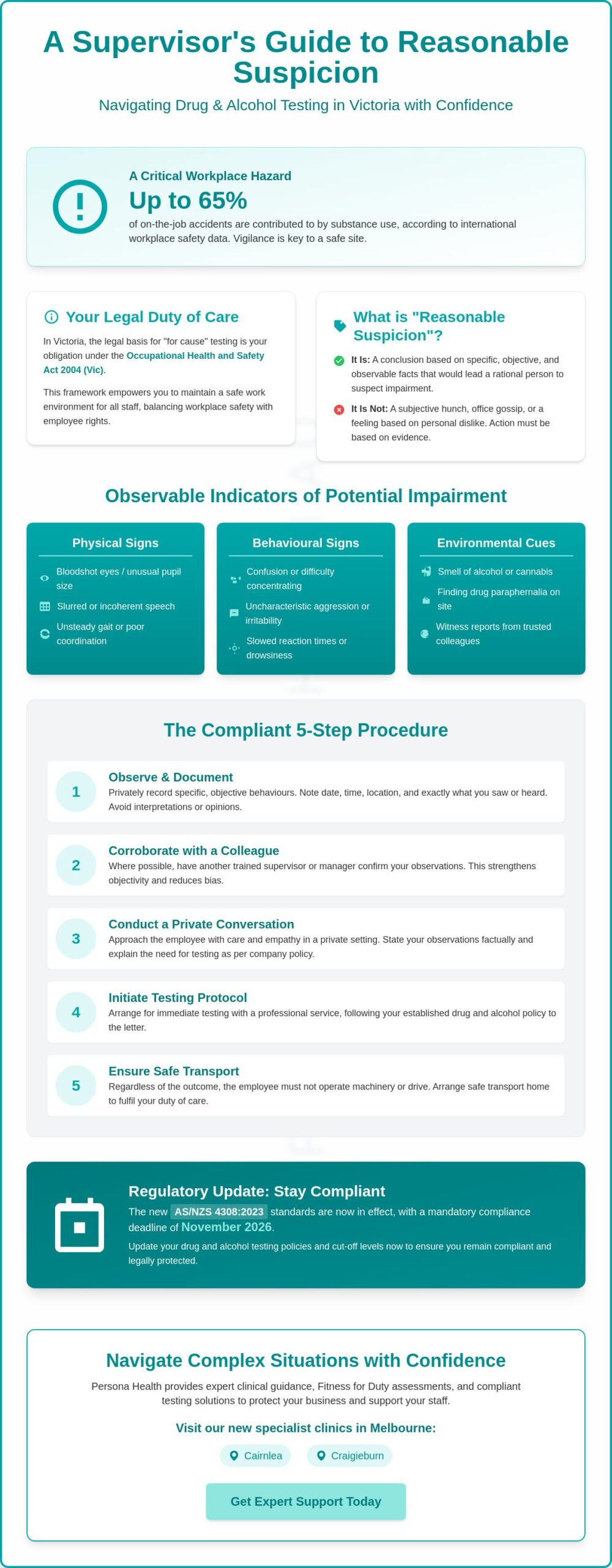
Substance abuse in the workplace contributes to up to 65% of on-the-job accidents according to data from the US Department of Labor. This statistic highlights why maintaining a vigilant safety culture is never just a checkbox exercise. We understand that noticing signs of impairment in a team member is one of the most stressful experiences a supervisor can face. You likely feel a heavy weight of responsibility mixed with the anxiety of a potential unfair dismissal claim. Mastering the reasonable suspicion drug testing procedure vic is the key to balancing your legal obligations under the OHS Act 2004 (Vic) with the need to protect your staff’s dignity.
At Persona Health, our approach is built on the belief that every person is unique and deserves care that reflects their individual needs. Whether you visit our new clinics in Cairnlea or Craigieburn, you’ll find a professional partner dedicated to helping you manage these sensitive situations with clinical precision and genuine empathy. This 2026 guide provides a clear checklist for supervisors to ensure compliance with SafeWork Australia recommendations and the latest AS/NZS 4308:2023 standards. You’ll learn how to manage drug and alcohol testing confidently while maintaining a safe work site and preserving employee trust.
Key Takeaways
- Understand how the Occupational Health and Safety Act 2004 (Vic) provides the legal framework for “for cause” testing to ensure a safe work environment for everyone.
- Master the essential steps of a compliant reasonable suspicion drug testing procedure vic to protect your business from litigation while supporting your employees.
- Learn to identify objective physical and behavioural indicators of impairment, allowing your supervisors to act with confidence rather than hesitation.
- Stay ahead of the November 2026 deadline for AS/NZS 4308:2023 by updating your drug and alcohol testing protocols and cut-off levels today.
- Access expert clinical guidance and Independent Medical Examiner services at our modern Melbourne clinics in Cairnlea and Craigieburn.
Defining Reasonable Suspicion Under Victorian Law
In Victoria, the legal basis for testing isn’t found in a single “Drug Testing Act.” Instead, it’s rooted in your duty of care under the Occupational Health and Safety Act 2004 (Vic). This legislation requires you to provide a safe workplace so far as is reasonably practicable. Implementing a reasonable suspicion drug testing procedure vic is a proactive way to meet this obligation. Unlike random testing, which acts as a general deterrent, suspicion-based testing is a targeted safety intervention triggered by specific, observable indicators of impairment.
This “for cause” trigger is a sensitive moment for both the supervisor and the employee. It requires a delicate balance of professional authority and human empathy. Defining Reasonable Suspicion correctly is vital to avoid legal pitfalls. It isn’t just a “hunch” or office gossip; it’s a set of facts or circumstances that would lead a rational person to believe an employee is unfit for duty. Having a robust, written drug and alcohol policy is your legal foundation, ensuring everyone understands their rights and responsibilities before a situation arises.
To better understand how these legal concepts play out in real-world scenarios, watch this helpful video:
The Duty of Care and SafeWork Australia Guidelines
SafeWork Australia emphasizes that impairment from drugs or alcohol is a significant workplace hazard, particularly in high-risk industries like construction or logistics. While employees have a right to privacy, this must be balanced against the collective safety of the entire workforce. Victorian legal precedents generally support “for cause” testing when an employer can demonstrate a genuine safety risk. At our new clinics in Cairnlea and Craigieburn, we often help Melbourne employers navigate this balance through professional fitness for duty medicals. It’s about ensuring the person is safe to perform their role, not just checking for substances.
When Suspicion Becomes Actionable
For suspicion to be actionable, it must be based on objective, documented evidence. This might include slurred speech, the smell of alcohol, or uncharacteristic aggression. We recommend that two managers or supervisors confirm these observations whenever possible. This “second pair of eyes” reduces the risk of bias and strengthens your position if the testing leads to a dispute. Documentation is your best friend here. Record the date, time, and specific behaviours observed immediately. This methodical approach ensures that the reasonable suspicion drug testing procedure vic remains a clinical safety tool rather than a disciplinary trap. You’re acting to protect the individual and their colleagues, which is the highest form of workplace support.
Identifying Indicators of Impairment in the Workplace
Recognising that a colleague might be struggling with impairment is a heavy responsibility that requires both clinical awareness and emotional intelligence. While the legal framework discussed earlier provides your foundation, the actual reasonable suspicion drug testing procedure vic begins with your direct observations on the ground. You aren’t looking for a reason to penalise; you’re looking for a reason to keep your team safe. This involves identifying a pattern of physical, behavioural, and environmental indicators that suggest a person’s fitness for work is compromised.
Objective evidence is the gold standard in these situations. It’s vital to distinguish between a “hunch” and a verifiable symptom. For example, the smell of alcohol on an employee’s breath or the discovery of drug paraphernalia in a locker are clear environmental clues. However, cognitive indicators are often more subtle. You might notice a team member struggling to follow simple instructions they’ve performed for years or experiencing sudden memory lapses during a shift. These signs, when combined with physical changes, create a professional basis for a fitness for duty assessment at one of our clinics.
Physical and Observable Symptoms
Physical manifestations are often the most immediate red flags. When assessing an employee, look for a combination of these common signs:
- Bloodshot or glassy eyes and dilated or constricted pupils.
- Unsteady gait, loss of balance, or poor coordination during manual tasks.
- Hand tremors or excessive sweating that seems unrelated to the work environment.
- Slurred speech or an inability to maintain a coherent conversation.
It’s important to remain empathetic, as some of these symptoms can mirror chronic illness or extreme fatigue. However, if these signs appear suddenly or follow a “near-miss” safety incident, they become urgent triggers for intervention. Adhering to the 2026 Victorian workplace drug testing regulations ensures that your observations lead to a fair and scientifically valid outcome.
Performance and Behavioural Red Flags
Impairment doesn’t always look like a physical tremor. Sometimes it manifests as a sharp pivot in workplace social dynamics or a sudden drop in productivity. You might observe uncharacteristic aggression, extreme lethargy, or a previously reliable worker becoming frequently tardy during their shift. These behavioural shifts often precede a safety incident, making early detection crucial. If you’re concerned about maintaining a safe site, our team at the new Cairnlea and Craigieburn clinics can provide expert on-site health surveillance to help you manage these risks before they escalate. By focusing on these objective performance markers, you ensure the reasonable suspicion drug testing procedure vic remains a supportive safety tool rather than a source of workplace friction.
The Step-by-Step Reasonable Suspicion Procedure
Once you’ve identified indicators of impairment, the clock starts on your safety intervention. The first and most critical step in a reasonable suspicion drug testing procedure vic is the immediate removal of the employee from any safety-sensitive tasks. This isn’t a disciplinary action yet; it’s a protective measure for the individual and the site. You must act decisively but with the quiet professionalism that defines a supportive leader. Leaving an impaired person in control of heavy machinery or high-risk equipment violates your primary duty under SafeWork Australia guidelines and the OHS Act.
Following the initial removal, you’ll need to transition to a more formal, clinical verification process. This Reasonable suspicion testing procedure ensures that every action taken is legally defensible and scientifically sound. It’s about moving from observation to evidence in a way that respects the individual’s rights while upholding the safety standards of your Victorian workplace.
The Private Meeting and Confrontation
The conversation that follows is often the most daunting part for managers. Conducting a private meeting allows you to discuss your observations without an audience, preserving the employee’s dignity. We suggest using “I” statements to describe what you’ve seen. For example, saying “I noticed you’re having trouble maintaining balance” is more professional than “You’re acting like you’re on something.” It’s best practice to offer the employee the opportunity to have a support person or representative present. This ensures the process is transparent and fair. You may face excuses like fatigue or personal stress, but your role is to stick to the safety protocol. Explain that the clinical test is the best way to clear up any uncertainty for everyone’s peace of mind.
Organising the Clinical Assessment
After the meeting, you’ll need to move quickly to verify the situation through a clinical lens. We strongly recommend using an accredited occupational health provider rather than attempting internal testing, which can be prone to procedural errors. For businesses in Melbourne’s west and north, our new clinics in Cairnlea and Craigieburn provide a neutral, professional environment for these assessments. If you’re managing a larger project, integrating on-site health surveillance can streamline this process, keeping the chain of custody secure and minimising site downtime. While awaiting results, the employee should be placed on paid leave or assigned to non-safety-sensitive duties. It’s also your responsibility to ensure they get home safely. Never allow someone you suspect is impaired to drive themselves. This level of care reinforces that your priority is their wellbeing and the site’s collective safety.
Legal Compliance, Privacy, and 2026 Regulations
Executing a reasonable suspicion drug testing procedure vic requires more than just clinical accuracy; it demands strict adherence to evolving Australian standards and privacy laws. As we move through 2026, the regulatory environment has become more precise. All urine-based workplace testing must transition to the new AS/NZS 4308:2023 standard by November 2026. This update introduces more sensitive cut-off levels for substances like cannabis and amphetamines. Staying ahead of these deadlines is vital for maintaining a legally defensible safety programme that aligns with SafeWork Australia guidelines.
Medicinal Cannabis in the Victorian Workplace
The rise of medicinal cannabis prescriptions has created a complex landscape for Victorian HR managers. While a prescription makes the use of the substance legal, it does not grant a “pass” for impairment in safety-critical roles. Your focus must remain on the individual’s actual capacity to perform their duties safely. If an employee produces a non-negative result but provides a valid prescription, the situation shifts from a simple policy breach to a complex clinical assessment. In these instances, we recommend referring the individual for fitness for duty medicals. This professional evaluation determines if the medication’s side effects, rather than just its presence, pose a risk to the work site. It’s a nuanced approach that protects the employee’s health journey while upholding your site’s safety integrity.
Record Keeping and Confidentiality
Handling health information in Victoria is governed by both the federal Privacy Act and the state-based Health Records Act. Drug test results are highly sensitive. They must be stored securely and only be accessible to authorised personnel, such as the direct HR manager or the safety officer involved in the intervention. Unauthorised disclosure of a result isn’t just a breach of trust; it can lead to significant legal penalties for Victorian employers. We suggest keeping these records for at least seven years, though they should be separated from general personnel files to ensure maximum confidentiality.
Following a suspicion-based intervention, it’s also best practice to offer support through an Employee Assistance Programme (EAP). Even if a test returns a negative result, the stress of the process can be taxing. Providing a pathway to professional counselling shows your team that you care about their holistic well-being, not just their compliance. If you need to update your current protocols to meet the 2026 standards, our teams at Cairnlea and Craigieburn are ready to assist. Contact Persona Health today to ensure your testing procedures are clinical, compliant, and compassionate.
Professional Testing Solutions in Melbourne and Sydney
Persona Health provides a vital bridge between regulatory compliance and compassionate care. Managing a reasonable suspicion drug testing procedure vic shouldn’t feel like a legal minefield for your supervisors. We offer the clinical authority needed to handle sensitive situations with the dignity your employees deserve. Our role is to act as your modern professional partner, ensuring every test meets the rigorous AS/NZS 4308:2023 or AS/NZS 4760:2019 standards while keeping the focus on individual wellbeing and site safety.
Sometimes results are disputed or involve complex medical histories. In these cases, our access to an Independent Medical Examiner is a significant advantage. An expert clinical opinion can resolve interpersonal conflicts and legal uncertainties that a simple “positive” or “negative” result cannot address. This level of clinical oversight is why many Victorian businesses trust us to manage their most challenging cases. We also suggest integrating these services into a broader health strategy, such as conducting pre-employment medicals to establish a clear health baseline for every new team member.
New Victorian Clinics: Cairnlea and Craigieburn
We’ve expanded our footprint to better serve Melbourne’s growing industrial and logistics hubs. Our new clinics in Cairnlea and Craigieburn offer rapid response testing for businesses in the northern and western suburbs. These state-of-the-art facilities are designed with occupational health privacy as a priority, ensuring employees feel respected throughout the process. Whether you need an immediate reasonable suspicion drug testing procedure vic or a scheduled block of testing, our local teams are ready to help. You’ll find a welcoming environment that reduces the anxiety often associated with clinical assessments, helping to maintain workplace trust even during difficult interventions.
Comprehensive Occupational Health Support
Our support for your business goes well beyond the initial test. We provide end-to-end solutions including workplace injury management and on-site health surveillance for larger operations. Persona Health is the preferred partner for drug and alcohol testing because we understand the local Victorian industrial landscape. We don’t just provide data; we offer manager training sessions and policy reviews to ensure your site remains safe and compliant with SafeWork Australia guidelines. Contact our team today to discuss how we can tailor our services to your specific site requirements and help you maintain a culture of safety and integrity.
Securing Your Workplace with Confidence and Care
Managing impairment risks is one of the most significant challenges a Victorian leader faces. By focusing on objective physical indicators and following a structured reasonable suspicion drug testing procedure vic, you protect both your team and your business from unnecessary risk. Your duty under the OHS Act 2004 (Vic) is fundamentally about safety; it’s not about punishment. Staying compliant with the latest AS/NZS 4308:2023 standards ensures your actions are scientifically sound and legally defensible in the eyes of SafeWork Australia.
At Persona Health, we’re here to guide you through every clinical and legal nuance. With our new clinics now open in Cairnlea and Craigieburn, expert support is closer than ever for Melbourne businesses. Our facilities are fully accredited to Australian standards, and our Independent Medical Examiners provide the authoritative clarity needed for complex or disputed results. We invite you to Book a Professional Drug and Alcohol Assessment at our Melbourne or Sydney Clinics to ensure your site remains a safe, high-performing environment. You’re making a positive choice for your team’s wellbeing, and we’re ready to support you every step of the way.
Frequently Asked Questions
What qualifies as reasonable suspicion for a drug test in Victoria?
Reasonable suspicion is based on objective, observable signs that an employee’s fitness for work is impaired. This includes physical symptoms like slurred speech, bloodshot eyes, or the smell of alcohol, alongside behavioural changes such as uncharacteristic aggression or extreme lethargy. SafeWork Australia recommends documenting these observations immediately to ensure the reasonable suspicion drug testing procedure vic is legally defensible and based on facts rather than mere gossip.
Can an employee refuse a reasonable suspicion drug test?
Yes, an employee can refuse, but doing so often carries significant consequences under a company’s drug and alcohol policy. Most Victorian employment contracts and site policies state that a reasonable and lawful direction to undergo testing must be followed. A refusal is typically treated similarly to a non-negative result, potentially leading to disciplinary action or removal from the site to maintain collective safety obligations.
What happens if an employee tests positive for medicinal cannabis in Victoria?
A positive result for medicinal cannabis requires a nuanced clinical review rather than an automatic disciplinary response. If the employee has a valid prescription, the focus shifts to whether they are currently impaired and safe to perform their specific role. We often recommend a fitness for duty assessment at our Cairnlea or Craigieburn clinics to determine if the medication side effects pose a genuine hazard to workplace safety.
Is a manager required to have training before requesting a suspicion-based test?
While not strictly mandated by Victorian law, SafeWork Australia strongly encourages manager training to ensure the process is fair and consistent. Trained supervisors are better equipped to identify objective signs of impairment and conduct the initial conversation with empathy. Professional training reduces the risk of bias and helps ensure the reasonable suspicion drug testing procedure vic is followed correctly, protecting the business from potential legal claims.
How soon must a reasonable suspicion test be conducted after observations are made?
The test should be conducted as soon as practically possible after the observations are documented and the employee is removed from safety-sensitive tasks. Delays can lead to the metabolism of substances, which might result in an inaccurate reflection of the employee’s state at the time of the incident. Prompt testing at a professional clinic ensures the results are clinically relevant to the suspected impairment period.
Do I need to pay the employee while they are suspended pending test results?
Generally, employees should be placed on paid leave while awaiting the results of a suspicion-based test. This approach maintains the presumption of innocence and protects the employer from claims of lost wages if the result returns negative. If the test is confirmed positive at a laboratory, the employer can then follow the disciplinary or support pathways outlined in their specific workplace policy.
What is the difference between reasonable suspicion and post-incident testing?
Reasonable suspicion testing is triggered by observable signs of impairment before an accident occurs, acting as a preventative safety measure. Post-incident testing is mandatory following a specific event, such as a vehicle collision or a near-miss on site, regardless of whether impairment is suspected. Both are critical tools for Victorian employers to meet their duty of care under the OHS Act.
Can I use a retail-bought drug kit for reasonable suspicion testing?
We don’t recommend using retail-bought kits for workplace testing as they often fail to meet the rigorous Australian Standards like AS/NZS 4308:2023. These kits lack the certified chain of custody and clinical accuracy required to withstand legal scrutiny in a Victorian court or tribunal. Using a professional provider ensures that the testing process is legally defensible and provides a reliable basis for any following safety or HR decisions.

Article by
Ian Nicholson
Ian is the Business Support Manager at Persona Health, where he plays a key role across IT, sales, marketing and business operations. With a broad skill set and a practical, solutions-focused approach, Ian helps drive the systems, communication and commercial strategy that support Persona Health’s continued growth across Australia.