

URL Slug: cruise-ship-medicals-australia-guide
You’ve finally secured that dream contract with a major cruise line, but now you’re staring at a thick stack of medical forms and a looming deadline that feels impossible to meet. For many Australian seafarers, the process of obtaining cruise ship medicals feels more daunting than the job itself, especially when a single missed test or an incorrectly completed form can put your entire career at risk. It’s completely natural to feel anxious about failing or confused by the differing requirements between lines like Royal Caribbean and Carnival, particularly when your departure date is fast approaching. We understand that the pressure of these administrative hurdles can be overwhelming.
This 2026 guide is designed to remove the stress from your preparation, offering expert guidance on passing your assessment and securing your medical clearance certificate. You’ll discover exactly what testing is required, how to navigate specific paperwork, and how to access fast turnaround times for pathology at our specialised clinics in Sydney and Melbourne. Whether you’re visiting our teams in Parramatta, Rosebery, or Craigieburn, we’ll ensure you meet every AMSA and cruise line standard with clinical precision. We are here to support your journey. Our goal is to get you on board safely and without delay.
Key Takeaways
- Understand the critical differences between standard physicals and the rigorous PEME standards required for international maritime roles.
- Master the specific testing requirements for cruise ship medicals to ensure your results align with the strict criteria of lines like Carnival and Royal Caribbean.
- Learn how to navigate the complex paperwork and varying validity periods unique to each cruise line to avoid costly contract delays.
- Discover the essential preparation steps, including gathering immunisation records and photo ID, that facilitate a fast and successful medical clearance.
- Locate specialised occupational health clinics in Sydney and Melbourne that offer the expertise and fast pathology turnaround seafarers need.
Understanding Cruise Ship Medicals for Australian Seafarers
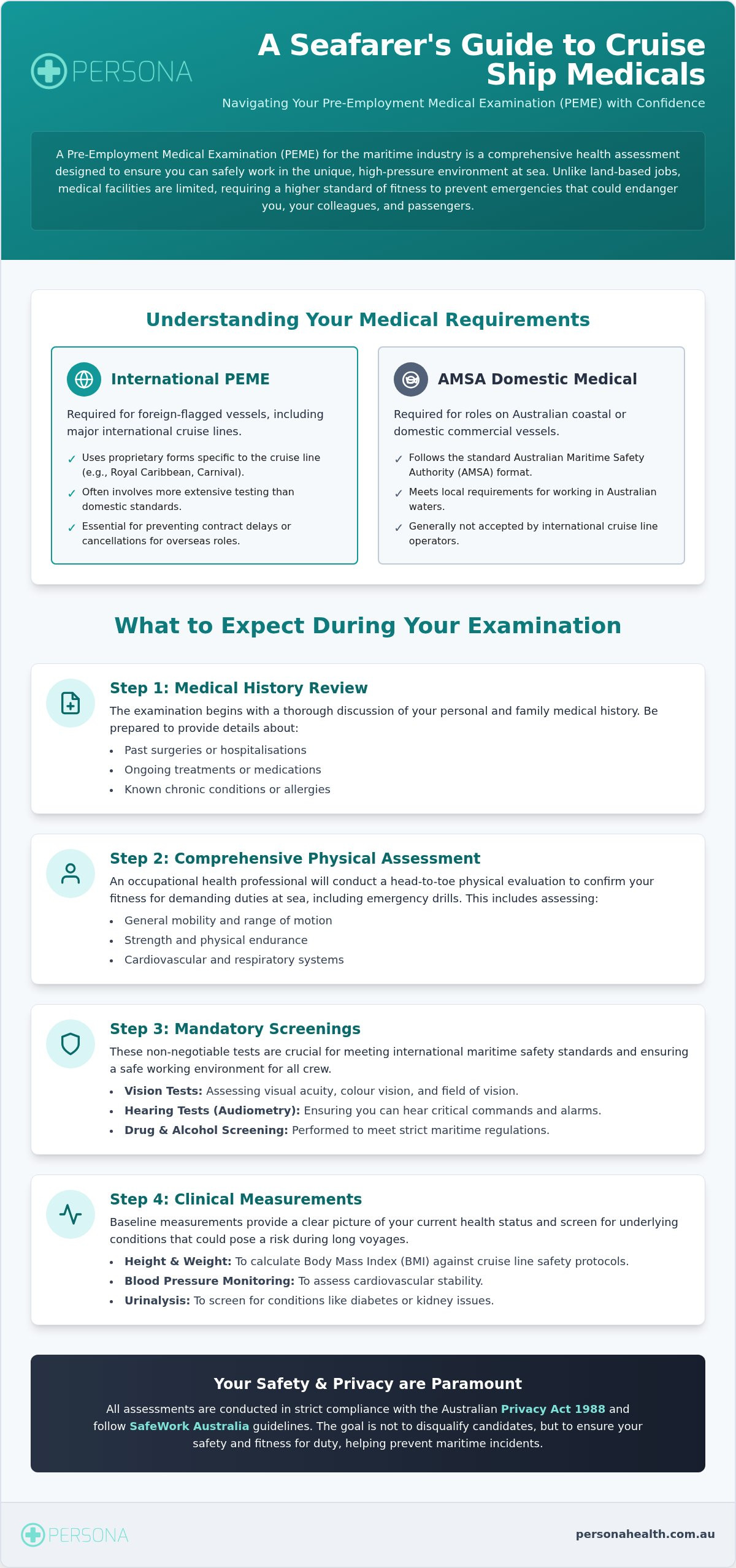
A Pre-Employment Medical Examination (PEME) for the maritime industry isn’t just a standard check-up. It’s a comprehensive health assessment designed to ensure you can safely work in a high-pressure environment at sea. For many Australian seafarers, obtaining cruise ship medicals is the final hurdle before beginning an international contract. Unlike land-based roles where a hospital is usually a short drive away, working on a cruise ship means living in a remote setting for months. This isolation requires a higher tier of medical fitness to prevent emergencies that could endanger you, your colleagues, or the vessel.
These standards are rooted in international conventions on seafarer medicals and the Maritime Labour Convention (MLC). These frameworks ensure that every crew member is physically and mentally capable of performing their duties, including mandatory emergency drills. At Persona Health, we understand the stress that comes with these requirements. We support candidates across Australia through our specialised cruise ship medicals at our clinics in Parramatta, Rosebery, Gregory Hills, and Dee Why in Sydney, as well as Cairnlea and Craigieburn in Melbourne. With an extensive network of 100 affiliate clinics, we ensure you can access professional assessments regardless of your location.
International PEME vs AMSA Domestic Seafarer Medicals
It’s a common point of confusion for many Australian seafarers starting their careers. If you’re working on a foreign-flagged vessel, such as those operated by major international cruise lines, you’ll almost certainly need a specific PEME rather than a standard Australian Maritime Safety Authority (AMSA) domestic certificate. While an AMSA domestic seafarer medical is essential for local coastal roles, international lines have their own proprietary forms and testing protocols that often go beyond domestic requirements. Using the wrong form can lead to your contract being delayed or even cancelled, so it’s vital to confirm exactly which certificate your employer requires before booking.
Legal and Compliance Framework in Australia
Your health data is highly sensitive. In Australia, these assessments must comply with the Privacy Act 1988, which ensures your personal information is handled with the highest level of confidentiality. We also follow SafeWork Australia guidelines to ensure every assessment is fair, objective, and focused on your fitness for duty. This process isn’t about looking for reasons to disqualify you; it’s about ensuring your safety and the safety of thousands of passengers. Maintaining a robust fitness for duty profile helps prevent maritime incidents and ensures you can complete your contract successfully without health-related interruptions.
What to Expect During Your Cruise Line Medical Examination
Stepping into a clinic for cruise ship medicals is a structured process designed to confirm you can withstand the unique rigours of life at sea. The examination starts with a comprehensive review of your personal and family medical history. You should be prepared to discuss any past surgeries, hospitalisations, or ongoing treatments. An occupational health professional then performs a head-to-toe physical assessment to evaluate your mobility and strength. Because safety is the absolute priority on a vessel, vision and hearing tests are non-negotiable; these are performed alongside mandatory drug and alcohol screening to meet international maritime standards.
Clinical Measurements and Physical Testing
The clinical team begins with baseline measurements to establish a clear picture of your current health status. This includes recording your height and weight to ensure your Body Mass Index (BMI) falls within the acceptable range for cruise line safety protocols. We also perform blood pressure monitoring to assess cardiovascular stability, as untreated hypertension can be a significant risk factor during long voyages. A urinalysis is standard practice, allowing us to screen for underlying conditions like diabetes or kidney issues that might require management while you are away from land-based medical centres.
Specialised Diagnostic and Pathology Requirements
International cruise lines require more detailed diagnostic data than most land-based employers. You will likely need a chest X-ray to screen for tuberculosis and other respiratory conditions, which is a critical step for anyone living in close quarters with crew and passengers. Extensive blood panels are also required, typically testing for HIV, Hepatitis, and liver function. For those working in high-noise areas like the engine room or on deck, audiometric testing verifies that your hearing levels meet the necessary safety thresholds. If you need to organise a pre-employment medical, our teams in Sydney and Melbourne can streamline these complex pathology requirements.
Psychological and Mental Wellbeing Assessments
Working at sea involves long contracts and periods of isolation from family and friends. Modern medicals now include a focus on mental health resilience to ensure you are prepared for the psychological demands of ship life. These screenings help identify whether you have the internal resources to manage the stress of a maritime environment effectively. For more information on how these standards are applied, you can explore our detailed Fitness for Duty assessments. Our goal is to ensure you are not just physically capable, but also mentally ready for a successful career on the water.
Navigating Specific Cruise Line Requirements and Forms
Securing your role is only half the battle; ensuring your medical documentation matches the specific standards of your employer is the next critical step. Every major brand, from Carnival and Princess to Royal Caribbean, utilises a unique set of PEME forms that reflect their internal safety protocols and the specific flag state of their vessels. These documents vary significantly in their level of detail and validity periods. While most certificates remain valid for two years, certain lines or age brackets may require annual reviews. At Persona Health, we take the guesswork out of this process by maintaining an up-to-date library of specific cruise line requirements, ensuring your paperwork is completed to the exacting standards required for contract approval.
Accurate documentation is also a prerequisite for successful visa applications. Many international maritime roles require specific crew visas, such as the C1/D visa for the United States, which often demand proof of medical fitness. Any discrepancy between your medical results and your visa health declaration can lead to significant delays at the border. Our clinicians are trained to spot these potential conflicts early, providing a seamless bridge between your clinical assessment and your travel compliance needs.
Managing Vaccinations and Immunisation Records
A vital component of cruise ship medicals is the verification of your immunisation status. Living in a communal environment means you must be protected against highly communicable diseases. Common requirements include:
- Measles, Mumps, and Rubella (MMR)
- Varicella (Chickenpox)
- Yellow Fever, depending on the ship’s itinerary
- Hepatitis A and B
- Polio and Diphtheria boosters
You must record these in an International Certificate of Vaccination or Prophylaxis. If your records are incomplete, we can organise the necessary boosters or serology tests before your departure date to ensure you are fully compliant with global health regulations.
Visa Medicals and International Travel Compliance
For many Australian crew members, the medical clearance process is inextricably linked to international travel permits. Port of entry requirements can be just as strict as the cruise line’s own standards. We specialise in coordinating these overlapping needs, ensuring that your cruise ship medicals satisfy both your employer and the relevant immigration authorities. If you are preparing for a role that requires specific documentation, you can access our dedicated Visa Medicals Sydney services to ensure every box is ticked for your international voyage.
How to Prepare for Your Medical to Minimise Delays
Preparation is the most effective way to ensure your cruise ship medicals proceed without unnecessary interruptions. When you arrive at our clinic, having your documentation organised allows our clinical team to focus entirely on your assessment rather than chasing missing records. We recommend starting your preparation at least two weeks before your appointment. This timeframe gives you enough space to request records from your GP or locate your original immunisation certificates, which are essential for verifying your health history against international maritime standards.
On the day of your exam, you’ll need to bring your valid passport as primary photo identification and your official cruise line offer letter. If you have been provided with specific PEME forms by your employer, please bring the original hard copies. Wear comfortable, loose-fitting clothing that allows for a full range of movement during the physical ability portion of the exam. If your role involves manual handling or deck duties, you may be asked to perform basic functional movements to ensure your joints and muscles are fit for the demands of the ship.
Documentation Checklist for Your Appointment
To avoid a second visit, ensure you have every item on this list ready for your occupational health professional:
- Your current passport and any specific cruise line medical forms.
- A complete list of current medications, including dosages and the conditions they treat.
- Management plans for any chronic conditions, such as asthma or diabetes.
- Your corrective lenses (glasses or contacts) and any hearing aids you use daily.
- Your International Certificate of Vaccination or a printout from the Australian Immunisation Register.
Health Optimisation Tips Before the Exam
Small lifestyle adjustments in the 24 hours leading up to your appointment can significantly impact your results. We advise fasting for at least 8 to 12 hours if your cruise line requires specific blood glucose or cholesterol testing; however, you should continue to drink plenty of water to stay hydrated. Avoid excessive caffeine and high-salt foods on the morning of your exam, as these can temporarily elevate your blood pressure and lead to a requirement for repeat readings. Most importantly, be honest during your medical history review. Our clinicians are here to support your career, and being transparent about your health history is the best way to ensure a safe and sustainable placement at sea. If you are ready to begin your journey, you can book your cruise ship medicals at one of our clinics in Sydney or Melbourne today.
Professional Cruise Ship Medicals at Persona Health Clinics
Finding a clinic that understands the nuances of cruise ship medicals shouldn’t be a source of stress. We’ve established dedicated hubs across Australia to provide seafarers with reliable, clinical expertise. In Sydney, you can visit our teams in Parramatta, Rosebery, Gregory Hills, or Dee Why. In Melbourne, we offer comprehensive assessments at our Cairnlea and Craigieburn centres. For those living in regional areas, our extensive network of 100 affiliate clinics ensures you don’t have to travel to a capital city to meet your contract requirements. We understand that contracts often come with tight deadlines, which is why we prioritise fast turnaround times for pathology and results, ensuring your cruise ship medicals are handled with the urgency they deserve.
Employer Focused Solutions and Injury Management
Supporting the maritime industry requires more than just a one-off assessment. We work closely with cruise lines to maintain a healthy and compliant workforce through ongoing health surveillance. This proactive approach helps identify potential health trends before they become operational risks. By integrating professional injury management, we ensure that if an incident does occur, the path back to duty is clear and clinically supported. This commitment to long-term crew wellbeing reduces staff turnover and ensures that every seafarer is physically prepared for the challenges of their specific role.
InjuryQR: Digital Triage for Maritime Safety
Safety at sea requires immediate action when things go wrong. We’re proud to introduce InjuryQR, a free, AI-powered triage service designed for Australian businesses. This tool requires no app installation; workers simply scan a QR code and describe their injury by voice. The AI then asks follow-up questions to determine the best course of action, ranging from self-care and telehealth to emergency intervention. For maritime operations, this means immediate access to clinical guidance and the potential for instant Certificates of Capacity. Implementing this digital triage reduces Lost Time Injuries (LTIs) and ensures that minor incidents don’t escalate into major contract disruptions. It brings clinical certainty to the workplace in real-time, helping you manage safety with modern precision.
If you’re ready to secure your medical clearance or need to discuss a tailored solution for your crew, contact the Persona Health team today. We’re here to help you navigate the complexities of maritime health compliance with confidence.
Your Path to a Successful Maritime Career
Securing your dream role on an international vessel is an incredible achievement, and your medical clearance is the final piece of the puzzle. By understanding the specific requirements of your cruise line and preparing your documentation in advance, you can avoid the stress of last-minute delays. Whether you’re navigating the complex PEME forms for Carnival or ensuring your vaccinations meet Royal Caribbean standards, having an expert partner makes all the difference.
Our accredited occupational health professionals are dedicated to providing a seamless experience with the fast turnaround times your time-sensitive contract demands. With conveniently located clinics across Sydney and Melbourne, we ensure your cruise ship medicals are handled with clinical precision and genuine support. You’re not just another appointment to us; you’re a professional preparing for a life-changing journey.
Book your Cruise Line Medical with Persona Health today and take the next step toward the gangway with confidence. We look forward to supporting your health and safety at sea.
Frequently Asked Questions
How long does a cruise ship medical appointment usually take?
A standard appointment for cruise ship medicals typically takes between 90 minutes and two hours to complete. This duration allows our clinicians to conduct a thorough physical examination, vision and hearing assessments, and the required drug and alcohol screenings. If your cruise line requires additional diagnostic tests like chest X-rays or extensive blood panels, we’ll coordinate these to ensure the process remains as efficient as possible for your schedule.
What happens if I do not pass my initial cruise line medical?
If you don’t meet the initial health standards, it doesn’t always mean your career is over. Our occupational health professionals will discuss the specific findings with you and may request further information from your treating GP or a specialist. In many cases, a “deferred” status allows you time to manage a treatable condition before being re-evaluated for a fit-for-duty certificate that satisfies your employer’s safety requirements.
Do I need to fast before my cruise ship medical appointment?
Most cruise lines require specific blood tests that demand a fasting period of 8 to 12 hours before your appointment. This ensures the accuracy of your blood glucose and cholesterol readings. You should continue to drink plenty of water during this time to stay hydrated, which also makes the blood collection process easier. Always check your specific cruise line instructions or confirm with our clinic staff when booking your assessment.
How long is a cruise line medical certificate valid for?
Most cruise line medical certificates are valid for 24 months from the date of issue. However, this period can vary depending on the specific cruise line’s policy or your age. For example, seafarers under the age of 18 or those aged 55 and over often require annual renewals. It’s essential to check the expiry date on your certificate and the specific requirements of your upcoming contract to ensure you remain compliant.
Is a cruise ship medical different from a standard GP check up?
Yes, these assessments are significantly more comprehensive than a standard GP check-up. While a GP focuses on general wellness, cruise ship medicals are specialised occupational health exams designed for the unique rigours of maritime life. They include specific diagnostic tests, psychological resilience screenings, and physical ability assessments required by international conventions. Our clinicians focus on your ability to work safely in an isolated environment where hospital access is limited.
Can I get my vaccinations done at the same time as my medical?
We can certainly assist with organising your required vaccinations or serology tests during your medical appointment. Many cruise lines require proof of immunity for conditions like Measles, Mumps, Rubella, and Varicella. Bringing your Australian Immunisation Register records allows us to identify any gaps. If you need boosters to meet international travel compliance, we’ll coordinate these to ensure your International Certificate of Vaccination is fully updated before you depart.
What specific blood tests are required for a cruise ship PEME?
The required blood panels are extensive and typically include screenings for HIV, Hepatitis A, B, and C, and liver function. You’ll also usually undergo tests for blood glucose and a full lipid profile to assess cardiovascular risk. These tests are mandatory for living in close quarters and ensure you don’t have underlying conditions that could become emergencies at sea. We use high-quality pathology partners to provide the fast turnaround times seafarers need.
Which cruise lines does Persona Health provide medicals for?
We provide specialised assessments for all major international cruise lines, including Royal Caribbean, Carnival, Princess, and Norwegian Cruise Line. Our clinicians are familiar with the proprietary forms and specific clinical standards used by these brands. Whether you’re visiting our clinics in Sydney or Melbourne, we ensure your paperwork is completed accurately to meet the exact standards of your employer, helping you avoid administrative delays during your embarkation process.

Article by
Ian Nicholson
Ian is the Business Support Manager at Persona Health, where he plays a key role across IT, sales, marketing and business operations. With a broad skill set and a practical, solutions-focused approach, Ian helps drive the systems, communication and commercial strategy that support Persona Health’s continued growth across Australia.